





























Introduction: Three Styles, Three Philosophies
For many newcomers, whisky begins with confusion.
Terms like bourbon, Scotch, and Japanese whisky are often used interchangeably, yet they represent fundamentally different traditions. These are not just categories—they are distinct philosophies shaped by geography, regulation, culture, and craftsmanship.
Understanding their differences is not about memorizing rules. It is about recognizing how environment and intention shape flavor.
Once you grasp this, whisky becomes easier—and far more interesting—to explore.
What Defines Each Style?
Before diving into flavor, it is essential to understand the foundational differences.
Bourbon
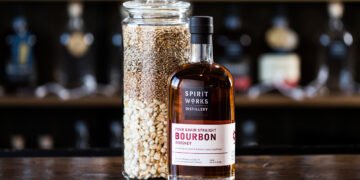
Bourbon is a type of American whiskey with strict production rules:
- Made primarily from corn (at least 51%)
- Aged in new, charred oak barrels
- Typically produced in the United States
Scotch
Scotch whisky must be produced in Scotland and follows specific regulations:
- Usually made from malted barley
- Aged in oak barrels
- Often associated with regional styles
Japanese Whisky
Japanese whisky draws inspiration from Scotch but emphasizes precision:
- Carefully controlled production
- Balanced and refined flavor profiles
- Focus on harmony and detail
Grain and Raw Materials
The choice of grain significantly impacts flavor.
Bourbon
High corn content creates:
- Natural sweetness
- Rich, rounded flavors
Scotch
Barley-based production often results in:
- Malty notes
- Complex structure
Japanese Whisky
Varies depending on style, but often mirrors Scotch foundations while refining texture and balance.
The Role of Barrels
Barrels are one of the most influential factors in whisky flavor.
Bourbon Barrels
- Always new and charred
- Strong impact on flavor
- Contribute vanilla, caramel, and toasted notes
Scotch Barrels
- Often reused
- Previously held other spirits or wines
- Provide subtle, layered influence
Japanese Approach
- Uses a variety of casks
- Focuses on balance rather than dominance
Climate and Aging Conditions
Environment plays a crucial role in how whisky matures.
Bourbon (Warmer Climate)
- Faster aging
- Stronger interaction with wood
- More intense flavors
Scotch (Cooler Climate)
- Slower aging
- More gradual flavor development
- Greater subtlety
Japanese Climate
Varied conditions allow for controlled, nuanced maturation.
Flavor Profiles: A Comparative View
Bourbon
Typical characteristics:
- Sweet
- Full-bodied
- Notes of caramel, vanilla, and spice
It is often bold and immediately approachable.
Scotch
More diverse in flavor:
- Can be light and floral
- Or smoky and intense
- Often layered and complex
Japanese Whisky
Known for:
- Elegance
- Balance
- Subtle complexity
It rarely overwhelms the palate.
Texture and Mouthfeel
Bourbon
- Rich
- Oily
- Full
Scotch
- Varies widely
- Can be light or heavy
Japanese Whisky
- Smooth
- Refined
- Clean
The Role of Smoke
Smoke is one of the most recognizable elements in whisky—but it is not universal.
Scotch
Some Scotch whiskies are known for smoky characteristics due to peat usage.
Bourbon
Typically does not feature smoky flavors.

Japanese Whisky
Occasionally includes subtle smoke, but rarely dominates.
Approachability vs Complexity
Bourbon
- Easy to understand
- Flavor-forward
- Beginner-friendly
Scotch
- Requires exploration
- Wide range of styles
- Appeals to both beginners and advanced drinkers
Japanese Whisky
- Smooth entry point
- Balanced complexity
- Highly refined
Cultural Philosophy
Beyond flavor, each style reflects a cultural mindset.
Bourbon
- Bold
- Direct
- Expressive
Scotch
- Traditional
- Region-driven
- Historically rooted
Japanese Whisky
- Precision-focused
- Detail-oriented
- Harmony-driven
Price and Accessibility
Bourbon
- Generally more accessible
- Wide price range
Scotch
- Varies significantly
- Includes both affordable and premium options
Japanese Whisky
- Often positioned as premium
- Limited availability can drive prices higher
Choosing the Right Style
Rather than asking which is better, consider:
- Do you prefer sweet or dry profiles?
- Do you enjoy bold flavors or subtlety?
- Are you exploring or refining your taste?
Each style offers something different.
Common Misconceptions
“Scotch Is Always Smoky”
Only certain styles have strong smoke.
“Bourbon Is Simple”
While approachable, it can still be complex.
“Japanese Whisky Is Just a Copy of Scotch”
It has evolved into its own distinct identity.
How to Compare Them Effectively
The best way to understand differences is through comparison.
Try tasting:
- One bourbon
- One Scotch
- One Japanese whisky
Focus on:
- Aroma
- Texture
- Finish
Side-by-side tasting accelerates learning.
The Influence of Globalization
Modern whisky culture is increasingly interconnected.
Producers learn from each other, and styles continue to evolve.
This leads to:
- Hybrid approaches
- New flavor profiles
- Greater diversity
The Future of Whisky Styles
As consumer preferences shift, traditional categories may blur.
Innovation is driving:
- New production techniques
- Experimental aging methods
- Cross-cultural influences
The future of whisky is dynamic.
Conclusion: Three Paths, One World
Bourbon, Scotch, and Japanese whisky are not competitors.
They are expressions of different philosophies.
Each represents a unique way of thinking about flavor, craft, and experience.
Understanding them does not limit your choices—it expands them.
Because the more you explore, the more you realize:
There is no single definition of great whisky.
Only different ways to experience it.