














SipsavorLife
  • Home
  • Wine
    Wine Pairings: Can They Change the Flavor Profile of a Dish?

    Wine Pairings: Can They Change the Flavor Profile of a Dish?

    How Do Wine Glasses Influence the Tasting Experience?

    How Do Wine Glasses Influence the Tasting Experience?

    Is Organic Wine Healthier Than Conventional Wine?

    Is Organic Wine Healthier Than Conventional Wine?

    Why Do Some Wines Taste Better from Specific Vintages?

    Why Do Some Wines Taste Better from Specific Vintages?

    Wine Tasting: Can It Truly Be an Art Form?

    Wine Tasting: Can It Truly Be an Art Form?

    What Does Terroir Actually Mean for Your Wine?

    What Does Terroir Actually Mean for Your Wine?

  • Whiskey
    Can Beer Be an Effective Ingredient in Culinary Cooking?

    Can Beer Be an Effective Ingredient in Culinary Cooking?

    Second Fermentation in Champagne: Is It Really That Crucial?

    Second Fermentation in Champagne: Is It Really That Crucial?

    How Do Different Grains Impact the Flavor Profile of Distilled Spirits?

    How Do Different Grains Impact the Flavor Profile of Distilled Spirits?

    How Do Whiskey Master Blenders Create Perfection?

    How Do Whiskey Master Blenders Create Perfection?

    Wine Pairings: Can They Change the Flavor Profile of a Dish?

    Wine Pairings: Can They Change the Flavor Profile of a Dish?

    Beer the Ultimate Beverage for Pairing with Spicy Food?

    Beer the Ultimate Beverage for Pairing with Spicy Food?

  • Beer
    Can Beer Be an Effective Ingredient in Culinary Cooking?

    Can Beer Be an Effective Ingredient in Culinary Cooking?

    Beer the Ultimate Beverage for Pairing with Spicy Food?

    Beer the Ultimate Beverage for Pairing with Spicy Food?

    How Did Ancient Civilizations Brew Beer Without Modern Technology?

    How Did Ancient Civilizations Brew Beer Without Modern Technology?

    Is It Possible to Brew a Beer with No Alcohol and No Compromise on Taste?

    Is It Possible to Brew a Beer with No Alcohol and No Compromise on Taste?

    Why Does Beer Taste Different at High Altitudes?

    Why Does Beer Taste Different at High Altitudes?

    Is Hops the Secret Ingredient Behind Beer’s Bold Flavor?

    Is Hops the Secret Ingredient Behind Beer’s Bold Flavor?

  • Grain Spirits
    How Do Different Grains Impact the Flavor Profile of Distilled Spirits?

    How Do Different Grains Impact the Flavor Profile of Distilled Spirits?

    Grain Spirits the Unsung Heroes of Modern Mixology

    Grain Spirits the Unsung Heroes of Modern Mixology

    What Makes Grain-Based Whiskey So Different from Its Peated Cousins?

    What Makes Grain-Based Whiskey So Different from Its Peated Cousins?

    Grain Spirits: Could They Be the Next Big Trend in Craft Cocktails?

    Grain Spirits: Could They Be the Next Big Trend in Craft Cocktails?

    Why Are Grain Spirits Often Overlooked in the World of Fine Liquor?

    Why Are Grain Spirits Often Overlooked in the World of Fine Liquor?

    Is There a Secret Art to Distilling Grain Spirits?

    Is There a Secret Art to Distilling Grain Spirits?

  • Champagne
    Second Fermentation in Champagne: Is It Really That Crucial?

    Second Fermentation in Champagne: Is It Really That Crucial?

    The Science Behind the ‘Bubble Size’ in Champagne

    The Science Behind the ‘Bubble Size’ in Champagne

    Why Do Some Champagnes Use a High Proportion of Pinot Meunier?

    Why Do Some Champagnes Use a High Proportion of Pinot Meunier?

    Role of Terroir in Champagne Production

    Role of Terroir in Champagne Production

    Champagne Can Be Aged in Wood?

    Champagne Can Be Aged in Wood?

    Is There a Difference Between Blanc de Blancs and Blanc de Noirs Champagne?

    Is There a Difference Between Blanc de Blancs and Blanc de Noirs Champagne?

  • ALL
    Can Beer Be an Effective Ingredient in Culinary Cooking?

    Can Beer Be an Effective Ingredient in Culinary Cooking?

    Second Fermentation in Champagne: Is It Really That Crucial?

    Second Fermentation in Champagne: Is It Really That Crucial?

    How Do Different Grains Impact the Flavor Profile of Distilled Spirits?

    How Do Different Grains Impact the Flavor Profile of Distilled Spirits?

    How Do Whiskey Master Blenders Create Perfection?

    How Do Whiskey Master Blenders Create Perfection?

    Wine Pairings: Can They Change the Flavor Profile of a Dish?

    Wine Pairings: Can They Change the Flavor Profile of a Dish?

    Beer the Ultimate Beverage for Pairing with Spicy Food?

    Beer the Ultimate Beverage for Pairing with Spicy Food?

SipsavorLife
  • Home
  • Wine
    Wine Pairings: Can They Change the Flavor Profile of a Dish?

    Wine Pairings: Can They Change the Flavor Profile of a Dish?

    How Do Wine Glasses Influence the Tasting Experience?

    How Do Wine Glasses Influence the Tasting Experience?

    Is Organic Wine Healthier Than Conventional Wine?

    Is Organic Wine Healthier Than Conventional Wine?

    Why Do Some Wines Taste Better from Specific Vintages?

    Why Do Some Wines Taste Better from Specific Vintages?

    Wine Tasting: Can It Truly Be an Art Form?

    Wine Tasting: Can It Truly Be an Art Form?

    What Does Terroir Actually Mean for Your Wine?

    What Does Terroir Actually Mean for Your Wine?

  • Whiskey
    Can Beer Be an Effective Ingredient in Culinary Cooking?

    Can Beer Be an Effective Ingredient in Culinary Cooking?

    Second Fermentation in Champagne: Is It Really That Crucial?

    Second Fermentation in Champagne: Is It Really That Crucial?

    How Do Different Grains Impact the Flavor Profile of Distilled Spirits?

    How Do Different Grains Impact the Flavor Profile of Distilled Spirits?

    How Do Whiskey Master Blenders Create Perfection?

    How Do Whiskey Master Blenders Create Perfection?

    Wine Pairings: Can They Change the Flavor Profile of a Dish?

    Wine Pairings: Can They Change the Flavor Profile of a Dish?

    Beer the Ultimate Beverage for Pairing with Spicy Food?

    Beer the Ultimate Beverage for Pairing with Spicy Food?

  • Beer
    Can Beer Be an Effective Ingredient in Culinary Cooking?

    Can Beer Be an Effective Ingredient in Culinary Cooking?

    Beer the Ultimate Beverage for Pairing with Spicy Food?

    Beer the Ultimate Beverage for Pairing with Spicy Food?

    How Did Ancient Civilizations Brew Beer Without Modern Technology?

    How Did Ancient Civilizations Brew Beer Without Modern Technology?

    Is It Possible to Brew a Beer with No Alcohol and No Compromise on Taste?

    Is It Possible to Brew a Beer with No Alcohol and No Compromise on Taste?

    Why Does Beer Taste Different at High Altitudes?

    Why Does Beer Taste Different at High Altitudes?

    Is Hops the Secret Ingredient Behind Beer’s Bold Flavor?

    Is Hops the Secret Ingredient Behind Beer’s Bold Flavor?

  • Grain Spirits
    How Do Different Grains Impact the Flavor Profile of Distilled Spirits?

    How Do Different Grains Impact the Flavor Profile of Distilled Spirits?

    Grain Spirits the Unsung Heroes of Modern Mixology

    Grain Spirits the Unsung Heroes of Modern Mixology

    What Makes Grain-Based Whiskey So Different from Its Peated Cousins?

    What Makes Grain-Based Whiskey So Different from Its Peated Cousins?

    Grain Spirits: Could They Be the Next Big Trend in Craft Cocktails?

    Grain Spirits: Could They Be the Next Big Trend in Craft Cocktails?

    Why Are Grain Spirits Often Overlooked in the World of Fine Liquor?

    Why Are Grain Spirits Often Overlooked in the World of Fine Liquor?

    Is There a Secret Art to Distilling Grain Spirits?

    Is There a Secret Art to Distilling Grain Spirits?

  • Champagne
    Second Fermentation in Champagne: Is It Really That Crucial?

    Second Fermentation in Champagne: Is It Really That Crucial?

    The Science Behind the ‘Bubble Size’ in Champagne

    The Science Behind the ‘Bubble Size’ in Champagne

    Why Do Some Champagnes Use a High Proportion of Pinot Meunier?

    Why Do Some Champagnes Use a High Proportion of Pinot Meunier?

    Role of Terroir in Champagne Production

    Role of Terroir in Champagne Production

    Champagne Can Be Aged in Wood?

    Champagne Can Be Aged in Wood?

    Is There a Difference Between Blanc de Blancs and Blanc de Noirs Champagne?

    Is There a Difference Between Blanc de Blancs and Blanc de Noirs Champagne?

  • ALL
    Can Beer Be an Effective Ingredient in Culinary Cooking?

    Can Beer Be an Effective Ingredient in Culinary Cooking?

    Second Fermentation in Champagne: Is It Really That Crucial?

    Second Fermentation in Champagne: Is It Really That Crucial?

    How Do Different Grains Impact the Flavor Profile of Distilled Spirits?

    How Do Different Grains Impact the Flavor Profile of Distilled Spirits?

    How Do Whiskey Master Blenders Create Perfection?

    How Do Whiskey Master Blenders Create Perfection?

    Wine Pairings: Can They Change the Flavor Profile of a Dish?

    Wine Pairings: Can They Change the Flavor Profile of a Dish?

    Beer the Ultimate Beverage for Pairing with Spicy Food?

    Beer the Ultimate Beverage for Pairing with Spicy Food?

SipsavorLife
No Result
View All Result
Home ALL

Why Do Some Champagnes Use a High Proportion of Pinot Meunier?

January 20, 2026
in ALL, Champagne
Why Do Some Champagnes Use a High Proportion of Pinot Meunier?

Champagne is often synonymous with luxury, celebration, and the delicate art of effervescence. While most people casually recognize the trio of grape varieties that define Champagne—Chardonnay, Pinot Noir, and Pinot Meunier—few pause to consider why certain Champagnes rely heavily on Pinot Meunier. This intriguing grape, sometimes overshadowed by its more illustrious cousins, holds unique qualities that influence flavor, aging potential, and even the economics of Champagne production. Understanding why some producers favor a high proportion of Pinot Meunier offers a window into both viticultural strategy and the artistry of winemaking.

The Origins and Characteristics of Pinot Meunier

Pinot Meunier is a mutation of Pinot Noir, genetically similar but with notable physiological differences. Its name, “Meunier,” translates to “miller” in French, a nod to the powdery appearance of its leaves, reminiscent of flour dusted across a surface. Historically, it was long considered the “lesser” Pinot, a grape for immediate consumption rather than cellaring, partially because it ripens earlier than Pinot Noir and is more resistant to frost.

From a viticultural perspective, Pinot Meunier is a workhorse. It thrives in cooler, wetter regions where Chardonnay and Pinot Noir might struggle. Its vigorous growth, early budding, and adaptability make it a reliable choice for growers in the diverse microclimates of Champagne. Moreover, its thick skin provides resilience against rot and disease—a factor that can make a substantial difference in unpredictable weather conditions typical of northern France.

Flavor-wise, Pinot Meunier imparts soft, fruit-forward qualities. While Pinot Noir contributes structure, tannins, and red berry aromas, and Chardonnay adds elegance, acidity, and finesse, Meunier is often described as the “fruit bridge.” It produces notes of orchard fruit, apple, pear, and sometimes stone fruits, bringing immediate approachability to Champagne without compromising complexity.

Climate and Terroir: Why Meunier Matters

Champagne’s climate is famously marginal. Winters are cold, springs are unpredictable, and frosts can devastate delicate buds. In these conditions, Pinot Meunier’s early ripening is a strategic advantage. By reaching maturity sooner than Pinot Noir, Meunier reduces the risk of crop loss from late frosts. Furthermore, its ability to maintain balance in cooler, cloudier vintages ensures that producers can achieve consistent quality, even when Chardonnay or Pinot Noir falter.

Soil composition also plays a role. Meunier performs well in clay-rich soils, which retain moisture and provide the mineral backbone for its expressive fruit. While Chardonnay often dominates chalky slopes and Pinot Noir thrives in well-draining gravel, Meunier’s versatility allows winemakers to cultivate productive plots that might otherwise remain underutilized.

Style and Strategy in Champagne Blending

Blending is a defining art in Champagne production. The goal is often to achieve a signature house style that balances freshness, fruit, body, and aging potential. Pinot Meunier is particularly valuable in blends for its immediacy. Where Chardonnay and Pinot Noir might require years to soften and reveal complexity, Meunier is approachable young, making it ideal for non-vintage blends intended for early release.

High proportions of Pinot Meunier can shape the wine’s personality significantly:
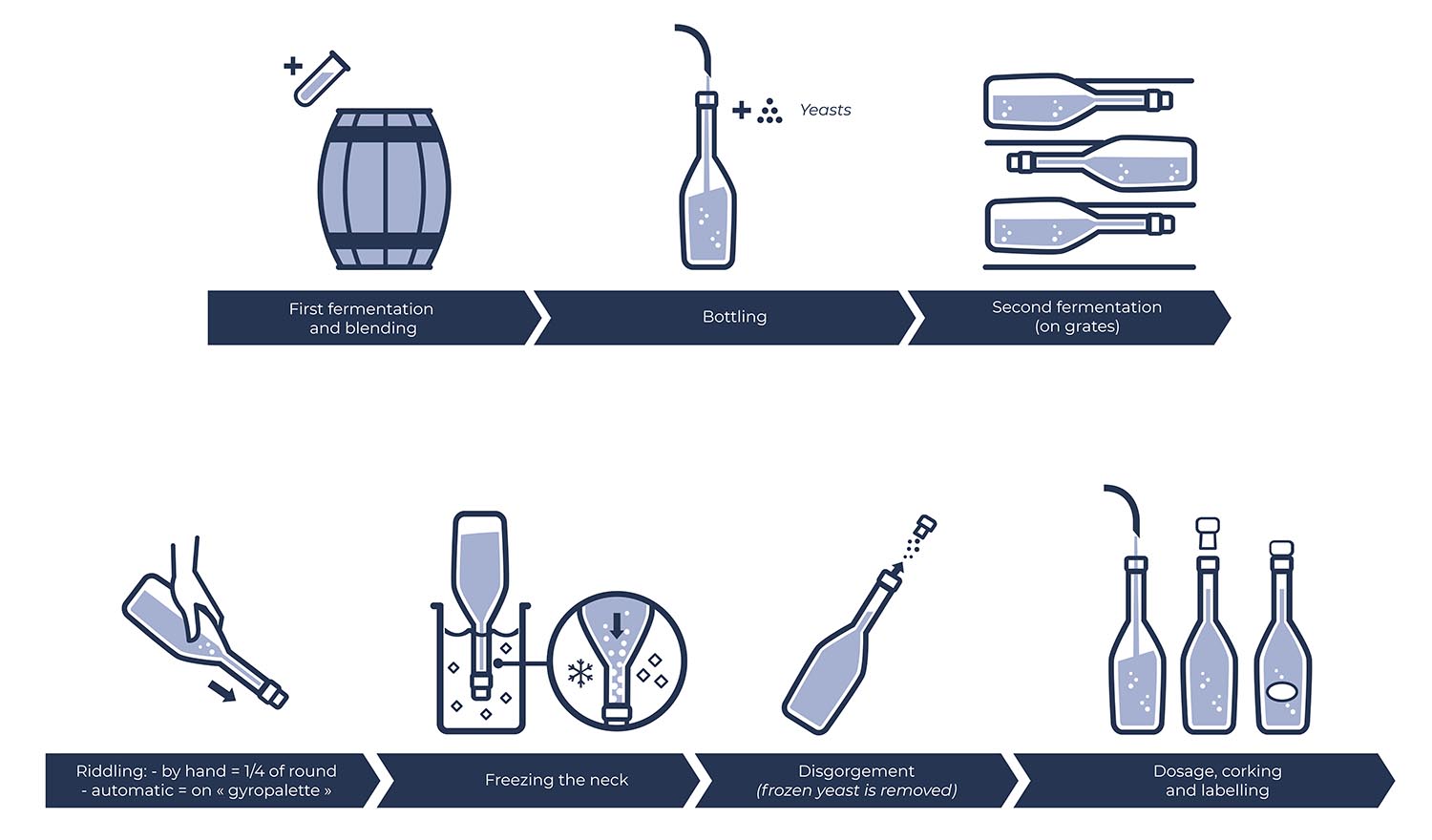
How do you make sparkling wine? The example of Cremant de Bourgogne.
  • Enhanced Fruitiness: The grape contributes a round, juicy fruit profile that appeals to contemporary palates.
  • Softened Acidity: While still maintaining enough structure for balance, Meunier moderates the sometimes sharp edge of Chardonnay.
  • Early Drinkability: Wines with more Meunier often require less aging and can be enjoyed within a few years of release, making them commercially attractive.

This is why many Champagne houses—especially smaller producers and cooperatives—leverage Meunier heavily. It allows them to release a consistent, approachable product that satisfies consumers who prefer lively, fruit-driven sparkling wine over austere, mineral-driven styles.

Pinot Meunier and Aging Potential

A common misconception is that Meunier lacks aging potential. While it generally matures faster than Pinot Noir or Chardonnay, recent studies and tastings reveal that Meunier can develop fascinating secondary and tertiary notes if handled carefully. Aromas of baked apple, honeyed pear, and toasted nuts emerge over time, demonstrating that Meunier is not inherently a “quick” grape but rather one with untapped versatility.

In vintage Champagne or cuvées where Meunier dominates, careful vineyard management and vinification techniques—such as controlled fermentation and extended lees aging—allow producers to harness its expressive fruit while maintaining structural integrity. The result is Champagne that is lively and approachable in youth yet reveals depth and nuance over several years.

Economic and Practical Considerations

From an economic standpoint, Pinot Meunier can be a win-win for growers and producers alike. Its reliability in difficult vintages ensures a more predictable yield, and its rapid maturity enables earlier sales. In contrast, Pinot Noir requires more attention, careful pruning, and optimal weather to achieve top quality. By emphasizing Meunier, producers hedge against climatic and financial uncertainty.

Additionally, Pinot Meunier’s versatility extends to marketing. A Champagne labeled as “Meunier-heavy” can appeal to a younger, fruit-oriented demographic or a casual celebratory market without sacrificing authenticity or sophistication. For houses seeking a signature style distinct from the traditional Chardonnay-Pinot Noir dominated blends, Meunier offers both differentiation and continuity.

Case Studies in Meunier-Forward Champagnes

Several Champagne houses are known for embracing Meunier as a central component of their identity. These producers demonstrate how high-Meunier blends can coexist with tradition while innovating flavor and accessibility:

  1. Cooperative and Grower Champagnes: Smaller cooperatives often have plots dominated by Meunier due to site suitability. Their wines typically emphasize freshness, fruit, and early drinkability.
  2. Vintage Meunier Champagnes: Some producers craft vintage Meunier cuvées that showcase the grape’s depth, proving that it is not solely a blending grape but capable of expressing terroir and complexity on its own.
  3. Non-Vintage Blends: High-Meunier NV blends allow houses to maintain stylistic consistency across years, mitigating vintage variation risks.
Hand Painted Champagne Glasses/ Flute style/ Set of of 6/ Summer berries  and fruits design.

Flavor Dynamics and Food Pairing

Pinot Meunier’s approachable, fruit-driven style makes it extremely versatile at the table. It pairs seamlessly with a range of dishes:

  • Light Appetizers: Fresh salads, seafood ceviche, or sushi highlight Meunier’s crisp fruit notes.
  • Rich Poultry or Pork: Roasted chicken or pork tenderloin complements the wine’s soft texture and gentle acidity.
  • Cheese Boards: Soft cheeses like Brie or young goat cheese interact beautifully with the subtle fruitiness of Meunier.

This flexibility contrasts with high-Chardonnay blends, which may overwhelm delicate dishes, or Pinot Noir-dominant Champagnes, which sometimes call for more robust fare.

Innovation and the Future of Pinot Meunier

The modern Champagne market continues to evolve, driven by consumer preferences, climate change, and a growing interest in diversity of flavor. Pinot Meunier sits at the intersection of these trends. Producers experimenting with high-Meunier blends are finding new ways to express fruit purity, enhance aromatics, and create wines that are immediately enjoyable yet capable of aging gracefully.

Climate change may further elevate Meunier’s importance. Its frost resistance and adaptability could make it a cornerstone of resilient viticulture in Champagne, ensuring both quality and quantity as weather patterns shift.

Conclusion

Pinot Meunier is far more than the “second-class” Pinot it was once considered. Its unique viticultural traits, approachable fruit profile, and adaptability to Champagne’s marginal climate make it an indispensable component for many producers. High-Meunier Champagnes offer immediate pleasure, versatility, and economic practicality without sacrificing complexity or elegance.

In the intricate dance of grapes, terroir, and blending, Pinot Meunier often plays the unsung hero—bringing harmony, balance, and subtle charm to every sparkling bottle. So next time you sip a Meunier-forward Champagne, recognize the quiet genius behind that fruitiness: a grape that turns marginal conditions into celebratory brilliance.


Tags: Champagne productionflavorsparkling wineterroir
ShareTweetShare

Related Posts

Can Beer Be an Effective Ingredient in Culinary Cooking?
ALL

Can Beer Be an Effective Ingredient in Culinary Cooking?

January 22, 2026
Second Fermentation in Champagne: Is It Really That Crucial?
ALL

Second Fermentation in Champagne: Is It Really That Crucial?

January 22, 2026
How Do Different Grains Impact the Flavor Profile of Distilled Spirits?
ALL

How Do Different Grains Impact the Flavor Profile of Distilled Spirits?

January 22, 2026
How Do Whiskey Master Blenders Create Perfection?
ALL

How Do Whiskey Master Blenders Create Perfection?

January 22, 2026
Wine Pairings: Can They Change the Flavor Profile of a Dish?
ALL

Wine Pairings: Can They Change the Flavor Profile of a Dish?

January 22, 2026
Beer the Ultimate Beverage for Pairing with Spicy Food?
ALL

Beer the Ultimate Beverage for Pairing with Spicy Food?

January 21, 2026
Leave Comment
  • Trending
  • Comments
  • Latest
What Hidden Craftsmanship Lies Behind a Bottle of Quality Grain Spirits?

What Hidden Craftsmanship Lies Behind a Bottle of Quality Grain Spirits?

July 3, 2025
How Is Champagne Made? The Secrets Behind the Sparkle

How Is Champagne Made? The Secrets Behind the Sparkle

April 15, 2025
Grain Spirits vs. Traditional Distilled Spirits: Which One Suits Your Taste?

Grain Spirits vs. Traditional Distilled Spirits: Which One Suits Your Taste?

July 3, 2025
Champagne Bubbles: How Do They Perfectly Convey Celebration, Joy, and Luxury?

Champagne Bubbles: How Do They Perfectly Convey Celebration, Joy, and Luxury?

July 2, 2025
The Timeless Elegance of Wine: A Journey Through History and Culture

The Timeless Elegance of Wine: A Journey Through History and Culture

Why Is Château Lafite Rothschild the Pinnacle of Fine Wine?

Why Is Château Lafite Rothschild the Pinnacle of Fine Wine?

How Did Château Lafite Rothschild Become a Global Icon of Luxury?

How Did Château Lafite Rothschild Become a Global Icon of Luxury?

What Makes Chateau Lafite Rothschild the Pinnacle of Bordeaux Wines?

What Makes Chateau Lafite Rothschild the Pinnacle of Bordeaux Wines?

Can Beer Be an Effective Ingredient in Culinary Cooking?

Can Beer Be an Effective Ingredient in Culinary Cooking?

January 22, 2026
Second Fermentation in Champagne: Is It Really That Crucial?

Second Fermentation in Champagne: Is It Really That Crucial?

January 22, 2026
How Do Different Grains Impact the Flavor Profile of Distilled Spirits?

How Do Different Grains Impact the Flavor Profile of Distilled Spirits?

January 22, 2026
How Do Whiskey Master Blenders Create Perfection?

How Do Whiskey Master Blenders Create Perfection?

January 22, 2026
SipsavorLife

Welcome to our comprehensive beverage guide, where you can explore the fascinating world of alcoholic drinks. From exquisite wines and rich whiskeys to refreshing beers and sparkling champagnes, we provide insights, tips, and recommendations for enthusiasts and casual drinkers alike. Discover your next favorite libation with us!

© 2025 sipsavorlife.com. contacts:sipsavorlife-35376@gmail.com

No Result
View All Result
  • Home
  • Wine
  • Whiskey
  • Beer
  • Grain Spirits
  • Champagne
  • ALL

© 2025 sipsavorlife.com. contacts:sipsavorlife-35376@gmail.com

Welcome Back!

Login to your account below

Forgotten Password?

Retrieve your password

Please enter your username or email address to reset your password.

Log In