









SipsavorLife
  • Home
  • Wine
    Red Wine — The Liquid Expression of Land, Time, and Human Intention

    The Future of Red Wine — Climate Change, Technology, and the Evolution of Taste

    Red Wine — The Liquid Expression of Land, Time, and Human Intention

    Red Wine and Human Culture — Rituals, Status, and the Psychology of Drinking

    Red Wine — The Liquid Expression of Land, Time, and Human Intention

    A Journey Through the World of Red Wine — Bordeaux, Tuscany, Napa, and Beyond

    Red Wine — The Liquid Expression of Land, Time, and Human Intention

    The Chemistry of Red Wine — Tannins, Acids, Phenolics, and Molecular Evolution

    Red Wine — The Liquid Expression of Land, Time, and Human Intention

    Red Wine — The Liquid Expression of Land, Time, and Human Intention

    Wine as Culture, Craft, and Time — Understanding the Soul of the World’s Most Enduring Drink

    The Changing Map of Wine — Global Industry, Emerging Regions, and the Future of a Timeless Craft

  • Whiskey
    Can Beer Be an Effective Ingredient in Culinary Cooking?

    Can Beer Be an Effective Ingredient in Culinary Cooking?

    Second Fermentation in Champagne: Is It Really That Crucial?

    Second Fermentation in Champagne: Is It Really That Crucial?

    How Do Different Grains Impact the Flavor Profile of Distilled Spirits?

    How Do Different Grains Impact the Flavor Profile of Distilled Spirits?

    How Do Whiskey Master Blenders Create Perfection?

    How Do Whiskey Master Blenders Create Perfection?

    Wine Pairings: Can They Change the Flavor Profile of a Dish?

    Wine Pairings: Can They Change the Flavor Profile of a Dish?

    Beer the Ultimate Beverage for Pairing with Spicy Food?

    Beer the Ultimate Beverage for Pairing with Spicy Food?

  • Beer
    The Evolution of Beer — From Ancient Brews to the Craft Revolution

    The Future of Beer — Innovation, Sustainability, and Emerging Trends

    The Evolution of Beer — From Ancient Brews to the Craft Revolution

    Global Beer Styles — A Journey Across Continents

    The Evolution of Beer — From Ancient Brews to the Craft Revolution

    The Science of Brewing — Ingredients, Fermentation, and Flavor

    The Evolution of Beer — From Ancient Brews to the Craft Revolution

    Inside the Craft Beer Movement — Culture, Creativity, and Community

    The Evolution of Beer — From Ancient Brews to the Craft Revolution

    The Evolution of Beer — From Ancient Brews to the Craft Revolution

    Beer and the Human Story — A Journey Through Time, Taste, and Civilization

    Inside the Modern Beer Industry — Craft, Corporations, and the Battle for the Future

  • Grain Spirits
    Grain Spirits Explained — The Foundation of Global Distillation

    The Future of Grain Spirits — Technology, Sustainability, and the Next Era of Distillation

    Grain Spirits Explained — The Foundation of Global Distillation

    Grain Spirits Around the World — Vodka, Whisky Bases, and Industrial Applications

    Grain Spirits Explained — The Foundation of Global Distillation

    Distillation Systems — Pot Still vs Column Still, and the Balance Between Efficiency and Flavor

    Grain Spirits Explained — The Foundation of Global Distillation

    Grain Selection and Fermentation Science — How Raw Ingredients Shape Grain Spirits

    Grain Spirits Explained — The Foundation of Global Distillation

    Grain Spirits Explained — The Foundation of Global Distillation

    Grain Spirits and the Industrial Birth of Neutral Alcohol

    The Future of Grain Spirits — AI Distillation, Sustainability, and the Post-Flavor Alcohol Industry

  • Champagne
    The History of Champagne — From Accidental Sparkle to Global Luxury

    The Future of Champagne — Climate Change, Innovation, and Industry Evolution

    The History of Champagne — From Accidental Sparkle to Global Luxury

    The Culture of Champagne — Luxury, Celebration, and Global Influence

    The History of Champagne — From Accidental Sparkle to Global Luxury

    Champagne Styles Explained — Brut, Rosé, Vintage, and Beyond

    The History of Champagne — From Accidental Sparkle to Global Luxury

    The Craft of Champagne — Terroir, Grapes, and the Méthode Traditionnelle

    The History of Champagne — From Accidental Sparkle to Global Luxury

    The History of Champagne — From Accidental Sparkle to Global Luxury

    The Future of Champagne — Climate Change, Innovation, and the Evolution of Sparkling Wine

    The Future of Champagne — Climate Change, Innovation, and the Evolution of Sparkling Wine

  • ALL
    Can Beer Be an Effective Ingredient in Culinary Cooking?

    Can Beer Be an Effective Ingredient in Culinary Cooking?

    Second Fermentation in Champagne: Is It Really That Crucial?

    Second Fermentation in Champagne: Is It Really That Crucial?

    How Do Different Grains Impact the Flavor Profile of Distilled Spirits?

    How Do Different Grains Impact the Flavor Profile of Distilled Spirits?

    How Do Whiskey Master Blenders Create Perfection?

    How Do Whiskey Master Blenders Create Perfection?

    Wine Pairings: Can They Change the Flavor Profile of a Dish?

    Wine Pairings: Can They Change the Flavor Profile of a Dish?

    Beer the Ultimate Beverage for Pairing with Spicy Food?

    Beer the Ultimate Beverage for Pairing with Spicy Food?

SipsavorLife
  • Home
  • Wine
    Red Wine — The Liquid Expression of Land, Time, and Human Intention

    The Future of Red Wine — Climate Change, Technology, and the Evolution of Taste

    Red Wine — The Liquid Expression of Land, Time, and Human Intention

    Red Wine and Human Culture — Rituals, Status, and the Psychology of Drinking

    Red Wine — The Liquid Expression of Land, Time, and Human Intention

    A Journey Through the World of Red Wine — Bordeaux, Tuscany, Napa, and Beyond

    Red Wine — The Liquid Expression of Land, Time, and Human Intention

    The Chemistry of Red Wine — Tannins, Acids, Phenolics, and Molecular Evolution

    Red Wine — The Liquid Expression of Land, Time, and Human Intention

    Red Wine — The Liquid Expression of Land, Time, and Human Intention

    Wine as Culture, Craft, and Time — Understanding the Soul of the World’s Most Enduring Drink

    The Changing Map of Wine — Global Industry, Emerging Regions, and the Future of a Timeless Craft

  • Whiskey
    Can Beer Be an Effective Ingredient in Culinary Cooking?

    Can Beer Be an Effective Ingredient in Culinary Cooking?

    Second Fermentation in Champagne: Is It Really That Crucial?

    Second Fermentation in Champagne: Is It Really That Crucial?

    How Do Different Grains Impact the Flavor Profile of Distilled Spirits?

    How Do Different Grains Impact the Flavor Profile of Distilled Spirits?

    How Do Whiskey Master Blenders Create Perfection?

    How Do Whiskey Master Blenders Create Perfection?

    Wine Pairings: Can They Change the Flavor Profile of a Dish?

    Wine Pairings: Can They Change the Flavor Profile of a Dish?

    Beer the Ultimate Beverage for Pairing with Spicy Food?

    Beer the Ultimate Beverage for Pairing with Spicy Food?

  • Beer
    The Evolution of Beer — From Ancient Brews to the Craft Revolution

    The Future of Beer — Innovation, Sustainability, and Emerging Trends

    The Evolution of Beer — From Ancient Brews to the Craft Revolution

    Global Beer Styles — A Journey Across Continents

    The Evolution of Beer — From Ancient Brews to the Craft Revolution

    The Science of Brewing — Ingredients, Fermentation, and Flavor

    The Evolution of Beer — From Ancient Brews to the Craft Revolution

    Inside the Craft Beer Movement — Culture, Creativity, and Community

    The Evolution of Beer — From Ancient Brews to the Craft Revolution

    The Evolution of Beer — From Ancient Brews to the Craft Revolution

    Beer and the Human Story — A Journey Through Time, Taste, and Civilization

    Inside the Modern Beer Industry — Craft, Corporations, and the Battle for the Future

  • Grain Spirits
    Grain Spirits Explained — The Foundation of Global Distillation

    The Future of Grain Spirits — Technology, Sustainability, and the Next Era of Distillation

    Grain Spirits Explained — The Foundation of Global Distillation

    Grain Spirits Around the World — Vodka, Whisky Bases, and Industrial Applications

    Grain Spirits Explained — The Foundation of Global Distillation

    Distillation Systems — Pot Still vs Column Still, and the Balance Between Efficiency and Flavor

    Grain Spirits Explained — The Foundation of Global Distillation

    Grain Selection and Fermentation Science — How Raw Ingredients Shape Grain Spirits

    Grain Spirits Explained — The Foundation of Global Distillation

    Grain Spirits Explained — The Foundation of Global Distillation

    Grain Spirits and the Industrial Birth of Neutral Alcohol

    The Future of Grain Spirits — AI Distillation, Sustainability, and the Post-Flavor Alcohol Industry

  • Champagne
    The History of Champagne — From Accidental Sparkle to Global Luxury

    The Future of Champagne — Climate Change, Innovation, and Industry Evolution

    The History of Champagne — From Accidental Sparkle to Global Luxury

    The Culture of Champagne — Luxury, Celebration, and Global Influence

    The History of Champagne — From Accidental Sparkle to Global Luxury

    Champagne Styles Explained — Brut, Rosé, Vintage, and Beyond

    The History of Champagne — From Accidental Sparkle to Global Luxury

    The Craft of Champagne — Terroir, Grapes, and the Méthode Traditionnelle

    The History of Champagne — From Accidental Sparkle to Global Luxury

    The History of Champagne — From Accidental Sparkle to Global Luxury

    The Future of Champagne — Climate Change, Innovation, and the Evolution of Sparkling Wine

    The Future of Champagne — Climate Change, Innovation, and the Evolution of Sparkling Wine

  • ALL
    Can Beer Be an Effective Ingredient in Culinary Cooking?

    Can Beer Be an Effective Ingredient in Culinary Cooking?

    Second Fermentation in Champagne: Is It Really That Crucial?

    Second Fermentation in Champagne: Is It Really That Crucial?

    How Do Different Grains Impact the Flavor Profile of Distilled Spirits?

    How Do Different Grains Impact the Flavor Profile of Distilled Spirits?

    How Do Whiskey Master Blenders Create Perfection?

    How Do Whiskey Master Blenders Create Perfection?

    Wine Pairings: Can They Change the Flavor Profile of a Dish?

    Wine Pairings: Can They Change the Flavor Profile of a Dish?

    Beer the Ultimate Beverage for Pairing with Spicy Food?

    Beer the Ultimate Beverage for Pairing with Spicy Food?

SipsavorLife
No Result
View All Result
Home Grain Spirits

Grain Selection and Fermentation Science — How Raw Ingredients Shape Grain Spirits

April 25, 2026
in Grain Spirits
Grain Spirits Explained — The Foundation of Global Distillation

If grain spirits are the foundation of global distillation, then grains themselves are the blueprint. Every decision in spirit production begins long before fermentation or distillation—it begins in the field. The choice of grain determines not only yield and efficiency, but also the subtle structure of flavor that survives the entire production process.

This article explores how different grains behave in fermentation, how enzymes unlock their potential, and why small variations in raw materials can lead to dramatically different spirits.


1. Why Grain Choice Matters

At first glance, grains may seem interchangeable. Corn, wheat, rye, barley, and rice all contain starch. But in spirit production, each grain behaves differently due to:

  • Starch composition
  • Protein levels
  • Oil content
  • Enzymatic activity
  • Flavor precursors

These differences influence:

  • Fermentation speed
  • Alcohol yield
  • Aromatic compounds
  • Mouthfeel of the final spirit

Grain selection is therefore both a technical and artistic decision.


2. The Science of Starch Conversion

Grains do not contain sugar directly. Instead, they contain starch, which must be converted into fermentable sugars through enzymatic action.

This is achieved through two key enzymes:

  • Amylase → breaks starch into smaller sugar units
  • Glucosidase → converts these into glucose

The efficiency of this process depends on:

  • Grain type
  • Malting (if used)
  • Temperature control
  • Mash composition

Without this biochemical transformation, fermentation would not be possible.


3. Corn: The Sweet Foundation

Corn is one of the most widely used grains in spirit production, especially in American whiskey traditions.

Key Characteristics

  • High starch content
  • Naturally sweet profile
  • Low protein interference

Impact on Spirits

Corn produces:

  • Soft, rounded sweetness
  • Caramel-like notes after aging
  • Smooth mouthfeel

Because of its sweetness, corn is often associated with approachable spirits.


4. Wheat: The Softening Grain

Wheat plays a very different role compared to corn.

Characteristics

  • Lower oil content
  • High fermentable efficiency
  • Neutral aromatic profile

Impact on Spirits

Wheat contributes:

  • Smooth texture
  • Gentle sweetness
  • Reduced harshness

It is often used to soften blends and create more delicate spirits.


5. Rye: The Spice Driver

Rye is one of the most distinctive grains in spirit production.

Characteristics

  • High protein content
  • Strong enzymatic activity
  • Complex flavor precursors

Impact on Spirits

Rye produces:

  • Peppery spice
  • Herbal notes
  • Dry, structured finish

Even small percentages of rye can dramatically change a spirit’s profile.


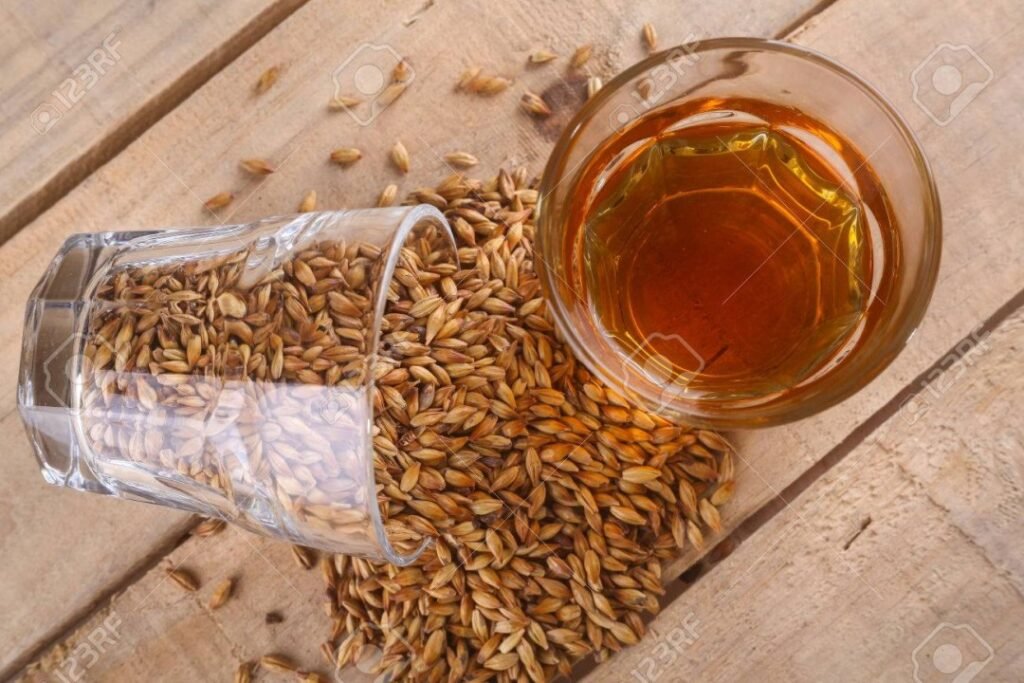
6. Barley: The Enzymatic Powerhouse

Barley is unique because it is often malted, meaning it is germinated before processing.

Why Malting Matters

During malting:

  • Enzymes are activated
  • Starch becomes more accessible
  • Flavor precursors develop

Impact on Spirits

Barley contributes:

  • Nutty, biscuity flavors
  • Depth and complexity
  • Structural backbone

It is especially important in traditional whisky production.


7. Rice: The Clean Canvas

Rice is widely used in Asian spirit traditions.

Characteristics

  • Very high starch purity
  • Low fat and protein
  • Neutral aromatic profile

Impact on Spirits

Rice produces:

  • Clean, delicate spirits
  • Subtle sweetness
  • Light texture

It allows fermentation to express purity rather than intensity.

8. Grain Blending: Building Complexity

Many spirits use multiple grains rather than one.

Blending allows producers to:

  • Balance sweetness and spice
  • Control texture
  • Increase complexity

Common combinations include:

  • Corn + rye → sweet with spice
  • Wheat + barley → smooth with structure
  • Multi-grain blends → layered profiles

Each grain contributes a different “voice” to the final spirit.


9. Fermentation: Where Grain Becomes Alcohol

Once grains are mashed into fermentable sugars, yeast is introduced.

During fermentation:

  • Sugars → ethanol (alcohol)
  • Byproducts → flavor compounds

Key byproducts include:

  • Esters (fruity aromas)
  • Higher alcohols (warming sensation)
  • Organic acids (complexity)

Fermentation is where raw material begins transforming into character.


10. Yeast Strains and Flavor Control

Yeast is not just a functional ingredient—it is a flavor architect.

Different strains can produce:

  • Fruity notes (apple, banana)
  • Floral aromas
  • Spicy undertones

Producers often select proprietary yeast strains to create signature profiles.


11. Temperature and Fermentation Speed

Fermentation conditions dramatically affect outcome.

Warm fermentation

  • Faster process
  • More esters
  • Stronger flavors

Cool fermentation

  • Slower process
  • Cleaner profile
  • More subtle aroma

Control over temperature is critical for consistency.


12. Wash Quality: The First Flavor Layer

The fermented liquid (“wash”) already contains flavor before distillation.

At this stage:

  • Grain identity is still present
  • Alcohol content is low
  • Aromatics are highly expressive

Distillation will refine, not erase, these characteristics.


13. Distillation’s Selective Nature

During distillation:

  • Some compounds are preserved
  • Others are removed
  • New balance is created

Light spirits remove more grain character. Heavy spirits preserve more of it.

This is why grain choice matters even after distillation.


14. Industrial vs Flavor-Driven Production

Modern grain spirits fall into two approaches:

Industrial focus

  • Efficiency
  • Neutrality
  • High yield

Craft focus

  • Flavor expression
  • Grain identity
  • Experimental fermentation

Both rely on the same science but pursue different goals.


15. Grain as Identity

Grain is not just raw material—it is identity.

It defines:

  • Texture
  • Aroma direction
  • Structural complexity

Even in highly refined spirits, grain leaves an invisible signature.


Conclusion: The Chemistry of Character

Grain spirits begin with biology, not branding. The transformation from starch to alcohol is a precise biochemical sequence that determines everything that follows.

Corn brings sweetness. Rye brings spice. Wheat brings softness. Barley brings structure. Rice brings purity.

Together, they form the vocabulary of global distillation.

Understanding grain selection and fermentation science reveals a simple truth: before any spirit becomes refined, aged, or branded, it is first a product of nature, chemistry, and careful human design.

Tags: grain spirits
ShareTweetShare

Related Posts

Grain Spirits Explained — The Foundation of Global Distillation
Grain Spirits

The Future of Grain Spirits — Technology, Sustainability, and the Next Era of Distillation

April 25, 2026
Grain Spirits Explained — The Foundation of Global Distillation
Grain Spirits

Grain Spirits Around the World — Vodka, Whisky Bases, and Industrial Applications

April 25, 2026
Grain Spirits Explained — The Foundation of Global Distillation
Grain Spirits

Distillation Systems — Pot Still vs Column Still, and the Balance Between Efficiency and Flavor

April 25, 2026
Grain Spirits Explained — The Foundation of Global Distillation
Grain Spirits

Grain Spirits Explained — The Foundation of Global Distillation

April 25, 2026
Grain Spirits and the Industrial Birth of Neutral Alcohol
Grain Spirits

The Future of Grain Spirits — AI Distillation, Sustainability, and the Post-Flavor Alcohol Industry

April 21, 2026
Grain Spirits and the Industrial Birth of Neutral Alcohol
Grain Spirits

Grain Spirits and Vodka Culture — Purity, Ritual, and the Social Psychology of Neutral Alcohol

April 21, 2026
Leave Comment
  • Trending
  • Comments
  • Latest
Role of Terroir in Champagne Production

Role of Terroir in Champagne Production

January 19, 2026
Champagne Can Be Aged in Wood?

Champagne Can Be Aged in Wood?

January 18, 2026
Is Organic Wine Healthier Than Conventional Wine?

Is Organic Wine Healthier Than Conventional Wine?

January 20, 2026
Why Do Some Champagnes Use a High Proportion of Pinot Meunier?

Why Do Some Champagnes Use a High Proportion of Pinot Meunier?

January 20, 2026
The Timeless Elegance of Wine: A Journey Through History and Culture

The Timeless Elegance of Wine: A Journey Through History and Culture

Why Is Château Lafite Rothschild the Pinnacle of Fine Wine?

Why Is Château Lafite Rothschild the Pinnacle of Fine Wine?

How Did Château Lafite Rothschild Become a Global Icon of Luxury?

How Did Château Lafite Rothschild Become a Global Icon of Luxury?

What Makes Chateau Lafite Rothschild the Pinnacle of Bordeaux Wines?

What Makes Chateau Lafite Rothschild the Pinnacle of Bordeaux Wines?

Grain Spirits Explained — The Foundation of Global Distillation

The Future of Grain Spirits — Technology, Sustainability, and the Next Era of Distillation

April 25, 2026
Grain Spirits Explained — The Foundation of Global Distillation

Grain Spirits Around the World — Vodka, Whisky Bases, and Industrial Applications

April 25, 2026
Grain Spirits Explained — The Foundation of Global Distillation

Distillation Systems — Pot Still vs Column Still, and the Balance Between Efficiency and Flavor

April 25, 2026
Grain Spirits Explained — The Foundation of Global Distillation

Grain Selection and Fermentation Science — How Raw Ingredients Shape Grain Spirits

April 25, 2026
SipsavorLife

Welcome to our comprehensive beverage guide, where you can explore the fascinating world of alcoholic drinks. From exquisite wines and rich whiskeys to refreshing beers and sparkling champagnes, we provide insights, tips, and recommendations for enthusiasts and casual drinkers alike. Discover your next favorite libation with us!

© 2025 sipsavorlife.com. contacts:sipsavorlife-35376@gmail.com

No Result
View All Result
  • Home
  • Wine
  • Whiskey
  • Beer
  • Grain Spirits
  • Champagne
  • ALL

© 2025 sipsavorlife.com. contacts:sipsavorlife-35376@gmail.com

Welcome Back!

Login to your account below

Forgotten Password?

Retrieve your password

Please enter your username or email address to reset your password.

Log In