








SipsavorLife
  • Home
  • Wine
    Red Wine — The Liquid Expression of Land, Time, and Human Intention

    The Future of Red Wine — Climate Change, Technology, and the Evolution of Taste

    Red Wine — The Liquid Expression of Land, Time, and Human Intention

    Red Wine and Human Culture — Rituals, Status, and the Psychology of Drinking

    Red Wine — The Liquid Expression of Land, Time, and Human Intention

    A Journey Through the World of Red Wine — Bordeaux, Tuscany, Napa, and Beyond

    Red Wine — The Liquid Expression of Land, Time, and Human Intention

    The Chemistry of Red Wine — Tannins, Acids, Phenolics, and Molecular Evolution

    Red Wine — The Liquid Expression of Land, Time, and Human Intention

    Red Wine — The Liquid Expression of Land, Time, and Human Intention

    Wine as Culture, Craft, and Time — Understanding the Soul of the World’s Most Enduring Drink

    The Changing Map of Wine — Global Industry, Emerging Regions, and the Future of a Timeless Craft

  • Whiskey
    Can Beer Be an Effective Ingredient in Culinary Cooking?

    Can Beer Be an Effective Ingredient in Culinary Cooking?

    Second Fermentation in Champagne: Is It Really That Crucial?

    Second Fermentation in Champagne: Is It Really That Crucial?

    How Do Different Grains Impact the Flavor Profile of Distilled Spirits?

    How Do Different Grains Impact the Flavor Profile of Distilled Spirits?

    How Do Whiskey Master Blenders Create Perfection?

    How Do Whiskey Master Blenders Create Perfection?

    Wine Pairings: Can They Change the Flavor Profile of a Dish?

    Wine Pairings: Can They Change the Flavor Profile of a Dish?

    Beer the Ultimate Beverage for Pairing with Spicy Food?

    Beer the Ultimate Beverage for Pairing with Spicy Food?

  • Beer
    The Evolution of Beer — From Ancient Brews to the Craft Revolution

    The Future of Beer — Innovation, Sustainability, and Emerging Trends

    The Evolution of Beer — From Ancient Brews to the Craft Revolution

    Global Beer Styles — A Journey Across Continents

    The Evolution of Beer — From Ancient Brews to the Craft Revolution

    The Science of Brewing — Ingredients, Fermentation, and Flavor

    The Evolution of Beer — From Ancient Brews to the Craft Revolution

    Inside the Craft Beer Movement — Culture, Creativity, and Community

    The Evolution of Beer — From Ancient Brews to the Craft Revolution

    The Evolution of Beer — From Ancient Brews to the Craft Revolution

    Beer and the Human Story — A Journey Through Time, Taste, and Civilization

    Inside the Modern Beer Industry — Craft, Corporations, and the Battle for the Future

  • Grain Spirits
    Grain Spirits Explained — The Foundation of Global Distillation

    The Future of Grain Spirits — Technology, Sustainability, and the Next Era of Distillation

    Grain Spirits Explained — The Foundation of Global Distillation

    Grain Spirits Around the World — Vodka, Whisky Bases, and Industrial Applications

    Grain Spirits Explained — The Foundation of Global Distillation

    Distillation Systems — Pot Still vs Column Still, and the Balance Between Efficiency and Flavor

    Grain Spirits Explained — The Foundation of Global Distillation

    Grain Selection and Fermentation Science — How Raw Ingredients Shape Grain Spirits

    Grain Spirits Explained — The Foundation of Global Distillation

    Grain Spirits Explained — The Foundation of Global Distillation

    Grain Spirits and the Industrial Birth of Neutral Alcohol

    The Future of Grain Spirits — AI Distillation, Sustainability, and the Post-Flavor Alcohol Industry

  • Champagne
    The History of Champagne — From Accidental Sparkle to Global Luxury

    The Future of Champagne — Climate Change, Innovation, and Industry Evolution

    The History of Champagne — From Accidental Sparkle to Global Luxury

    The Culture of Champagne — Luxury, Celebration, and Global Influence

    The History of Champagne — From Accidental Sparkle to Global Luxury

    Champagne Styles Explained — Brut, Rosé, Vintage, and Beyond

    The History of Champagne — From Accidental Sparkle to Global Luxury

    The Craft of Champagne — Terroir, Grapes, and the Méthode Traditionnelle

    The History of Champagne — From Accidental Sparkle to Global Luxury

    The History of Champagne — From Accidental Sparkle to Global Luxury

    The Future of Champagne — Climate Change, Innovation, and the Evolution of Sparkling Wine

    The Future of Champagne — Climate Change, Innovation, and the Evolution of Sparkling Wine

  • ALL
    Can Beer Be an Effective Ingredient in Culinary Cooking?

    Can Beer Be an Effective Ingredient in Culinary Cooking?

    Second Fermentation in Champagne: Is It Really That Crucial?

    Second Fermentation in Champagne: Is It Really That Crucial?

    How Do Different Grains Impact the Flavor Profile of Distilled Spirits?

    How Do Different Grains Impact the Flavor Profile of Distilled Spirits?

    How Do Whiskey Master Blenders Create Perfection?

    How Do Whiskey Master Blenders Create Perfection?

    Wine Pairings: Can They Change the Flavor Profile of a Dish?

    Wine Pairings: Can They Change the Flavor Profile of a Dish?

    Beer the Ultimate Beverage for Pairing with Spicy Food?

    Beer the Ultimate Beverage for Pairing with Spicy Food?

SipsavorLife
  • Home
  • Wine
    Red Wine — The Liquid Expression of Land, Time, and Human Intention

    The Future of Red Wine — Climate Change, Technology, and the Evolution of Taste

    Red Wine — The Liquid Expression of Land, Time, and Human Intention

    Red Wine and Human Culture — Rituals, Status, and the Psychology of Drinking

    Red Wine — The Liquid Expression of Land, Time, and Human Intention

    A Journey Through the World of Red Wine — Bordeaux, Tuscany, Napa, and Beyond

    Red Wine — The Liquid Expression of Land, Time, and Human Intention

    The Chemistry of Red Wine — Tannins, Acids, Phenolics, and Molecular Evolution

    Red Wine — The Liquid Expression of Land, Time, and Human Intention

    Red Wine — The Liquid Expression of Land, Time, and Human Intention

    Wine as Culture, Craft, and Time — Understanding the Soul of the World’s Most Enduring Drink

    The Changing Map of Wine — Global Industry, Emerging Regions, and the Future of a Timeless Craft

  • Whiskey
    Can Beer Be an Effective Ingredient in Culinary Cooking?

    Can Beer Be an Effective Ingredient in Culinary Cooking?

    Second Fermentation in Champagne: Is It Really That Crucial?

    Second Fermentation in Champagne: Is It Really That Crucial?

    How Do Different Grains Impact the Flavor Profile of Distilled Spirits?

    How Do Different Grains Impact the Flavor Profile of Distilled Spirits?

    How Do Whiskey Master Blenders Create Perfection?

    How Do Whiskey Master Blenders Create Perfection?

    Wine Pairings: Can They Change the Flavor Profile of a Dish?

    Wine Pairings: Can They Change the Flavor Profile of a Dish?

    Beer the Ultimate Beverage for Pairing with Spicy Food?

    Beer the Ultimate Beverage for Pairing with Spicy Food?

  • Beer
    The Evolution of Beer — From Ancient Brews to the Craft Revolution

    The Future of Beer — Innovation, Sustainability, and Emerging Trends

    The Evolution of Beer — From Ancient Brews to the Craft Revolution

    Global Beer Styles — A Journey Across Continents

    The Evolution of Beer — From Ancient Brews to the Craft Revolution

    The Science of Brewing — Ingredients, Fermentation, and Flavor

    The Evolution of Beer — From Ancient Brews to the Craft Revolution

    Inside the Craft Beer Movement — Culture, Creativity, and Community

    The Evolution of Beer — From Ancient Brews to the Craft Revolution

    The Evolution of Beer — From Ancient Brews to the Craft Revolution

    Beer and the Human Story — A Journey Through Time, Taste, and Civilization

    Inside the Modern Beer Industry — Craft, Corporations, and the Battle for the Future

  • Grain Spirits
    Grain Spirits Explained — The Foundation of Global Distillation

    The Future of Grain Spirits — Technology, Sustainability, and the Next Era of Distillation

    Grain Spirits Explained — The Foundation of Global Distillation

    Grain Spirits Around the World — Vodka, Whisky Bases, and Industrial Applications

    Grain Spirits Explained — The Foundation of Global Distillation

    Distillation Systems — Pot Still vs Column Still, and the Balance Between Efficiency and Flavor

    Grain Spirits Explained — The Foundation of Global Distillation

    Grain Selection and Fermentation Science — How Raw Ingredients Shape Grain Spirits

    Grain Spirits Explained — The Foundation of Global Distillation

    Grain Spirits Explained — The Foundation of Global Distillation

    Grain Spirits and the Industrial Birth of Neutral Alcohol

    The Future of Grain Spirits — AI Distillation, Sustainability, and the Post-Flavor Alcohol Industry

  • Champagne
    The History of Champagne — From Accidental Sparkle to Global Luxury

    The Future of Champagne — Climate Change, Innovation, and Industry Evolution

    The History of Champagne — From Accidental Sparkle to Global Luxury

    The Culture of Champagne — Luxury, Celebration, and Global Influence

    The History of Champagne — From Accidental Sparkle to Global Luxury

    Champagne Styles Explained — Brut, Rosé, Vintage, and Beyond

    The History of Champagne — From Accidental Sparkle to Global Luxury

    The Craft of Champagne — Terroir, Grapes, and the Méthode Traditionnelle

    The History of Champagne — From Accidental Sparkle to Global Luxury

    The History of Champagne — From Accidental Sparkle to Global Luxury

    The Future of Champagne — Climate Change, Innovation, and the Evolution of Sparkling Wine

    The Future of Champagne — Climate Change, Innovation, and the Evolution of Sparkling Wine

  • ALL
    Can Beer Be an Effective Ingredient in Culinary Cooking?

    Can Beer Be an Effective Ingredient in Culinary Cooking?

    Second Fermentation in Champagne: Is It Really That Crucial?

    Second Fermentation in Champagne: Is It Really That Crucial?

    How Do Different Grains Impact the Flavor Profile of Distilled Spirits?

    How Do Different Grains Impact the Flavor Profile of Distilled Spirits?

    How Do Whiskey Master Blenders Create Perfection?

    How Do Whiskey Master Blenders Create Perfection?

    Wine Pairings: Can They Change the Flavor Profile of a Dish?

    Wine Pairings: Can They Change the Flavor Profile of a Dish?

    Beer the Ultimate Beverage for Pairing with Spicy Food?

    Beer the Ultimate Beverage for Pairing with Spicy Food?

SipsavorLife
No Result
View All Result
Home Grain Spirits

Distillation Systems — Pot Still vs Column Still, and the Balance Between Efficiency and Flavor

April 25, 2026
in Grain Spirits
Grain Spirits Explained — The Foundation of Global Distillation

If fermentation is where grain becomes alcohol, then distillation is where alcohol becomes identity. In the world of grain spirits, distillation is the decisive stage that determines whether a spirit will be bold or neutral, complex or clean, traditional or industrial.

At the center of this process are two fundamental systems: the pot still and the column still. Each represents a different philosophy of production—one prioritizing character and craftsmanship, the other efficiency and scale.

Understanding these systems is essential to understanding why spirits such as whisky, vodka, and grain neutral spirit can originate from similar raw materials yet taste entirely different.


1. What Distillation Actually Does

Distillation is based on a simple physical principle: alcohol evaporates at a lower temperature than water.

By heating a fermented liquid, producers can:

  • Separate alcohol from water
  • Concentrate ethanol
  • Control flavor retention

However, distillation does not only separate alcohol—it also selectively carries over aromatic compounds that define a spirit’s personality.


2. The Two Philosophies of Distillation

There are two main approaches:

  • Pot Still Distillation → flavor retention, complexity, tradition
  • Column Still Distillation → efficiency, purity, scale

These systems are not just tools—they represent two different ways of thinking about spirits.


3. Pot Still Distillation: The Traditional Craft

The pot still is one of the oldest distillation technologies still in use.

It is typically made of copper and operates in batches.


How It Works

  1. Fermented liquid is loaded into the still
  2. The still is heated
  3. Alcohol vapor rises
  4. Vapors condense and are collected

This process is usually repeated twice or more.


Why Copper Matters

Copper plays a crucial chemical role:

  • Removes sulfur compounds
  • Improves aroma clarity
  • Enhances smoothness

Without copper, spirits would often taste harsher and more sulfuric.


Flavor Characteristics

Pot still distillation produces:

  • Rich, full-bodied spirits
  • Strong grain character
  • Complex aromatic profiles

This method is essential in traditional whisky production, especially in regions like Scotland.


4. The Role of Cuts: Heads, Hearts, and Tails

Pot still distillation is highly selective.

Distillers divide output into three parts:

  • Heads → volatile, often undesirable compounds
  • Hearts → desired spirit
  • Tails → heavier, oilier compounds

Only the “hearts” are used for aging or bottling.

This selection process is where craftsmanship plays a major role.


5. Column Still Distillation: Industrial Precision

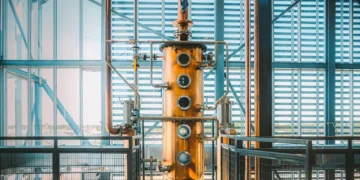
The column still (also called continuous still) revolutionized spirit production.

Unlike pot stills, it operates continuously rather than in batches.


How It Works

Inside a tall column:

  • Liquid flows downward
  • Steam rises upward
  • Alcohol is separated at different levels

This creates multiple distillation stages in one system.


Key Advantage: Efficiency

Column stills allow:

  • Continuous production
  • High output volume
  • Lower energy consumption per unit

They are essential for large-scale production of neutral spirits.

6. Neutral Grain Spirit Production

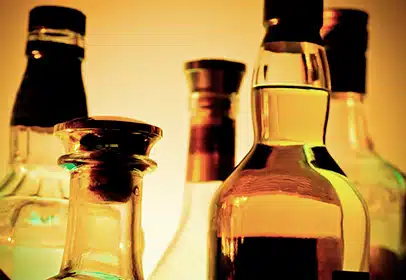
One of the primary uses of column stills is producing neutral grain spirit (NGS).

This spirit is:

  • Extremely high in purity
  • Almost flavorless
  • High in alcohol concentration

It serves as the base for:

  • Vodka
  • Gin
  • Liqueurs
  • Flavored spirits

In this case, the goal is not flavor creation—but flavor neutrality.


7. Flavor vs Purity: The Central Trade-Off

Distillation always involves a trade-off:

  • More distillation → higher purity, less flavor
  • Less distillation → lower purity, more character

Pot stills sit on the flavor side of this spectrum.
Column stills sit on the purity side.


8. Multiple Columns and Rectification

Modern column stills often contain multiple sections:

  • Stripping section
  • Rectifying section
  • Condensation zones

Each section refines the spirit further.

The more stages involved, the more neutral the final product becomes.


9. Distillation Proof and Control

Another key factor is distillation strength (proof).

Higher proof distillation:

  • Removes more impurities
  • Produces cleaner spirit
  • Reduces aromatic intensity

Lower proof distillation:

  • Retains more congeners
  • Preserves flavor complexity
  • Creates heavier texture

Producers adjust proof depending on desired outcome.


10. Hybrid Systems: Combining Both Worlds

Many modern distilleries use both systems.

For example:

  • Pot still for flavor-rich spirits
  • Column still for blending components

This allows:

  • Flexibility
  • Consistency
  • Layered flavor design

Hybrid approaches are now common in global production.


11. Energy and Sustainability Considerations

Distillation is energy-intensive.

Column stills are generally:

  • More energy efficient
  • Better for large-scale sustainability

Pot stills:

  • Require more heat per batch
  • But offer greater artisanal control

Sustainability discussions are increasingly influencing equipment choices.


12. Distillation and Regional Identity

Different regions favor different systems:

  • Scotland → pot still dominance (flavor tradition)
  • United States → column still dominance (bourbon + large-scale whiskey)
  • Vodka-producing regions → column still neutrality focus

This creates clear stylistic separation in global spirits.


13. Rectification and Neutrality Limits

Even “neutral” spirits are not completely flavorless.

Small traces remain:

  • Grain origin
  • Fermentation byproducts
  • Water composition

True neutrality is an ideal, not an absolute reality.


14. Innovation in Distillation Technology

Modern distilleries are experimenting with:

  • Vacuum distillation (lower temperatures)
  • Energy recovery systems
  • Precision temperature control
  • Modular still design

These innovations aim to improve efficiency while preserving flexibility.


15. The Philosophy of Distillation

Distillation is not just engineering—it is decision-making.

Every distiller must decide:

  • How much flavor to preserve
  • How much purity to extract
  • What identity the spirit should have

These decisions define the final product more than any single ingredient.


Conclusion: Where Science Becomes Style

Distillation is the moment where grain spirit becomes intentional. It is the bridge between raw fermentation and finished identity.

Pot stills preserve personality. Column stills refine neutrality. Between them lies an entire spectrum of possibilities.

Together, they define the modern spirits world—one built on both tradition and industrial precision.

In every bottle of grain spirit, there is a silent choice embedded within it: how far to push purification, and how much character to preserve.

That choice is distillation.
Tags: grain spirits
ShareTweetShare

Related Posts

Grain Spirits Explained — The Foundation of Global Distillation
Grain Spirits

The Future of Grain Spirits — Technology, Sustainability, and the Next Era of Distillation

April 25, 2026
Grain Spirits Explained — The Foundation of Global Distillation
Grain Spirits

Grain Spirits Around the World — Vodka, Whisky Bases, and Industrial Applications

April 25, 2026
Grain Spirits Explained — The Foundation of Global Distillation
Grain Spirits

Grain Selection and Fermentation Science — How Raw Ingredients Shape Grain Spirits

April 25, 2026
Grain Spirits Explained — The Foundation of Global Distillation
Grain Spirits

Grain Spirits Explained — The Foundation of Global Distillation

April 25, 2026
Grain Spirits and the Industrial Birth of Neutral Alcohol
Grain Spirits

The Future of Grain Spirits — AI Distillation, Sustainability, and the Post-Flavor Alcohol Industry

April 21, 2026
Grain Spirits and the Industrial Birth of Neutral Alcohol
Grain Spirits

Grain Spirits and Vodka Culture — Purity, Ritual, and the Social Psychology of Neutral Alcohol

April 21, 2026
Leave Comment
  • Trending
  • Comments
  • Latest
Role of Terroir in Champagne Production

Role of Terroir in Champagne Production

January 19, 2026
Champagne Can Be Aged in Wood?

Champagne Can Be Aged in Wood?

January 18, 2026
Is Organic Wine Healthier Than Conventional Wine?

Is Organic Wine Healthier Than Conventional Wine?

January 20, 2026
Why Do Some Champagnes Use a High Proportion of Pinot Meunier?

Why Do Some Champagnes Use a High Proportion of Pinot Meunier?

January 20, 2026
The Timeless Elegance of Wine: A Journey Through History and Culture

The Timeless Elegance of Wine: A Journey Through History and Culture

Why Is Château Lafite Rothschild the Pinnacle of Fine Wine?

Why Is Château Lafite Rothschild the Pinnacle of Fine Wine?

How Did Château Lafite Rothschild Become a Global Icon of Luxury?

How Did Château Lafite Rothschild Become a Global Icon of Luxury?

What Makes Chateau Lafite Rothschild the Pinnacle of Bordeaux Wines?

What Makes Chateau Lafite Rothschild the Pinnacle of Bordeaux Wines?

Grain Spirits Explained — The Foundation of Global Distillation

The Future of Grain Spirits — Technology, Sustainability, and the Next Era of Distillation

April 25, 2026
Grain Spirits Explained — The Foundation of Global Distillation

Grain Spirits Around the World — Vodka, Whisky Bases, and Industrial Applications

April 25, 2026
Grain Spirits Explained — The Foundation of Global Distillation

Distillation Systems — Pot Still vs Column Still, and the Balance Between Efficiency and Flavor

April 25, 2026
Grain Spirits Explained — The Foundation of Global Distillation

Grain Selection and Fermentation Science — How Raw Ingredients Shape Grain Spirits

April 25, 2026
SipsavorLife

Welcome to our comprehensive beverage guide, where you can explore the fascinating world of alcoholic drinks. From exquisite wines and rich whiskeys to refreshing beers and sparkling champagnes, we provide insights, tips, and recommendations for enthusiasts and casual drinkers alike. Discover your next favorite libation with us!

© 2025 sipsavorlife.com. contacts:sipsavorlife-35376@gmail.com

No Result
View All Result
  • Home
  • Wine
  • Whiskey
  • Beer
  • Grain Spirits
  • Champagne
  • ALL

© 2025 sipsavorlife.com. contacts:sipsavorlife-35376@gmail.com

Welcome Back!

Login to your account below

Forgotten Password?

Retrieve your password

Please enter your username or email address to reset your password.

Log In