




























Introduction
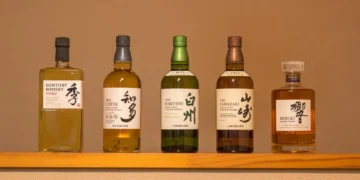
For much of the twentieth century, whisky enthusiasts around the world focused primarily on Scotland, Ireland, and the United States. Japanese whisky existed quietly in the background, respected domestically but rarely considered a serious competitor on the international stage. Yet within a few decades, Japanese distilleries transformed from imitators into global leaders. Today, Japanese whisky is celebrated for elegance, precision, balance, and craftsmanship, earning prestigious awards and commanding extraordinary prices.
The rise of Japanese whisky is one of the most remarkable stories in the modern spirits industry. It is a story shaped by cultural adaptation, meticulous attention to detail, scientific discipline, and artistic philosophy. Unlike industries built on centuries of uninterrupted tradition, Japanese whisky emerged through deliberate study and reinterpretation. Japanese distillers looked outward, learned from Scottish methods, and then refined those methods according to Japanese aesthetics and values.
At the heart of Japanese whisky lies the concept of harmony. While some whisky traditions emphasize boldness, smoke, or intensity, Japanese producers often pursue subtle complexity and balance. This philosophy reflects broader elements of Japanese culture visible in architecture, cuisine, tea ceremonies, gardening, and craftsmanship.
The global popularity of Japanese whisky also reflects changing consumer tastes. Modern drinkers increasingly seek authenticity, narrative, and artisanal quality. Japanese whisky offers all three while presenting a flavor profile that appeals to both beginners and experienced enthusiasts.
This article explores the origins, development, production philosophy, cultural significance, challenges, and future of Japanese whisky. Through this journey, it becomes clear that Japanese whisky represents more than a successful export product—it symbolizes the fusion of tradition, innovation, and national identity.
The Origins of Japanese Whisky
Japanese whisky began not with Japan itself, but with Scotland.
During the late nineteenth and early twentieth centuries, Japan underwent rapid modernization during the Meiji Restoration. The country actively studied Western industries, sciences, and technologies in order to strengthen its economy and international standing.
Among the many imported cultural influences was whisky.
Initially, imported Scotch whisky was consumed primarily by wealthy elites and foreign diplomats. However, a small number of Japanese entrepreneurs recognized the potential for domestic production.
The most important figure in Japanese whisky history is Masataka Taketsuru.
Born into a family involved in sake production, Taketsuru possessed both scientific curiosity and deep understanding of fermentation traditions. In 1918, he traveled to Scotland to study organic chemistry and whisky-making techniques.
While in Scotland, Taketsuru apprenticed at several distilleries and meticulously documented every aspect of production:
- Malting
- Fermentation
- Distillation
- Barrel aging
- Blending
- Warehouse management
He also married a Scottish woman named Rita Cowan, whose support later became central to the mythology surrounding Japanese whisky.
Upon returning to Japan, Taketsuru collaborated with entrepreneur Shinjiro Torii, founder of Kotobukiya, which later became Suntory.
Together, they established Japan’s first commercial whisky distillery: Yamazaki, founded in 1923 near Kyoto.
The location was chosen carefully due to its high-quality water, humid climate, and seasonal variation—all important factors in whisky maturation.
Japanese whisky production had officially begun.
Early Challenges and Domestic Development
Creating whisky in Japan presented enormous challenges.
Early Japanese consumers were unfamiliar with whisky’s flavor profile, particularly smoky Scotch-style expressions. Sake and shochu dominated the domestic alcohol market.
Moreover, whisky production required long-term investment. Distilleries had to wait years before their spirits matured sufficiently for sale.
The first Japanese whiskies were often heavily influenced by Scotch traditions, but producers gradually adapted styles to suit Japanese palates.
Shinjiro Torii believed Japanese consumers preferred softer and more delicate flavors than typical Scotch drinkers. This insight shaped the development of Japanese whisky identity.
During the mid-twentieth century, Japanese whisky slowly gained domestic popularity. Suntory expanded production, and Taketsuru eventually founded his own company, Nikka, in 1934.
Taketsuru selected Yoichi in Hokkaido for Nikka’s first distillery because its climate resembled Scotland’s cool maritime conditions.
The rivalry between Suntory and Nikka became one of the defining forces in Japanese whisky development.
Unlike Scotland, where distilleries frequently exchange whisky for blending purposes, Japanese companies traditionally operated more independently. As a result, each major producer developed a wide internal range of spirit styles to support blending flexibility.
This encouraged remarkable technical experimentation.
Japanese Philosophy and the Pursuit of Perfection
One of the defining characteristics of Japanese whisky is obsessive attention to detail.
Japanese craftsmanship often revolves around the concept of shokunin, referring to mastery achieved through lifelong dedication.
This philosophy deeply influences whisky production.
Every stage of the process receives extraordinary scrutiny:
- Water purity
- Fermentation timing
- Yeast selection
- Barrel management
- Temperature control
- Distillation cuts
- Blending precision
Rather than focusing solely on scale or efficiency, many Japanese distilleries prioritize consistency and refinement.
Blending occupies an especially respected role.
In some whisky traditions, single malts are viewed as superior to blends. In Japan, however, master blenders are often regarded as artists.
A high-quality Japanese blend seeks harmony among components rather than dominance by any single flavor.
This emphasis on balance mirrors principles found throughout Japanese culture, including cuisine and aesthetics.
For example, Japanese meals often balance sweetness, bitterness, acidity, texture, aroma, and visual presentation simultaneously.
Similarly, Japanese whisky frequently combines:
- Floral aromas
- Gentle fruit notes
- Soft smoke
- Subtle oak
- Silky mouthfeel
The result is elegance rather than aggression.
Distinctive Production Techniques
Although inspired by Scotch whisky, Japanese producers developed unique approaches.
Water Quality
Water plays a central role in Japanese whisky production.
Japan’s mountainous geography provides exceptionally pure water sources. Distilleries carefully select locations based on mineral composition and water softness.
The Yamazaki region, for instance, has long been famous for premium tea ceremony water.
Soft water often contributes to delicate and refined spirit profiles.
Fermentation
Japanese distilleries frequently use long fermentation periods to encourage complex fruity esters.
Wooden washbacks are sometimes employed to promote microbial interaction and flavor development.
Variety of Stills
Japanese producers often maintain unusually diverse still shapes and sizes within a single distillery.
Different still configurations create different spirit characters:
- Tall stills produce lighter spirits.
- Short stills generate heavier flavors.
- Upward lyne arms create elegance.
- Downward angles encourage richness.
Because Japanese companies traditionally exchanged little whisky with competitors, they needed internal diversity for blending.
Mizunara Oak
Perhaps the most famous Japanese innovation involves Mizunara oak barrels.
Mizunara is a rare Japanese oak species known for producing distinctive aromas:
- Sandalwood
- Incense
- Coconut
- Oriental spice
However, Mizunara presents enormous challenges:
- Trees grow slowly.
- Wood is porous.
- Barrels leak easily.
- Long aging periods are required.
Despite these difficulties, Mizunara maturation became highly prized because of its unique aromatic profile.
Today, Mizunara-aged whisky is considered one of the luxury categories within the global whisky market.
The International Breakthrough
For decades, Japanese whisky remained relatively obscure outside Japan.
That changed dramatically during the early twenty-first century.
A major turning point occurred when Japanese whiskies began winning international awards.
In 2001, Nikka’s Yoichi single malt received significant praise from critics.
Then, in 2003, the film Lost in Translation featured Suntory whisky prominently, introducing many global audiences to Japanese whisky culture.
The most transformative moment came when whisky critic Jim Murray named Yamazaki Single Malt Sherry Cask 2013 the “World Whisky of the Year” in his influential Whisky Bible.
This recognition shocked many traditional whisky enthusiasts.
Suddenly, Japanese whisky shifted from niche curiosity to international sensation.
Demand exploded.
Collectors rushed to purchase bottles. Prices soared. Distilleries struggled to meet global demand because whisky requires years of maturation.
Many producers underestimated future demand and lacked sufficient aged inventory.
As a result, age-statement bottlings became increasingly scarce.
Some bottles that originally sold for under one hundred dollars later reached thousands on the secondary market.
Japanese whisky had officially entered the luxury spirits world.

Major Japanese Whisky Producers
Suntory
Suntory remains the largest and most internationally recognized Japanese whisky company.
Its major distilleries include:
- Yamazaki
- Hakushu
- Chita
Yamazaki produces rich and complex whiskies, while Hakushu specializes in fresher and lightly smoky expressions.
Suntory’s Hibiki blends became globally celebrated for elegance and balance.
The company’s marketing strongly emphasizes Japanese craftsmanship, nature, and harmony.
Nikka
Founded by Masataka Taketsuru, Nikka maintains strong connections to traditional Scotch-inspired production.
Its Yoichi distillery produces robust and slightly peated whiskies, while Miyagikyo creates softer and fruitier styles.
Nikka gained international admiration for authenticity and depth.
Chichibu
Founded by Ichiro Akuto in 2008, Chichibu represents the new generation of Japanese craft whisky.
Despite its relatively small size, Chichibu quickly earned worldwide respect.
Its success demonstrates how Japanese whisky culture continues evolving beyond the dominant legacy companies.
Mars Whisky
Mars has also attracted attention for high-altitude maturation and elegant flavor profiles.
Smaller Japanese distilleries increasingly contribute diversity and innovation to the industry.
Japanese Whisky and Global Cocktail Culture
Japanese whisky significantly influenced modern cocktail culture.
One of the most important contributions is the Japanese highball.
The highball combines whisky, sparkling water, and ice in a simple yet carefully prepared drink.
Although deceptively straightforward, Japanese bartenders treat highball preparation with extraordinary precision.
Key elements include:
- Perfect ice clarity
- Controlled carbonation
- Correct stirring technique
- Temperature management
- Proper glassware
The highball became especially popular because it pairs well with food and suits modern urban lifestyles.
Unlike heavy cocktails, highballs feel refreshing and versatile.
Japanese bartending culture more broadly emphasizes discipline, hospitality, and craftsmanship.
Tokyo bars gained international fame for quiet atmospheres and meticulous service.
These establishments helped elevate whisky appreciation worldwide.
Scarcity, Authenticity, and Industry Challenges
The rapid rise of Japanese whisky created serious challenges.
Supply Shortages
Because whisky requires years of aging, producers could not quickly increase inventory.
Many age-statement whiskies disappeared from shelves.
Limited supply drove dramatic price inflation.
Fake Japanese Whisky
The popularity of Japanese whisky also exposed regulatory weaknesses.
For years, some products labeled “Japanese whisky” contained imported whisky from Scotland or Canada blended and bottled in Japan.
Consumers often assumed these products were fully distilled and aged domestically.
As global demand increased, criticism regarding labeling transparency intensified.
In response, industry organizations introduced stricter standards defining authentic Japanese whisky.
These regulations aim to protect consumer trust and preserve the category’s reputation.
Balancing Growth and Quality
Japanese producers face pressure to expand production without compromising craftsmanship.
Maintaining quality while increasing scale remains a delicate challenge.
Cultural Significance of Japanese Whisky
Japanese whisky represents more than an alcoholic beverage.
It symbolizes Japan’s ability to absorb foreign influences and transform them into uniquely Japanese cultural expressions.
This process appears repeatedly throughout Japanese history:
- Buddhism adapted from China
- Western architecture reinterpreted in Japanese design
- European culinary techniques refined into Japanese cuisine
- Scotch whisky transformed into Japanese whisky
The result is not imitation, but reinterpretation.
Japanese whisky also reflects national values including patience, discipline, precision, and respect for craftsmanship.
The aesthetics surrounding Japanese whisky further reinforce this identity.
Bottle design, label typography, packaging, and advertising often emphasize simplicity and elegance.
Nature imagery frequently appears in branding, highlighting forests, mountains, rivers, and seasonal transitions.
This connection to nature reflects broader Japanese artistic traditions.
The Role of Tourism and Whisky Pilgrimage
Whisky tourism has become increasingly important in Japan.
Enthusiasts travel internationally to visit iconic distilleries.
Yamazaki’s visitor center attracts whisky lovers from around the world.
Tours often emphasize:
- Production education
- Tasting experiences
- Historical exhibits
- Sensory appreciation
- Hospitality culture
Distillery architecture also contributes to the experience.
Many facilities blend industrial function with aesthetic beauty.
Whisky pilgrimage resembles wine tourism in regions such as Bordeaux or Napa Valley.
Visitors seek not only beverages, but immersive cultural experiences.
Innovation and the Future of Japanese Whisky
Japanese whisky continues evolving.
New distilleries are emerging across the country, experimenting with:
- Local barley varieties
- Alternative cask types
- Peated expressions
- Organic production
- Climate adaptation
Some producers explore sustainability initiatives involving renewable energy and water conservation.
Climate change may significantly affect whisky production worldwide, making environmental management increasingly important.
Technological innovation also plays a role.
Advanced climate monitoring, fermentation analysis, and warehouse management systems help producers refine consistency.
At the same time, many distilleries remain committed to traditional craftsmanship.
This balance between technology and heritage defines the future of Japanese whisky.
International competition will likely intensify as other countries develop premium whisky industries.
Nevertheless, Japanese whisky retains strong cultural identity and global prestige.
Conclusion
The rise of Japanese whisky represents one of the most extraordinary transformations in the modern spirits industry.
Beginning as an imported tradition studied by ambitious pioneers, Japanese whisky evolved into a globally respected category defined by elegance, precision, and harmony.
Figures such as Masataka Taketsuru and Shinjiro Torii laid foundations that future generations expanded into an international phenomenon.
Japanese distillers demonstrated that mastery does not require centuries of uninterrupted history. Through discipline, innovation, and relentless attention to detail, they created whiskies capable of rivaling the world’s best.
Today, Japanese whisky occupies a unique position within global culture.
It appeals simultaneously to collectors, casual drinkers, bartenders, and connoisseurs. It embodies craftsmanship while remaining accessible through approachable flavor profiles.
The industry’s future will involve challenges including supply management, authenticity standards, and environmental sustainability. Yet Japanese whisky’s core strengths—quality, artistry, and cultural identity—remain powerful.
Ultimately, Japanese whisky tells a broader story about creativity itself.
It shows how traditions can travel across borders, evolve through cultural exchange, and emerge transformed into something entirely new.
In every carefully crafted glass of Japanese whisky lies a dialogue between Scotland and Japan, between history and modernity, between discipline and artistry.
That dialogue continues to captivate the world.