






























Prologue: A Pop That Echoes Through History
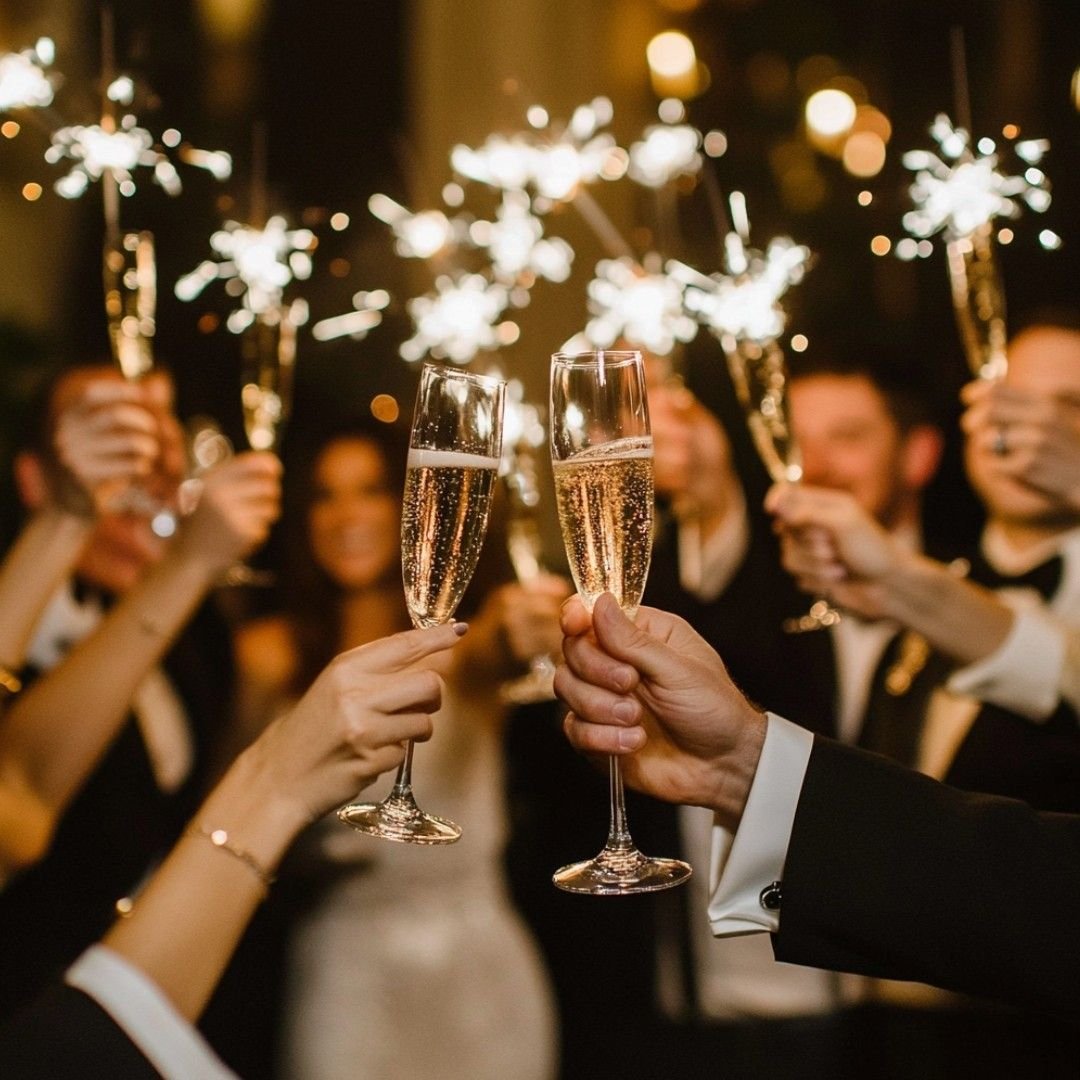
There are few sounds in the world as instantly recognizable—or as universally symbolic—as the sharp, celebratory pop of a Champagne cork. It signals joy, achievement, and transition. Whether it marks a wedding, a championship victory, a New Year’s countdown, or a milestone success, Champagne is rarely opened casually. It is reserved for moments that matter.
But this association between Champagne and celebration is not accidental. It is the result of centuries of history, cultural evolution, strategic branding, and psychological conditioning. Champagne is not just a drink—it is an idea. It represents luxury, power, exclusivity, and the human desire to mark life’s most meaningful moments with something extraordinary.
This article explores how Champagne rose from an unpredictable regional wine to a global symbol of celebration and status—and why, even today, it continues to hold that position.
Part I — The Accidental Birth of Champagne
1. A Flaw That Became a Feature
The story of Champagne begins in northeastern France, in the region now famously known as Champagne. In the early days, winemakers there struggled with a problem: their wines would sometimes undergo a second fermentation inside the bottle, creating bubbles.
At the time, this was considered a flaw.
Cold winters would halt fermentation prematurely. When temperatures rose again in spring, fermentation resumed inside sealed bottles, producing carbon dioxide and pressure. Bottles would explode, corks would fly out, and wine would foam uncontrollably.
For early producers, this instability was dangerous and undesirable. Sparkling wine was seen as inferior to still wine.
And yet, what was once a defect would soon become the defining feature of one of the most prestigious beverages in the world.
2. From Chaos to Control
Over time, winemakers began to understand and control the secondary fermentation process. Improvements in glassmaking allowed bottles to withstand higher pressure. Better corking techniques helped preserve carbonation.
Gradually, what had been unpredictable became intentional.
The bubbles—once feared—became desirable.
They added texture, liveliness, and a sense of excitement. Drinking sparkling wine was not just about taste; it was about sensation.
Champagne was beginning to differentiate itself.
Part II — Royal Endorsement and the Rise of Prestige
1. The French Court and Aristocratic Adoption
Champagne’s transformation into a luxury symbol was driven largely by its association with royalty and the aristocracy.
French kings were crowned in the Champagne region, and the wine produced there naturally became linked to royal ceremonies. Over time, it became fashionable among the elite in Paris and beyond.
Aristocrats embraced Champagne not just for its taste, but for its novelty and spectacle.
- The bubbles were seen as elegant and lively
- The rarity made it exclusive
- The experience of opening a bottle felt theatrical
Champagne became a drink of status.
2. Luxury as Strategy
Producers quickly realized that Champagne’s value was not just in its production—but in its perception.
They began to market it deliberately as a premium product:
- Associating it with wealth and celebration
- Designing elegant bottles and labels
- Positioning it as a drink for special occasions
Unlike other wines, Champagne was never meant to be everyday. Its power lay in its rarity and symbolism.
Part III — Champagne as a Ritual of Celebration
1. Why Do We Celebrate with Champagne?
Champagne is not just consumed—it is performed.
Opening a bottle involves:
- The anticipation of pressure
- The sound of the cork
- The visual of rising bubbles
- The act of pouring into elegant glasses
This multi-sensory experience transforms drinking into a ritual.
Psychologically, rituals help mark transitions:
- From past to future
- From effort to reward
- From ordinary to extraordinary
Champagne became the perfect medium for these moments.
2. The Symbolism of the “Pop”
The sound of a Champagne cork popping carries meaning:
- It announces celebration
- It draws attention
- It creates a shared moment
In many ways, it functions like a signal: something important is happening.
Few other beverages have such a powerful auditory identity.
Part IV — Champagne and the Language of Power
1. A Drink of Winners
Over time, Champagne became closely associated with success.
- Athletes spray it after victories
- Business leaders use it to mark achievements
- Celebrities celebrate milestones with it
This is not accidental. Champagne visually represents abundance:
- Overflowing liquid
- Sparkling bubbles
- Shared indulgence
It communicates triumph in a way that is both visible and emotional.
2. Exclusivity and Social Hierarchy
Champagne also reinforces social distinctions.
Historically:
- It was expensive and limited
- It was served in elite settings
- It required knowledge to appreciate
Even today, certain Champagne brands function as status symbols.
Ordering Champagne in a social setting can signal:
- Wealth
- Taste
- Cultural capital
It is a form of silent communication.
Part V — The Emotional Power of Champagne
1. Memory and Association
Champagne is rarely consumed in ordinary moments. As a result, it becomes strongly associated with significant events.
This creates powerful emotional links:
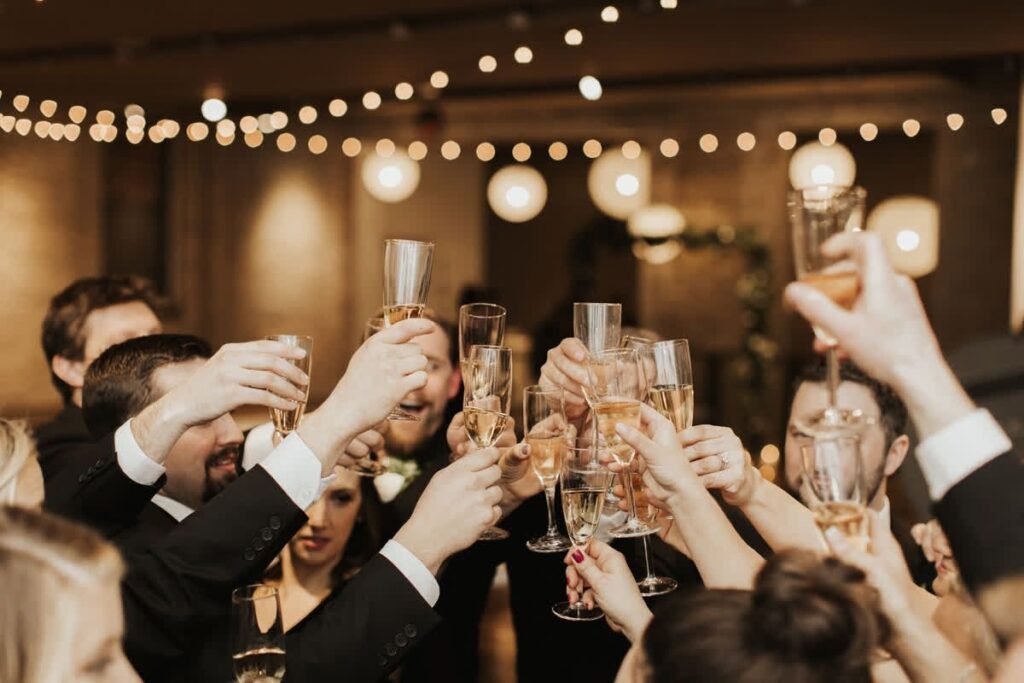
- Weddings
- Celebrations
- Personal achievements
Over time, even the taste and smell of Champagne can trigger memories.
2. Anticipation and Reward
Champagne often represents the end of effort:
- After a long project
- At the conclusion of a journey
- During a major life milestone
This reinforces its role as a reward.
The brain begins to associate Champagne with success and relief, making the experience even more satisfying.
Part VI — The Globalization of Champagne Culture
1. From France to the World
Although Champagne is produced in a specific region, its cultural influence is global.
It has become:
- A standard at international celebrations
- A symbol in movies and media
- A staple in luxury hospitality
Even in places far from France, Champagne carries the same meaning.
2. Cultural Adaptation
Different cultures have adopted Champagne in unique ways:
- New Year’s celebrations
- Weddings across continents
- Corporate milestones
Despite these variations, the core symbolism remains consistent: celebration and prestige.
Part VII — The Modern Reinvention of Champagne
1. Younger Consumers and New Meanings
Today’s consumers are reshaping Champagne culture.
- Less rigid traditions
- More casual consumption in some contexts
- Integration into lifestyle and social media
Champagne is no longer limited to formal occasions—it is becoming more flexible.
2. Experience Over Tradition
Modern consumers value experience:
- Rooftop bars
- Luxury travel
- Curated social moments
Champagne fits perfectly into this environment, acting as both a drink and a visual symbol of the experience.
Part VIII — The Paradox of Champagne
Champagne exists in a unique tension:
| Aspect | Reality |
|---|---|
| It is widely known | Yet still feels exclusive |
| It is global | Yet tied to one region |
| It is traditional | Yet constantly evolving |
This paradox is part of its power.
Conclusion: More Than a Drink
Champagne’s journey—from a flawed wine to a global symbol of celebration—is a story of transformation, perception, and cultural meaning.
It is not just the bubbles that make Champagne special. It is what those bubbles represent:
- Achievement
- Joy
- Connection
- Aspiration
In a world where experiences matter more than ever, Champagne continues to hold its place—not because it is necessary, but because it is meaningful.
And perhaps that is why, when something truly important happens, we still reach for it.
Not just to drink—but to mark the moment.










