


























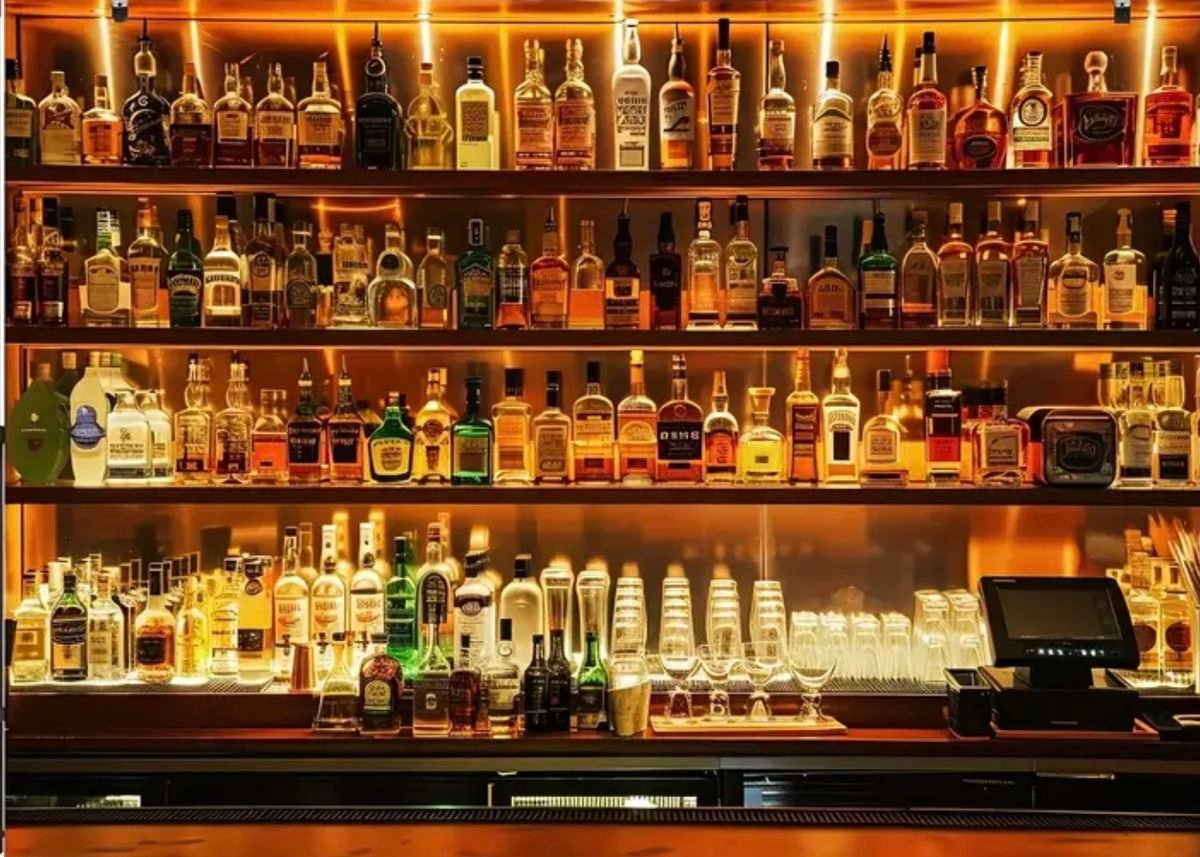
Introduction: Same Grain, Different Worlds
Take a handful of grain—barley, corn, wheat, or rye—and the possibilities seem limited. Yet across the globe, these same humble ingredients give rise to an astonishing diversity of spirits. Smoky Scotch whisky, sweet American bourbon, clean Russian vodka, botanical-rich gin—all begin with grain, yet end as entirely different experiences.
What explains this transformation?
It is not just the process, but the context. Geography, climate, culture, and history all shape how grain is interpreted. Grain spirits are not universal products; they are localized expressions of global techniques.
This article explores grain spirits not step-by-step, but region by region—a journey across the world to understand how different cultures have shaped distilled alcohol into something uniquely their own.
Region I — Scotland: Smoke, Tradition, and Time
Identity in a Bottle
Scotch whisky is perhaps the most iconic grain spirit, defined by tradition and regional identity.
Key characteristics:
- Use of malted barley
- Pot still distillation
- Long aging in oak barrels
But what truly distinguishes Scotch is terroir-like variation.
Flavor Landscape
Different regions produce distinct profiles:
- Islay → smoky, peaty, medicinal
- Speyside → fruity, elegant, balanced
- Highlands → diverse, often robust
The use of peat (burned organic material) to dry barley gives Scotch its signature smoky flavor—something rarely found elsewhere.
Cultural Meaning
In Scotland, whisky is more than a drink:
- A national symbol
- A craft tied to heritage
- A product of patience
Time is essential. Some whiskies age for decades, reinforcing the idea that quality cannot be rushed.
Region II — United States: Innovation and Boldness
A Different Philosophy
American whiskey, especially bourbon, reflects a different mindset—less constrained by tradition, more open to innovation.
Core rules (for bourbon):
- At least 51% corn
- Aged in new charred oak barrels
Flavor Profile
Compared to Scotch:
- Sweeter (due to corn)
- Richer (caramel, vanilla notes)
- Fuller-bodied
The use of new barrels creates intense interaction between wood and spirit, accelerating flavor development.
Cultural Context
American whiskey is tied to:
- Frontier history
- Individualism
- Experimentation
It represents a more dynamic, less rigid approach to tradition.
Region III — Eastern Europe: Purity and Precision
The Philosophy of Vodka
Vodka, particularly from Russia and Poland, takes a radically different approach.
Instead of emphasizing flavor, vodka emphasizes:
- Purity
- Neutrality
- Smoothness
Production Style
- Multiple distillations
- Extensive filtration
- High alcohol purity
The goal is not complexity, but clarity.
Cultural Role
Vodka is deeply embedded in social life:
- Celebrations
- Ritual toasts
- Shared drinking culture
It is less about individual tasting notes and more about collective experience.

Region IV — Western Europe: The Rise of Gin
From Medicine to Modern Icon
Gin began as a medicinal spirit flavored with juniper berries. Today, it is one of the most dynamic categories in the spirits world.
Flavor Innovation
Unlike whisky or vodka, gin is defined by botanicals.
Common ingredients:
- Juniper (required)
- Citrus peel
- Herbs and spices
Modern craft distilleries experiment with:
- Local plants
- Exotic flavors
- Unique combinations
Cultural Evolution
Gin has undergone multiple transformations:
- Medicinal use → mass consumption → craft revival
Today, it is associated with:
- Urban lifestyle
- Creativity
- Cocktail culture
Region V — Japan: Precision and Harmony
Borrowing and Perfecting
Japanese whisky was inspired by Scotch, but evolved into something distinct.
Key principles:
- Balance
- Subtlety
- Attention to detail
Flavor Profile
- Clean and refined
- Harmonious rather than bold
- Often delicate and layered
Philosophical Approach
Japanese production emphasizes:
- Craftsmanship
- Consistency
- Respect for process
It reflects broader cultural values of precision and harmony.
Region VI — Emerging Markets: New Voices in an Old Tradition
Global Expansion
Countries across Asia, Latin America, and beyond are developing their own grain spirits.
Drivers include:
- Growing middle class
- Exposure to global trends
- Local innovation
Hybrid Identities
New producers often blend influences:
- Traditional techniques
- Local ingredients
- Modern branding
This creates spirits that are both global and local.
A Comparative Lens: How Regions Differ
| Region | Core Focus | Flavor Identity | Cultural Meaning |
|---|---|---|---|
| Scotland | Tradition | Smoky, complex | Heritage |
| USA | Innovation | Sweet, bold | Individualism |
| Eastern Europe | Purity | Neutral | Social bonding |
| Western Europe | Creativity | Botanical | Lifestyle |
| Japan | Precision | Balanced | Craftsmanship |
Beyond Geography: What Really Shapes Flavor
While geography matters, several deeper factors influence outcomes:
- Raw materials → type of grain
- Climate → aging speed
- Technology → distillation method
- Culture → taste preferences
The same process, applied differently, creates entirely new results.
Conclusion: A Global Language, Local Dialects
Grain spirits are a perfect example of how a universal idea can produce infinite variation.
The core process—fermentation and distillation—is shared across cultures. Yet the results differ dramatically because each society interprets the process through its own lens.
In this sense, grain spirits are like language:
- The grammar is the same
- The dialects are different
And just as language reflects identity, so too does alcohol.
Every glass tells a story—not just of grain and technique, but of place, people, and perspective.