SipsavorLife
  • Home
  • Wine
    Wine as a Cultural Artifact: History, Identity, and the Evolution of Taste

    The Art and Science of Wine & Food Pairing: How to Create Perfect Matches Every Time

    Wine as a Cultural Artifact: History, Identity, and the Evolution of Taste

    A Complete Guide to Wine Styles and Grape Varieties: From Cabernet Sauvignon to Riesling

    Wine as a Cultural Artifact: History, Identity, and the Evolution of Taste

    The Global Wine Industry: Economics, Markets, and the Future of Consumption

    Wine as a Cultural Artifact: History, Identity, and the Evolution of Taste

    The Science of Wine Tasting: How Chemistry, Biology, and Perception Shape Flavor

    Wine as a Cultural Artifact: History, Identity, and the Evolution of Taste

    Wine as a Cultural Artifact: History, Identity, and the Evolution of Taste

    Red Wine — The Liquid Expression of Land, Time, and Human Intention

    The Future of Red Wine — Climate Change, Technology, and the Evolution of Taste

  • Whiskey
    Can Beer Be an Effective Ingredient in Culinary Cooking?

    Can Beer Be an Effective Ingredient in Culinary Cooking?

    Second Fermentation in Champagne: Is It Really That Crucial?

    Second Fermentation in Champagne: Is It Really That Crucial?

    How Do Different Grains Impact the Flavor Profile of Distilled Spirits?

    How Do Different Grains Impact the Flavor Profile of Distilled Spirits?

    How Do Whiskey Master Blenders Create Perfection?

    How Do Whiskey Master Blenders Create Perfection?

    Wine Pairings: Can They Change the Flavor Profile of a Dish?

    Wine Pairings: Can They Change the Flavor Profile of a Dish?

    Beer the Ultimate Beverage for Pairing with Spicy Food?

    Beer the Ultimate Beverage for Pairing with Spicy Food?

  • Beer
    Beer as a Cultural and Social Force: From Ancient Brew to Modern Identity

    The Art of Beer & Food Pairing: Unlocking Flavor Through Balance, Contrast, and Texture

    Beer as a Cultural and Social Force: From Ancient Brew to Modern Identity

    A Complete Guide to Beer Styles: From Lager to Stout, Understanding Flavor, Body, and Character

    Beer as a Cultural and Social Force: From Ancient Brew to Modern Identity

    The Global Beer Industry: Craft Revolution, Market Forces, and the Future of Brewing

    Beer as a Cultural and Social Force: From Ancient Brew to Modern Identity

    The Science of Beer: Brewing Process, Ingredients, and the Chemistry of Flavor

    Beer as a Cultural and Social Force: From Ancient Brew to Modern Identity

    Beer as a Cultural and Social Force: From Ancient Brew to Modern Identity

    The Evolution of Beer — From Ancient Brews to the Craft Revolution

    The Future of Beer — Innovation, Sustainability, and Emerging Trends

  • Grain Spirits
    Grain Spirits Explained — The Foundation of Global Distillation

    The Future of Grain Spirits — Technology, Sustainability, and the Next Era of Distillation

    Grain Spirits Explained — The Foundation of Global Distillation

    Grain Spirits Around the World — Vodka, Whisky Bases, and Industrial Applications

    Grain Spirits Explained — The Foundation of Global Distillation

    Distillation Systems — Pot Still vs Column Still, and the Balance Between Efficiency and Flavor

    Grain Spirits Explained — The Foundation of Global Distillation

    Grain Selection and Fermentation Science — How Raw Ingredients Shape Grain Spirits

    Grain Spirits Explained — The Foundation of Global Distillation

    Grain Spirits Explained — The Foundation of Global Distillation

    Grain Spirits and the Industrial Birth of Neutral Alcohol

    The Future of Grain Spirits — AI Distillation, Sustainability, and the Post-Flavor Alcohol Industry

  • Champagne
    The History of Champagne — From Accidental Sparkle to Global Luxury

    The Future of Champagne — Climate Change, Innovation, and Industry Evolution

    The History of Champagne — From Accidental Sparkle to Global Luxury

    The Culture of Champagne — Luxury, Celebration, and Global Influence

    The History of Champagne — From Accidental Sparkle to Global Luxury

    Champagne Styles Explained — Brut, Rosé, Vintage, and Beyond

    The History of Champagne — From Accidental Sparkle to Global Luxury

    The Craft of Champagne — Terroir, Grapes, and the Méthode Traditionnelle

    The History of Champagne — From Accidental Sparkle to Global Luxury

    The History of Champagne — From Accidental Sparkle to Global Luxury

    The Future of Champagne — Climate Change, Innovation, and the Evolution of Sparkling Wine

    The Future of Champagne — Climate Change, Innovation, and the Evolution of Sparkling Wine

  • ALL
    Can Beer Be an Effective Ingredient in Culinary Cooking?

    Can Beer Be an Effective Ingredient in Culinary Cooking?

    Second Fermentation in Champagne: Is It Really That Crucial?

    Second Fermentation in Champagne: Is It Really That Crucial?

    How Do Different Grains Impact the Flavor Profile of Distilled Spirits?

    How Do Different Grains Impact the Flavor Profile of Distilled Spirits?

    How Do Whiskey Master Blenders Create Perfection?

    How Do Whiskey Master Blenders Create Perfection?

    Wine Pairings: Can They Change the Flavor Profile of a Dish?

    Wine Pairings: Can They Change the Flavor Profile of a Dish?

    Beer the Ultimate Beverage for Pairing with Spicy Food?

    Beer the Ultimate Beverage for Pairing with Spicy Food?

SipsavorLife
  • Home
  • Wine
    Wine as a Cultural Artifact: History, Identity, and the Evolution of Taste

    The Art and Science of Wine & Food Pairing: How to Create Perfect Matches Every Time

    Wine as a Cultural Artifact: History, Identity, and the Evolution of Taste

    A Complete Guide to Wine Styles and Grape Varieties: From Cabernet Sauvignon to Riesling

    Wine as a Cultural Artifact: History, Identity, and the Evolution of Taste

    The Global Wine Industry: Economics, Markets, and the Future of Consumption

    Wine as a Cultural Artifact: History, Identity, and the Evolution of Taste

    The Science of Wine Tasting: How Chemistry, Biology, and Perception Shape Flavor

    Wine as a Cultural Artifact: History, Identity, and the Evolution of Taste

    Wine as a Cultural Artifact: History, Identity, and the Evolution of Taste

    Red Wine — The Liquid Expression of Land, Time, and Human Intention

    The Future of Red Wine — Climate Change, Technology, and the Evolution of Taste

  • Whiskey
    Can Beer Be an Effective Ingredient in Culinary Cooking?

    Can Beer Be an Effective Ingredient in Culinary Cooking?

    Second Fermentation in Champagne: Is It Really That Crucial?

    Second Fermentation in Champagne: Is It Really That Crucial?

    How Do Different Grains Impact the Flavor Profile of Distilled Spirits?

    How Do Different Grains Impact the Flavor Profile of Distilled Spirits?

    How Do Whiskey Master Blenders Create Perfection?

    How Do Whiskey Master Blenders Create Perfection?

    Wine Pairings: Can They Change the Flavor Profile of a Dish?

    Wine Pairings: Can They Change the Flavor Profile of a Dish?

    Beer the Ultimate Beverage for Pairing with Spicy Food?

    Beer the Ultimate Beverage for Pairing with Spicy Food?

  • Beer
    Beer as a Cultural and Social Force: From Ancient Brew to Modern Identity

    The Art of Beer & Food Pairing: Unlocking Flavor Through Balance, Contrast, and Texture

    Beer as a Cultural and Social Force: From Ancient Brew to Modern Identity

    A Complete Guide to Beer Styles: From Lager to Stout, Understanding Flavor, Body, and Character

    Beer as a Cultural and Social Force: From Ancient Brew to Modern Identity

    The Global Beer Industry: Craft Revolution, Market Forces, and the Future of Brewing

    Beer as a Cultural and Social Force: From Ancient Brew to Modern Identity

    The Science of Beer: Brewing Process, Ingredients, and the Chemistry of Flavor

    Beer as a Cultural and Social Force: From Ancient Brew to Modern Identity

    Beer as a Cultural and Social Force: From Ancient Brew to Modern Identity

    The Evolution of Beer — From Ancient Brews to the Craft Revolution

    The Future of Beer — Innovation, Sustainability, and Emerging Trends

  • Grain Spirits
    Grain Spirits Explained — The Foundation of Global Distillation

    The Future of Grain Spirits — Technology, Sustainability, and the Next Era of Distillation

    Grain Spirits Explained — The Foundation of Global Distillation

    Grain Spirits Around the World — Vodka, Whisky Bases, and Industrial Applications

    Grain Spirits Explained — The Foundation of Global Distillation

    Distillation Systems — Pot Still vs Column Still, and the Balance Between Efficiency and Flavor

    Grain Spirits Explained — The Foundation of Global Distillation

    Grain Selection and Fermentation Science — How Raw Ingredients Shape Grain Spirits

    Grain Spirits Explained — The Foundation of Global Distillation

    Grain Spirits Explained — The Foundation of Global Distillation

    Grain Spirits and the Industrial Birth of Neutral Alcohol

    The Future of Grain Spirits — AI Distillation, Sustainability, and the Post-Flavor Alcohol Industry

  • Champagne
    The History of Champagne — From Accidental Sparkle to Global Luxury

    The Future of Champagne — Climate Change, Innovation, and Industry Evolution

    The History of Champagne — From Accidental Sparkle to Global Luxury

    The Culture of Champagne — Luxury, Celebration, and Global Influence

    The History of Champagne — From Accidental Sparkle to Global Luxury

    Champagne Styles Explained — Brut, Rosé, Vintage, and Beyond

    The History of Champagne — From Accidental Sparkle to Global Luxury

    The Craft of Champagne — Terroir, Grapes, and the Méthode Traditionnelle

    The History of Champagne — From Accidental Sparkle to Global Luxury

    The History of Champagne — From Accidental Sparkle to Global Luxury

    The Future of Champagne — Climate Change, Innovation, and the Evolution of Sparkling Wine

    The Future of Champagne — Climate Change, Innovation, and the Evolution of Sparkling Wine

  • ALL
    Can Beer Be an Effective Ingredient in Culinary Cooking?

    Can Beer Be an Effective Ingredient in Culinary Cooking?

    Second Fermentation in Champagne: Is It Really That Crucial?

    Second Fermentation in Champagne: Is It Really That Crucial?

    How Do Different Grains Impact the Flavor Profile of Distilled Spirits?

    How Do Different Grains Impact the Flavor Profile of Distilled Spirits?

    How Do Whiskey Master Blenders Create Perfection?

    How Do Whiskey Master Blenders Create Perfection?

    Wine Pairings: Can They Change the Flavor Profile of a Dish?

    Wine Pairings: Can They Change the Flavor Profile of a Dish?

    Beer the Ultimate Beverage for Pairing with Spicy Food?

    Beer the Ultimate Beverage for Pairing with Spicy Food?

SipsavorLife
No Result
View All Result
Home Whiskey

The Global Whiskey Map — How Nations Shape Flavor, Identity, and Prestige

April 21, 2026
in Whiskey
Whiskey and the Shape of Civilization — From Monasteries to Modern Glasses

Introduction: Whiskey Is Not One Drink

If you place a glass of Scotch, Bourbon, Irish whiskey, and Japanese whisky side by side, they may look similar at first glance.

Amber liquid. Wooden barrel influence. Familiar warmth.

But the moment you taste them, the illusion of similarity disappears.

Each one carries a different logic:

  • Different climates
  • Different grains
  • Different cultural philosophies
  • Different historical pressures

Whiskey is not a single tradition.

It is a global language spoken with different accents.

This article maps that language across countries—showing how geography becomes flavor, and how culture becomes structure.


Section 1: Scotland — The Architecture of Tradition

1.1 Landscape as Identity

Scotland is not just a producer of whiskey—it is its symbolic home.

The environment defines everything:

  • Cold, damp climate
  • Coastal air
  • Peat-rich land

These conditions shape flavor before human intervention even begins.


1.2 The Role of Peat

One of Scotland’s defining features is peat smoke.

Historically, peat was used to dry malted barley.

This created:

  • Smoky aroma
  • Earthy depth
  • Medicinal notes in some styles

What began as necessity became identity.


1.3 Regional Variation

Even within Scotland, styles differ:

  • Highlands → rich, structured
  • Islay → heavily smoky, maritime
  • Speyside → fruity, elegant

Each region is essentially a microclimate experiment.


1.4 Philosophy of Scotch

Scotch whiskey is built on:

  • Preservation of tradition
  • Long aging
  • Controlled complexity

It values continuity over experimentation.


Section 2: Ireland — Smoothness and Subtlety

2.1 A Softer Tradition

Irish whiskey historically developed differently from Scotch.

Key distinction:

  • Triple distillation (often)
  • Less reliance on peat

Result:

  • Smoother texture
  • Lighter profile
  • More approachable flavor

2.2 Historical Disruption and Revival

Irish whiskey once dominated global markets.

Then declined due to:

  • Political instability
  • Industrial shifts
  • Competition from Scotch

In recent decades, it has undergone a strong revival.


2.3 Flavor Identity

Irish whiskey tends to emphasize:

  • Soft fruit notes
  • Light malt sweetness
  • Gentle finish

It is often described as “accessible elegance.”


Section 3: United States — Bourbon as Industrial Identity

3.1 Legal Definition Shapes Flavor

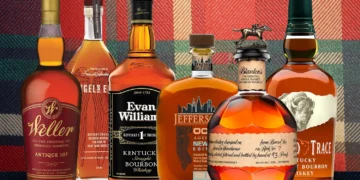
Unlike Europe, American whiskey is heavily defined by law.

For bourbon:

  • Must use at least 51% corn
  • Must be aged in new charred oak barrels
  • Must be produced in the U.S.

These rules create consistency and identity.


3.2 Corn as a Flavor Engine

Corn produces:

  • Natural sweetness
  • Round body
  • Caramel-like richness

This makes bourbon distinct from barley-based whiskies.


3.3 New Charred Oak

A key innovation:

Every barrel must be new and charred.

This results in:

  • Strong vanilla notes
  • Deep caramel color
  • Faster flavor extraction

3.4 Cultural Positioning

American whiskey is associated with:

  • Independence
  • Frontier history
  • Boldness

It reflects a culture of expansion and reinvention.

Section 4: Japan — Precision and Silence

4.1 A Philosophy of Refinement

Japanese whisky is relatively young but globally respected.

It is defined by:

  • Precision blending
  • Attention to detail
  • Minimalist aesthetic philosophy

4.2 Climate and Aging

Japan’s climate introduces:

  • Faster aging in some regions
  • Greater seasonal variation

This affects barrel interaction.


4.3 Blending as Art

Japanese distillers often focus heavily on blending:

  • Multiple grain sources
  • Multiple aging profiles
  • Extremely controlled balance

The goal is harmony rather than dominance.


4.4 Cultural Influence

Japanese whisky reflects broader cultural principles:

  • Discipline
  • Subtlety
  • Perfection through iteration

Section 5: Canada — Understated Complexity

5.1 Blended Identity

Canadian whisky is often:

  • Light
  • Smooth
  • Highly blended

5.2 Rye Influence

Rye plays a significant role, adding:

  • Spice
  • Dryness
  • Structural contrast

5.3 Market Position

Canadian whisky is often:

  • Less aggressive in flavor
  • More versatile in mixing
  • Understated globally

Section 6: India — Rapid Maturation and Expansion

6.1 Climate Acceleration

India’s warm climate causes:

  • Faster aging
  • Higher evaporation rates

This creates intense flavor development in shorter time.


6.2 Emerging Global Presence

Indian whisky is growing rapidly in:

  • Domestic consumption
  • International recognition

6.3 Style Characteristics

Often:

  • Rich
  • Fruity
  • Bold in character

Section 7: Taiwan — Innovation Under Heat and Humidity

7.1 Extreme Aging Conditions

Taiwan’s climate leads to:

  • Rapid barrel interaction
  • High evaporation

7.2 Flavor Profile

Taiwanese whiskies often show:

  • Tropical fruit notes
  • Deep color at younger age
  • Intense aromatic complexity

7.3 Global Recognition

Despite being new, Taiwan has gained prestige quickly due to:

  • Innovation
  • Controlled experimentation
  • Distinct flavor identity

Section 8: Emerging Regions — The Expanding Map

New whiskey-producing countries include:

  • Sweden
  • Australia
  • France
  • South Africa

Each brings:

  • Local grains
  • Unique climates
  • Experimental philosophies

The whiskey map is expanding.


Section 9: Global Comparison — Four Philosophies

Scotland → Tradition and Time

  • Slow aging
  • Regional identity
  • Heritage-driven

USA → Bold Structure

  • Grain-forward
  • Legally defined
  • Flavor intensity

Japan → Precision Harmony

  • Balance
  • Minimalism
  • Blending mastery

Emerging Regions → Experimentation

  • Climate-driven acceleration
  • Innovation-focused
  • Identity formation

Section 10: Globalization and Convergence

Despite differences, trends are merging:

  • Scotland experimenting more
  • America exploring finishing techniques
  • Japan expanding styles
  • New regions entering premium market

Whiskey is becoming less geographically rigid.


Conclusion: A Global Language of Time and Wood

Whiskey is no longer confined to one country or tradition.

It has become a global system of interpretation:

  • Geography shapes raw materials
  • Culture shapes production philosophy
  • Climate shapes aging speed
  • Markets shape identity

Yet at its core, the process remains unchanged:

Grain. Time. Wood. Transformation.

Different accents. Same language.
Tags: Culturemarketwhiskey
ShareTweetShare

Related Posts

The History of Whisky — From Monastic Origins to Global Industry
Whiskey

The Future of Whisky — Innovation, Sustainability, and Global Trends

April 25, 2026
The History of Whisky — From Monastic Origins to Global Industry
Whiskey

Whisky Culture — Rituals, Tasting, and Lifestyle

April 25, 2026
The History of Whisky — From Monastic Origins to Global Industry
Whiskey

Global Whisky Styles — Scotch, Bourbon, Japanese, and Beyond

April 25, 2026
The History of Whisky — From Monastic Origins to Global Industry
Whiskey

How Whisky Is Made — Grains, Distillation, and the Science of Aging

April 25, 2026
The History of Whisky — From Monastic Origins to Global Industry
Whiskey

The History of Whisky — From Monastic Origins to Global Industry

April 25, 2026
Whiskey and the Shape of Civilization — From Monasteries to Modern Glasses
Whiskey

The Economics of Whiskey — Scarcity, Investment, and the Psychology of Value

April 21, 2026
Leave Comment
  • Trending
  • Comments
  • Latest
Role of Terroir in Champagne Production

Role of Terroir in Champagne Production

January 19, 2026
Champagne Can Be Aged in Wood?

Champagne Can Be Aged in Wood?

January 18, 2026
Is Organic Wine Healthier Than Conventional Wine?

Is Organic Wine Healthier Than Conventional Wine?

January 20, 2026
Why Do Some Champagnes Use a High Proportion of Pinot Meunier?

Why Do Some Champagnes Use a High Proportion of Pinot Meunier?

January 20, 2026
The Timeless Elegance of Wine: A Journey Through History and Culture

The Timeless Elegance of Wine: A Journey Through History and Culture

Why Is Château Lafite Rothschild the Pinnacle of Fine Wine?

Why Is Château Lafite Rothschild the Pinnacle of Fine Wine?

How Did Château Lafite Rothschild Become a Global Icon of Luxury?

How Did Château Lafite Rothschild Become a Global Icon of Luxury?

What Makes Chateau Lafite Rothschild the Pinnacle of Bordeaux Wines?

What Makes Chateau Lafite Rothschild the Pinnacle of Bordeaux Wines?

Beer as a Cultural and Social Force: From Ancient Brew to Modern Identity

The Art of Beer & Food Pairing: Unlocking Flavor Through Balance, Contrast, and Texture

April 26, 2026
Beer as a Cultural and Social Force: From Ancient Brew to Modern Identity

A Complete Guide to Beer Styles: From Lager to Stout, Understanding Flavor, Body, and Character

April 26, 2026
Beer as a Cultural and Social Force: From Ancient Brew to Modern Identity

The Global Beer Industry: Craft Revolution, Market Forces, and the Future of Brewing

April 26, 2026
Beer as a Cultural and Social Force: From Ancient Brew to Modern Identity

The Science of Beer: Brewing Process, Ingredients, and the Chemistry of Flavor

April 26, 2026
SipsavorLife

Welcome to our comprehensive beverage guide, where you can explore the fascinating world of alcoholic drinks. From exquisite wines and rich whiskeys to refreshing beers and sparkling champagnes, we provide insights, tips, and recommendations for enthusiasts and casual drinkers alike. Discover your next favorite libation with us!

© 2025 sipsavorlife.com. contacts:sipsavorlife-35376@gmail.com

No Result
View All Result
  • Home
  • Wine
  • Whiskey
  • Beer
  • Grain Spirits
  • Champagne
  • ALL

© 2025 sipsavorlife.com. contacts:sipsavorlife-35376@gmail.com

Welcome Back!

Login to your account below

Forgotten Password?

Retrieve your password

Please enter your username or email address to reset your password.

Log In