SipsavorLife
  • Home
  • Wine
    Red Wine — The Liquid Expression of Land, Time, and Human Intention

    The Future of Red Wine — Climate Change, Technology, and the Evolution of Taste

    Red Wine — The Liquid Expression of Land, Time, and Human Intention

    Red Wine and Human Culture — Rituals, Status, and the Psychology of Drinking

    Red Wine — The Liquid Expression of Land, Time, and Human Intention

    A Journey Through the World of Red Wine — Bordeaux, Tuscany, Napa, and Beyond

    Red Wine — The Liquid Expression of Land, Time, and Human Intention

    The Chemistry of Red Wine — Tannins, Acids, Phenolics, and Molecular Evolution

    Red Wine — The Liquid Expression of Land, Time, and Human Intention

    Red Wine — The Liquid Expression of Land, Time, and Human Intention

    Wine as Culture, Craft, and Time — Understanding the Soul of the World’s Most Enduring Drink

    The Changing Map of Wine — Global Industry, Emerging Regions, and the Future of a Timeless Craft

  • Whiskey
    Can Beer Be an Effective Ingredient in Culinary Cooking?

    Can Beer Be an Effective Ingredient in Culinary Cooking?

    Second Fermentation in Champagne: Is It Really That Crucial?

    Second Fermentation in Champagne: Is It Really That Crucial?

    How Do Different Grains Impact the Flavor Profile of Distilled Spirits?

    How Do Different Grains Impact the Flavor Profile of Distilled Spirits?

    How Do Whiskey Master Blenders Create Perfection?

    How Do Whiskey Master Blenders Create Perfection?

    Wine Pairings: Can They Change the Flavor Profile of a Dish?

    Wine Pairings: Can They Change the Flavor Profile of a Dish?

    Beer the Ultimate Beverage for Pairing with Spicy Food?

    Beer the Ultimate Beverage for Pairing with Spicy Food?

  • Beer
    Beer and the Human Story — A Journey Through Time, Taste, and Civilization

    Inside the Modern Beer Industry — Craft, Corporations, and the Battle for the Future

    Beer and the Human Story — A Journey Through Time, Taste, and Civilization

    The Evolution of Beer Styles — How Taste Changed Across Centuries

    Beer and the Human Story — A Journey Through Time, Taste, and Civilization

    Inside the Brewery — A Walk Through the Living Heart of Beer

    Beer and the Human Story — A Journey Through Time, Taste, and Civilization

    The Anatomy of Beer — Deconstructing Flavor, Structure, and Brewing Logic

    Beer and the Human Story — A Journey Through Time, Taste, and Civilization

    Beer and the Human Story — A Journey Through Time, Taste, and Civilization

    The World of Beer — A Deep Dive into Craft, Culture, and Evolution

    Mastering Beer Tasting — From Casual Drinker to Connoisseur

  • Grain Spirits
    Grain Spirits and the Industrial Birth of Neutral Alcohol

    The Future of Grain Spirits — AI Distillation, Sustainability, and the Post-Flavor Alcohol Industry

    Grain Spirits and the Industrial Birth of Neutral Alcohol

    Grain Spirits and Vodka Culture — Purity, Ritual, and the Social Psychology of Neutral Alcohol

    Grain Spirits and the Industrial Birth of Neutral Alcohol

    Inside a Grain Spirit Distillery — Continuous Flow, Steel Columns, and the Engineering of Neutrality

    Grain Spirits and the Industrial Birth of Neutral Alcohol

    The Global Map of Grain Spirits — How Different Cultures Define Purity in Alcohol

    Grain Spirits and the Industrial Birth of Neutral Alcohol

    Grain Spirits and the Industrial Birth of Neutral Alcohol

    The Origins of Grain Spirits: Power, Society, and the Birth of Distilled Alcohol

    The Future of Grain Spirits: Reinvention in an Age of Change

  • Champagne
    The Future of Champagne — Climate Change, Innovation, and the Evolution of Sparkling Wine

    The Future of Champagne — Climate Change, Innovation, and the Evolution of Sparkling Wine

    Champagne — The Accidental Invention That Became the Language of Celebration

    Champagne and Luxury — Branding, Scarcity, and the Global Economy of Celebration

    Champagne — The Accidental Invention That Became the Language of Celebration

    Inside a Champagne House — From Vineyard to Cellar, A Journey Through Time and Craft

    Champagne — The Accidental Invention That Became the Language of Celebration

    The Science of Bubbles — Pressure, Carbonation, and the Physics of Champagne

    Champagne — The Accidental Invention That Became the Language of Celebration

    Champagne — The Accidental Invention That Became the Language of Celebration

    Champagne — The Ultimate Symbol of Elegance, Celebration, and Craft

    The Art of Champagne Tasting — A Refined Guide to Elegance, Precision, and Sensory Mastery

  • ALL
    Can Beer Be an Effective Ingredient in Culinary Cooking?

    Can Beer Be an Effective Ingredient in Culinary Cooking?

    Second Fermentation in Champagne: Is It Really That Crucial?

    Second Fermentation in Champagne: Is It Really That Crucial?

    How Do Different Grains Impact the Flavor Profile of Distilled Spirits?

    How Do Different Grains Impact the Flavor Profile of Distilled Spirits?

    How Do Whiskey Master Blenders Create Perfection?

    How Do Whiskey Master Blenders Create Perfection?

    Wine Pairings: Can They Change the Flavor Profile of a Dish?

    Wine Pairings: Can They Change the Flavor Profile of a Dish?

    Beer the Ultimate Beverage for Pairing with Spicy Food?

    Beer the Ultimate Beverage for Pairing with Spicy Food?

SipsavorLife
  • Home
  • Wine
    Red Wine — The Liquid Expression of Land, Time, and Human Intention

    The Future of Red Wine — Climate Change, Technology, and the Evolution of Taste

    Red Wine — The Liquid Expression of Land, Time, and Human Intention

    Red Wine and Human Culture — Rituals, Status, and the Psychology of Drinking

    Red Wine — The Liquid Expression of Land, Time, and Human Intention

    A Journey Through the World of Red Wine — Bordeaux, Tuscany, Napa, and Beyond

    Red Wine — The Liquid Expression of Land, Time, and Human Intention

    The Chemistry of Red Wine — Tannins, Acids, Phenolics, and Molecular Evolution

    Red Wine — The Liquid Expression of Land, Time, and Human Intention

    Red Wine — The Liquid Expression of Land, Time, and Human Intention

    Wine as Culture, Craft, and Time — Understanding the Soul of the World’s Most Enduring Drink

    The Changing Map of Wine — Global Industry, Emerging Regions, and the Future of a Timeless Craft

  • Whiskey
    Can Beer Be an Effective Ingredient in Culinary Cooking?

    Can Beer Be an Effective Ingredient in Culinary Cooking?

    Second Fermentation in Champagne: Is It Really That Crucial?

    Second Fermentation in Champagne: Is It Really That Crucial?

    How Do Different Grains Impact the Flavor Profile of Distilled Spirits?

    How Do Different Grains Impact the Flavor Profile of Distilled Spirits?

    How Do Whiskey Master Blenders Create Perfection?

    How Do Whiskey Master Blenders Create Perfection?

    Wine Pairings: Can They Change the Flavor Profile of a Dish?

    Wine Pairings: Can They Change the Flavor Profile of a Dish?

    Beer the Ultimate Beverage for Pairing with Spicy Food?

    Beer the Ultimate Beverage for Pairing with Spicy Food?

  • Beer
    Beer and the Human Story — A Journey Through Time, Taste, and Civilization

    Inside the Modern Beer Industry — Craft, Corporations, and the Battle for the Future

    Beer and the Human Story — A Journey Through Time, Taste, and Civilization

    The Evolution of Beer Styles — How Taste Changed Across Centuries

    Beer and the Human Story — A Journey Through Time, Taste, and Civilization

    Inside the Brewery — A Walk Through the Living Heart of Beer

    Beer and the Human Story — A Journey Through Time, Taste, and Civilization

    The Anatomy of Beer — Deconstructing Flavor, Structure, and Brewing Logic

    Beer and the Human Story — A Journey Through Time, Taste, and Civilization

    Beer and the Human Story — A Journey Through Time, Taste, and Civilization

    The World of Beer — A Deep Dive into Craft, Culture, and Evolution

    Mastering Beer Tasting — From Casual Drinker to Connoisseur

  • Grain Spirits
    Grain Spirits and the Industrial Birth of Neutral Alcohol

    The Future of Grain Spirits — AI Distillation, Sustainability, and the Post-Flavor Alcohol Industry

    Grain Spirits and the Industrial Birth of Neutral Alcohol

    Grain Spirits and Vodka Culture — Purity, Ritual, and the Social Psychology of Neutral Alcohol

    Grain Spirits and the Industrial Birth of Neutral Alcohol

    Inside a Grain Spirit Distillery — Continuous Flow, Steel Columns, and the Engineering of Neutrality

    Grain Spirits and the Industrial Birth of Neutral Alcohol

    The Global Map of Grain Spirits — How Different Cultures Define Purity in Alcohol

    Grain Spirits and the Industrial Birth of Neutral Alcohol

    Grain Spirits and the Industrial Birth of Neutral Alcohol

    The Origins of Grain Spirits: Power, Society, and the Birth of Distilled Alcohol

    The Future of Grain Spirits: Reinvention in an Age of Change

  • Champagne
    The Future of Champagne — Climate Change, Innovation, and the Evolution of Sparkling Wine

    The Future of Champagne — Climate Change, Innovation, and the Evolution of Sparkling Wine

    Champagne — The Accidental Invention That Became the Language of Celebration

    Champagne and Luxury — Branding, Scarcity, and the Global Economy of Celebration

    Champagne — The Accidental Invention That Became the Language of Celebration

    Inside a Champagne House — From Vineyard to Cellar, A Journey Through Time and Craft

    Champagne — The Accidental Invention That Became the Language of Celebration

    The Science of Bubbles — Pressure, Carbonation, and the Physics of Champagne

    Champagne — The Accidental Invention That Became the Language of Celebration

    Champagne — The Accidental Invention That Became the Language of Celebration

    Champagne — The Ultimate Symbol of Elegance, Celebration, and Craft

    The Art of Champagne Tasting — A Refined Guide to Elegance, Precision, and Sensory Mastery

  • ALL
    Can Beer Be an Effective Ingredient in Culinary Cooking?

    Can Beer Be an Effective Ingredient in Culinary Cooking?

    Second Fermentation in Champagne: Is It Really That Crucial?

    Second Fermentation in Champagne: Is It Really That Crucial?

    How Do Different Grains Impact the Flavor Profile of Distilled Spirits?

    How Do Different Grains Impact the Flavor Profile of Distilled Spirits?

    How Do Whiskey Master Blenders Create Perfection?

    How Do Whiskey Master Blenders Create Perfection?

    Wine Pairings: Can They Change the Flavor Profile of a Dish?

    Wine Pairings: Can They Change the Flavor Profile of a Dish?

    Beer the Ultimate Beverage for Pairing with Spicy Food?

    Beer the Ultimate Beverage for Pairing with Spicy Food?

SipsavorLife
No Result
View All Result
Home Champagne

Champagne — The Accidental Invention That Became the Language of Celebration

April 22, 2026
in Champagne
Champagne — The Accidental Invention That Became the Language of Celebration

Prologue: A Wine That Was Never Meant to Sparkle

Champagne, as the world knows it today, is synonymous with celebration.

It marks:

  • Weddings
  • Victories
  • New beginnings
  • Milestones

Yet its defining characteristic—its bubbles—was once considered a flaw.

In its earliest form, the wines of the Champagne region in France were unstable, unpredictable, and often problematic. Bottles would explode. Corks would pop unintentionally. Sediment would cloud the liquid.

Winemakers did not set out to create sparkling wine.

They were trying to prevent it.

The story of Champagne begins not as a deliberate invention, but as a series of misunderstandings, environmental constraints, and gradual mastery over a problem that eventually became its greatest strength.


Chapter 1: The Champagne Region — Geography Before Technique

1.1 Northern Limits of Viticulture

The Champagne region sits at the northern edge of viable grape cultivation.

This means:

  • Cooler temperatures
  • Shorter growing seasons
  • High acidity in grapes
  • Lower natural sugar levels

These conditions initially made it difficult to produce stable still wines.


1.2 Chalk Soils and Water Retention

One of Champagne’s defining geological features is its chalk-rich soil.

Chalk:

  • Retains water
  • Reflects sunlight
  • Regulates root temperature

These properties influence:

  • Vine health
  • Mineral perception in wine
  • Consistency across vintages

1.3 The Grape Varieties

Three primary grapes define Champagne:

  • Chardonnay
  • Pinot Noir
  • Pinot Meunier

Each contributes differently:

  • Chardonnay → acidity, elegance
  • Pinot Noir → structure, body
  • Pinot Meunier → fruitiness, approachability

Chapter 2: The Problem of Secondary Fermentation

2.1 Cold Climate Instability

In early Champagne production:

  • Fermentation would stop during winter
  • Yeast would become inactive
  • Sugar remained in the wine

When temperatures rose again in spring:

  • Fermentation restarted inside sealed containers
  • Carbon dioxide was trapped

This created pressure.


2.2 Bottles That Exploded

Early glass bottles were not strong enough.

Result:

  • Explosions during storage
  • Chain reactions in cellars
  • Significant financial losses

Champagne was seen as unstable and unreliable.


2.3 Carbonation as a Byproduct

At this stage:

  • Bubbles were accidental
  • Not controlled
  • Not desired

Yet they hinted at something unique.


Chapter 3: Learning to Control the Bubble

3.1 Stronger Glass and Cork Development

Technological advancements changed everything:

  • Thicker glass bottles
  • Improved cork sealing
  • Wire cages (muselets) to hold corks

These innovations allowed pressure to be contained.


3.2 Understanding Secondary Fermentation

Winemakers began to realize:

  • Sugar + yeast inside the bottle = controlled carbonation

This became the foundation of Champagne production.


3.3 The Birth of Method Champenoise

The traditional method involves:

  1. Primary fermentation (base wine)
  2. Bottling with added sugar and yeast
  3. Secondary fermentation in bottle
  4. Aging on lees (dead yeast cells)
  5. Removal of sediment
  6. Final dosage (adjusting sweetness)

This process transforms still wine into sparkling wine.


Chapter 4: The Role of Lees Aging

4.1 What Are Lees?

Lees are dead yeast cells left after fermentation.


4.2 Autolysis Process

Over time, lees break down and release compounds that create:

  • Bread-like aromas
  • Nutty complexity
  • Creamy texture

4.3 Time as Flavor Builder

Champagne aging can range from:

  • Minimum required years
  • To decades for prestige cuvées

Time defines complexity.


Chapter 5: Clarification and Precision

5.1 Riddling (Remuage)

Bottles are gradually rotated to collect sediment in the neck.

Originally done by hand, now often mechanized.

5.2 Disgorgement

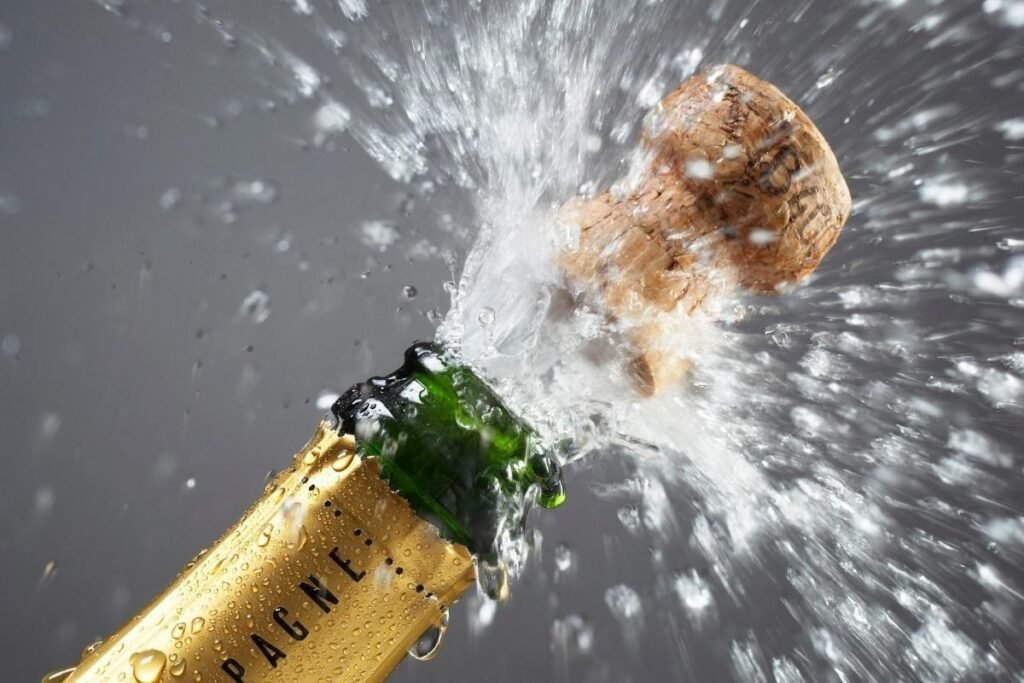
The neck is frozen and opened:

  • Sediment is expelled
  • Clear wine remains

5.3 Dosage

A small amount of sugar solution is added to balance acidity.

This determines style:

  • Brut
  • Extra Brut
  • Demi-sec

Chapter 6: Champagne as Symbol

6.1 From Problem to Prestige

What began as instability became luxury.

Champagne became associated with:

  • Royal courts
  • Celebrations
  • Success

6.2 The Sound of the Cork

The popping cork became a universal signal:

  • Beginning of celebration
  • Release of tension
  • Transition moment

6.3 Visual Identity

Champagne’s presentation reinforces its status:

  • Tall bottles
  • Elegant labels
  • Golden color

Chapter 7: The Economics of Champagne

7.1 Limited Geography

Only wines produced in the Champagne region can legally be called Champagne.

This creates:

  • Scarcity
  • Premium positioning

7.2 Brand Power

Champagne houses build identity through:

  • Consistency
  • Heritage
  • Marketing

7.3 Global Demand

Champagne is exported worldwide and tied to:

  • Luxury consumption
  • High-end events
  • Cultural prestige

Chapter 8: The Sensory Experience

8.1 The Bubble Structure

Fine bubbles indicate:

  • Controlled fermentation
  • Quality production

8.2 Aromatic Layers

Champagne often presents:

  • Citrus
  • Apple
  • Toast
  • Brioche

8.3 Texture

Unlike still wine:

  • Effervescence adds structure
  • Carbonation enhances perception

Conclusion: A Controlled Accident

Champagne is one of the rare products in history where:

A flaw became the defining feature.

What began as:

  • Climate limitation
  • Fermentation instability
  • Production challenges

Evolved into:

  • Precision technique
  • Cultural symbol
  • Global luxury

Champagne is not just sparkling wine.

It is the result of learning to control unpredictability—and turning it into something timeless.
Tags: celebratory drinkschampagne
ShareTweetShare

Related Posts

The Future of Champagne — Climate Change, Innovation, and the Evolution of Sparkling Wine
Champagne

The Future of Champagne — Climate Change, Innovation, and the Evolution of Sparkling Wine

April 22, 2026
Champagne — The Accidental Invention That Became the Language of Celebration
Champagne

Champagne and Luxury — Branding, Scarcity, and the Global Economy of Celebration

April 22, 2026
Champagne — The Accidental Invention That Became the Language of Celebration
Champagne

Inside a Champagne House — From Vineyard to Cellar, A Journey Through Time and Craft

April 22, 2026
Champagne — The Accidental Invention That Became the Language of Celebration
Champagne

The Science of Bubbles — Pressure, Carbonation, and the Physics of Champagne

April 22, 2026
Champagne — The Ultimate Symbol of Elegance, Celebration, and Craft
Champagne

The Art of Champagne Tasting — A Refined Guide to Elegance, Precision, and Sensory Mastery

April 15, 2026
Champagne — The Ultimate Symbol of Elegance, Celebration, and Craft
Champagne

The Business of Champagne — Luxury Strategy, Brand Power, and the Economics of Prestige

April 15, 2026
Leave Comment
  • Trending
  • Comments
  • Latest
Role of Terroir in Champagne Production

Role of Terroir in Champagne Production

January 19, 2026
Champagne Can Be Aged in Wood?

Champagne Can Be Aged in Wood?

January 18, 2026
Is Organic Wine Healthier Than Conventional Wine?

Is Organic Wine Healthier Than Conventional Wine?

January 20, 2026
Why Do Some Champagnes Use a High Proportion of Pinot Meunier?

Why Do Some Champagnes Use a High Proportion of Pinot Meunier?

January 20, 2026
The Timeless Elegance of Wine: A Journey Through History and Culture

The Timeless Elegance of Wine: A Journey Through History and Culture

Why Is Château Lafite Rothschild the Pinnacle of Fine Wine?

Why Is Château Lafite Rothschild the Pinnacle of Fine Wine?

How Did Château Lafite Rothschild Become a Global Icon of Luxury?

How Did Château Lafite Rothschild Become a Global Icon of Luxury?

What Makes Chateau Lafite Rothschild the Pinnacle of Bordeaux Wines?

What Makes Chateau Lafite Rothschild the Pinnacle of Bordeaux Wines?

Red Wine — The Liquid Expression of Land, Time, and Human Intention

The Future of Red Wine — Climate Change, Technology, and the Evolution of Taste

April 22, 2026
Red Wine — The Liquid Expression of Land, Time, and Human Intention

Red Wine and Human Culture — Rituals, Status, and the Psychology of Drinking

April 22, 2026
Red Wine — The Liquid Expression of Land, Time, and Human Intention

A Journey Through the World of Red Wine — Bordeaux, Tuscany, Napa, and Beyond

April 22, 2026
Red Wine — The Liquid Expression of Land, Time, and Human Intention

The Chemistry of Red Wine — Tannins, Acids, Phenolics, and Molecular Evolution

April 22, 2026
SipsavorLife

Welcome to our comprehensive beverage guide, where you can explore the fascinating world of alcoholic drinks. From exquisite wines and rich whiskeys to refreshing beers and sparkling champagnes, we provide insights, tips, and recommendations for enthusiasts and casual drinkers alike. Discover your next favorite libation with us!

© 2025 sipsavorlife.com. contacts:sipsavorlife-35376@gmail.com

No Result
View All Result
  • Home
  • Wine
  • Whiskey
  • Beer
  • Grain Spirits
  • Champagne
  • ALL

© 2025 sipsavorlife.com. contacts:sipsavorlife-35376@gmail.com

Welcome Back!

Login to your account below

Forgotten Password?

Retrieve your password

Please enter your username or email address to reset your password.

Log In