










Arrival: The Silence of the Vineyards
You arrive early in the morning.
The air is cool, almost sharp, carrying a faint scent of earth and chalk. The vineyards stretch outward in quiet symmetry, rows of vines aligned with geometric precision, disappearing into a pale horizon.
Nothing here feels rushed.
Unlike industrial distilleries or urban breweries, a Champagne house begins not with machinery—but with land.
A guide gestures toward the vines.
“This,” they say, “is where Champagne actually starts.”
And for the first time, you understand that what happens in the bottle is only the second half of the story.
Station 1: The Vineyard — Controlled Fragility
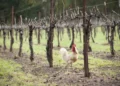
Walking between the rows, you notice how low the vines are kept.
They are not allowed to grow freely.
They are trained, pruned, disciplined.
What You See
- Thin, twisting trunks
- Carefully spaced grape clusters
- Soil that looks pale and powdery
What You Feel
- Cool wind moving across open land
- Slight moisture retained in the ground
- A sense of exposure—nothing here is protected from climate
Why This Matters
Champagne grapes are not meant to be rich or overly sweet.
They are cultivated for:
- High acidity
- Moderate sugar
- Structural balance
The goal is not immediate pleasure.
It is long-term transformation.
Station 2: Harvest — Precision Over Volume
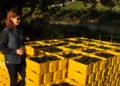
Unlike many large-scale wine operations, harvesting in Champagne is often done by hand.
You see workers moving carefully between rows, cutting clusters with small tools.
The Atmosphere
- Focused, quiet
- No rushed movements
- Minimal damage to grapes
What You Learn
Grapes must arrive intact.
Because:
- Oxidation must be minimized
- Juice quality must remain pure
- Timing is critical
Even a few hours can change the outcome.
Station 3: Pressing Room — Separation Without Color
Inside the pressing facility, everything feels controlled and deliberate.
Large presses gently extract juice from grapes.
What You Notice
- Clear juice flowing from dark-skinned grapes
- Minimal crushing force
- Immediate processing
The Principle
Champagne production separates:
- Juice → for fermentation
- Skins → mostly discarded early
This is how white Champagne can come from red grapes.
Station 4: Fermentation Room — Quiet Transformation
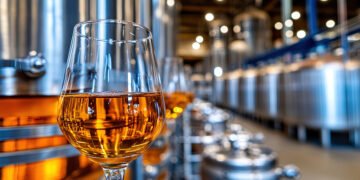
You enter a space filled with stainless steel tanks.
There is no dramatic movement here.
No visible reaction.
Yet everything is happening.
What You Smell
- Fresh fruit
- Slight yeast activity
- Clean, controlled environment
What Is Happening
Primary fermentation converts:
- Sugar → alcohol
This creates the base wine.
At this stage, it is still, acidic, and incomplete.
Nothing yet resembles Champagne as you know it.
Station 5: Blending Room — The Art of Assembly
You are guided into a quieter space.
Glasses are arranged on a long table.
Different base wines are poured.
Each one tastes different:
- One is sharp and citrusy
- One is rounder
- One is almost neutral
The Role of the Blender
A master blender combines wines from:
- Different vineyards
- Different grape varieties
- Sometimes different years
The goal is consistency.
Not in a single bottle—but across decades.
Station 6: Bottling — Preparing for Transformation
The blended wine is bottled with:
- Yeast
- Sugar
This initiates secondary fermentation.
The bottles are sealed.
At this moment, nothing looks special.
But the most important stage is about to begin.
Station 7: The Cellar — Where Time Lives
You descend underground.
The temperature drops.
The light fades.
The walls are made of chalk stone.
Rows upon rows of bottles lie horizontally in silence.
This is the heart of Champagne.
What You Feel
- Cool, stable air
- Slight humidity
- A sense of stillness that feels almost permanent
What Is Happening Inside the Bottles
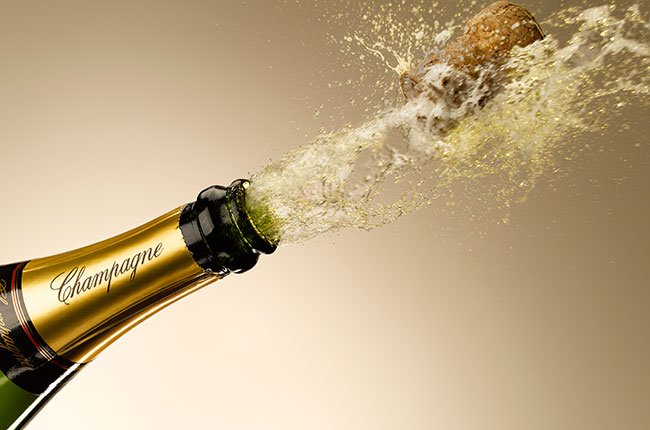
- Yeast consumes sugar
- Carbon dioxide is produced
- Pressure builds
- Bubbles are formed
And then:
Time begins to work.
Station 8: Lees Aging — Complexity in Stillness
The bottles remain untouched for years.
Inside:
- Dead yeast cells break down
- Compounds are released
- Flavor deepens
This is where Champagne gains:
- Bread-like aromas
- Creamy texture
- Structural depth
Nothing moves—but everything evolves.
Station 9: Riddling — Subtle Movement
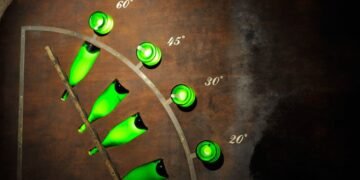
In another part of the cellar, you see bottles tilted at angles.
They are slowly rotated over time.
Purpose
To move sediment toward the neck.
Originally done by hand.
Now often mechanized—but the principle remains unchanged.
Station 10: Disgorgement — A Precise Moment
The neck of each bottle is frozen.
When opened:
- Pressure ejects the frozen sediment
- The wine remains clear
It is a brief, controlled release of force.
Station 11: Dosage — Final Adjustment
A small amount of liquid is added:
- Wine + sugar mixture
This determines style:
- Brut (dry)
- Extra Brut (very dry)
- Demi-sec (sweeter)
Station 12: Tasting Room — The Final Experience
You are handed a glass.
Now, everything comes together.
What You Notice
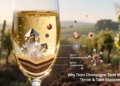
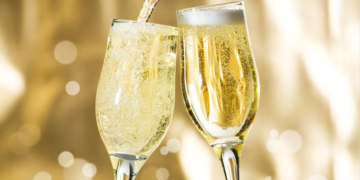
- Fine streams of bubbles
- Light golden color
- Complex aroma layers
What You Taste
- Bright acidity
- Subtle fruit
- Toast and brioche
- Long, clean finish
Reflection: A House Built on Time
Walking through a Champagne house reveals something essential:
This is not a place of rapid production.
It is a place of:
- Controlled waiting
- Layered decisions
- Invisible transformation
Every bottle contains:
- A season in the vineyard
- A moment of blending
- Years of quiet aging
Epilogue: Leaving with a Different Understanding
When you leave, the vineyards look the same.
The buildings feel unchanged.
But your perception has shifted.
Champagne is no longer just:
- A drink
- A celebration
It is a system:
- Of land
- Of time
- Of patience
- Of precise human intervention
And when the cork finally opens, what you are experiencing is not just bubbles—
It is everything that happened before that moment.