






























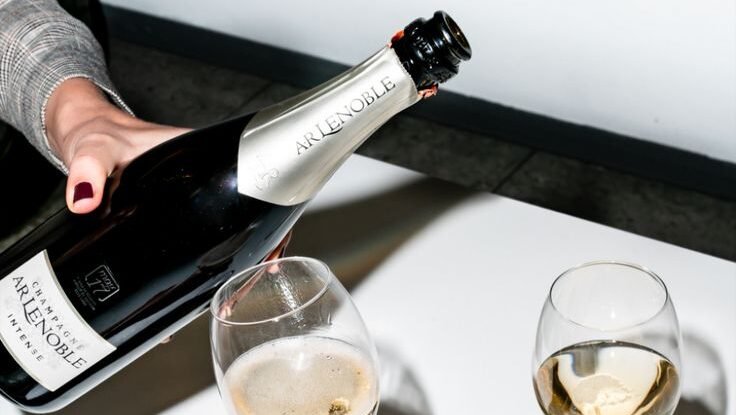
Introduction: When Wine Becomes Luxury
Not all wines are equal—but Champagne occupies a category of its own.
It is not just sold as a beverage. It is marketed, priced, and perceived as a luxury good. This distinction changes everything: how it is produced, distributed, consumed, and valued.
Unlike ordinary wines, Champagne operates within a carefully controlled ecosystem where scarcity, branding, and heritage are just as important as taste.
This article explores the business of Champagne—not as agriculture, but as strategy.
1. The Power of Origin: Controlled Scarcity
1.1 The Importance of the Champagne region
The most important rule in the Champagne business is simple:
Only sparkling wine produced in the Champagne region of France can legally be called Champagne.
This is not just tradition—it is a powerful economic tool.
1.2 Limited Land, Unlimited Demand
The Champagne region has:
- Fixed geographic boundaries
- Finite vineyard space
- Strict production rules
This creates natural scarcity.
As global demand increases, supply cannot expand easily—driving prices upward.
1.3 Protection Through Law
The Champagne name is protected internationally through:
- Appellation systems
- Trade agreements
- Legal enforcement
This prevents dilution of the brand and maintains exclusivity.
2. Industry Structure: Houses vs. Growers
2.1 The Grandes Maisons (Big Houses)
Large Champagne houses dominate global perception.
They focus on:
- Consistency
- Brand identity
- Global distribution
They often blend grapes from multiple sources to maintain a signature style.
2.2 Grower Champagne (Récoltant-Manipulant)
Smaller producers grow and produce their own Champagne.
They emphasize:
- Terroir expression
- Individuality
- Limited production
Though smaller in scale, they are gaining influence among enthusiasts.
2.3 A Dual System
The Champagne industry is unique in that:
- Large houses control global branding
- Small growers drive innovation and authenticity
Both coexist—and depend on each other.
3. Pricing: Why Champagne Is Expensive
3.1 Production Costs
Champagne is costly to produce due to:
- Manual harvesting
- Long aging periods
- Complex production processes
Time alone adds significant cost.
3.2 Inventory and Time Value
Champagne must age for years before release.
This means:
- Capital is tied up in inventory
- Producers must finance long cycles
The price reflects not just materials—but time.
3.3 Branding Premium
A significant portion of Champagne’s price comes from:
- Brand reputation
- Marketing investment
- Perceived prestige
Consumers are paying for both product and image.
4. Branding: The Core of Champagne’s Success
4.1 Heritage as Strategy
Champagne brands emphasize:
- History (often centuries old)
- Tradition
- Continuity
This creates trust and emotional resonance.
4.2 Consistency vs. Creativity
Unlike craft beer or experimental wines, Champagne brands prioritize:
- Consistent flavor profiles
- Recognizable identity
Customers expect reliability.
4.3 Visual Identity
Luxury Champagne branding often includes:
- Minimalist labels
- Elegant typography
- Iconic bottle shapes
Subtlety signals confidence.

5. Distribution and Exclusivity
5.1 Controlled Availability
Champagne is not always widely accessible.
Producers may:
- Limit distribution
- Allocate bottles selectively
- Control pricing across markets
5.2 On-Trade vs. Off-Trade
- On-trade (restaurants, bars) → higher margins, brand building
- Off-trade (retail) → volume and accessibility
Prestige is often built in high-end venues.
5.3 Luxury Placement
Champagne is strategically placed in:
- Fine dining restaurants
- Luxury hotels
- Exclusive events
Context reinforces value.
6. The Role of Marketing and Storytelling
6.1 Association with Celebration
Champagne marketing consistently links the product with:
- Success
- Joy
- Milestones
This emotional positioning drives demand.
6.2 Celebrity and Cultural Influence
Champagne appears in:
- Films
- Fashion events
- High-profile celebrations
This visibility strengthens its aspirational appeal.
6.3 Scarcity Marketing
Limited editions and vintage releases create:
- Urgency
- Collectibility
- Higher perceived value
7. Global Demand and Market Dynamics
7.1 Mature vs. Emerging Markets
- Europe → stable, traditional consumption
- Asia → growing demand, luxury-driven
- United States → mix of lifestyle and premiumization
7.2 Shifting Consumer Behavior
Modern consumers value:
- Authenticity
- Sustainability
- Story
This benefits smaller producers.
7.3 Economic Sensitivity
Champagne is a luxury product, so demand is influenced by:
- Economic cycles
- Consumer confidence
- Global wealth trends
8. Competition: Beyond Champagne
Champagne competes with:
- Other sparkling wines
- Premium still wines
- Luxury spirits
However, it maintains a unique position due to its identity.
9. Sustainability and Future Costs
9.1 Climate Change
Rising temperatures affect:
- Grape quality
- Harvest timing
- Regional identity
9.2 Sustainable Practices
Producers are investing in:
- Organic farming
- Reduced emissions
- Long-term vineyard health
These efforts may increase costs—but protect the future.
10. Innovation vs. Tradition
Champagne faces a delicate balance:
- Maintain heritage
- Adapt to modern markets
Too much change risks identity.
Too little risks irrelevance.
11. The Economics of Prestige
Champagne’s value is built on:
- Scarcity
- Time
- Brand
- Cultural meaning
It is not priced purely on cost—but on perception.
12. The Future of the Champagne Business
12.1 Continued Premiumization
High-end segments will continue to grow.
12.2 Rise of Smaller Producers
Consumers will increasingly explore:
- Grower Champagne
- Unique expressions
12.3 Experience-Based Luxury
Champagne will be sold not just as a product—but as an experience.
Conclusion: The Strategy Behind the Sparkle
Champagne is one of the clearest examples of how a product becomes a luxury.
It is not just what is inside the bottle that matters—but everything around it:
- Where it comes from
- How it is presented
- What it represents
In the end, Champagne is not just sold—it is positioned.
And that positioning is what turns a sparkling wine into a global symbol of prestige










