








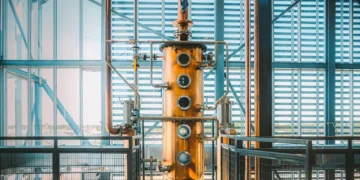





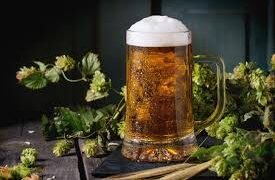















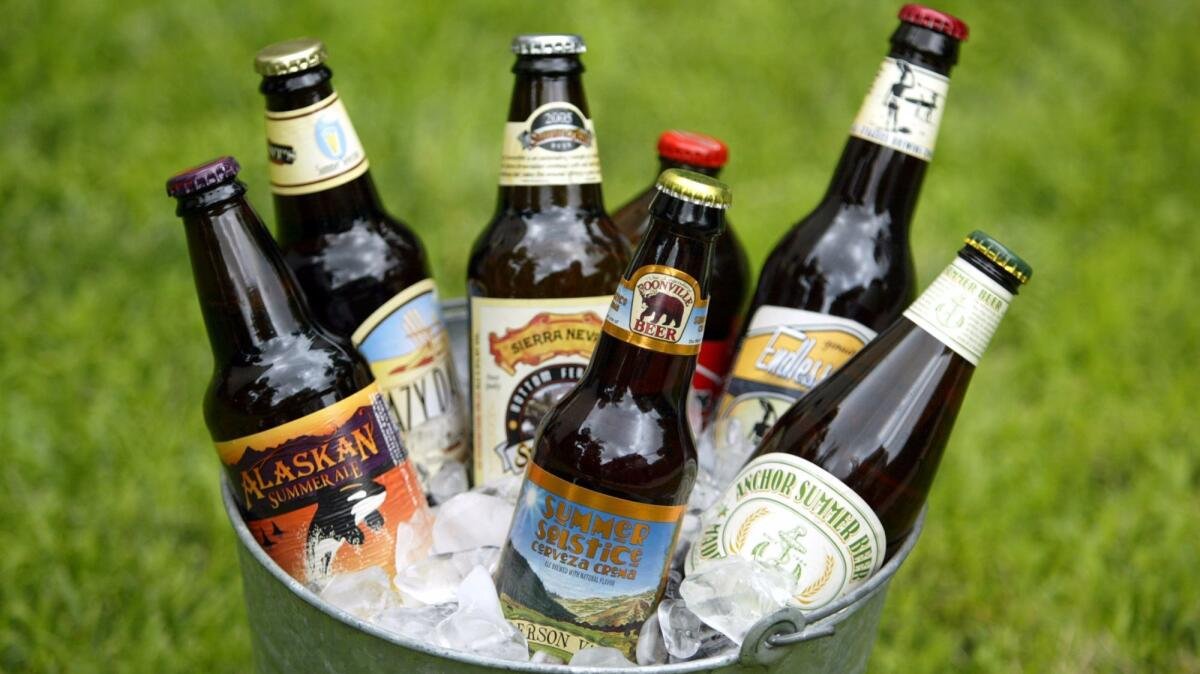
Introduction: Beer as a System, Not a Drink
Most people experience beer linearly: you open it, sip it, maybe notice bitterness or smoothness, and move on. But behind that seemingly simple experience lies a deeply layered system—one where chemistry, physics, biology, and human intention intersect.
To truly understand beer, you have to stop thinking of it as a finished product and start seeing it as a constructed system.
Beer is architecture.
It is built from layers: base materials, transformations, interactions, and final expression. Each decision—grain type, water composition, fermentation temperature—acts like a structural beam. Change one, and the entire system shifts.
This article does not tell the story of beer. It dissects it.
Module 1: The Four Primary Inputs — Raw Materials as Design Variables
Beer begins with four fundamental components, but each is far more complex than it appears.
1.1 Water: The Invisible Framework
Water makes up over 90% of beer, yet it is often overlooked.
What matters is not just water—but its mineral composition:
- Calcium influences enzyme activity and clarity
- Sulfates enhance perceived bitterness
- Chlorides emphasize malt smoothness
Historically, entire beer styles evolved because of local water chemistry. Brewers today often recreate or modify water profiles to achieve specific outcomes.
Water is not neutral—it is directional.
1.2 Malt: The Structural Core
Malt provides:
- Fermentable sugars
- Color
- Body
- Flavor
But malt is not a single ingredient—it is a spectrum.
Base malts create the foundation (light, neutral, enzymatic)
Specialty malts add complexity:
- Caramel malts → sweetness and body
- Roasted malts → coffee, chocolate, bitterness
- Kilned malts → biscuit, toast
The malt bill (the combination of grains) determines the beer’s skeletal identity.
1.3 Hops: The Precision Tool
Hops are not just for bitterness—they are timing-sensitive flavor instruments.
Added at different stages, hops contribute:
- Early boil → bitterness
- Mid boil → flavor
- Late boil → aroma
- Dry hopping → intense aromatic expression
Modern brewing treats hops almost like spices or perfume components.
Their impact is both quantitative (bitterness units) and qualitative (aroma complexity).
1.4 Yeast: The Biological Engine
Yeast is the most dynamic component.
It converts sugar into:
- Alcohol
- Carbon dioxide
- Hundreds of flavor compounds
Different yeast strains produce:
- Fruity esters
- Spicy phenols
- Clean or complex profiles
Yeast does not just ferment—it interprets the beer.
Module 2: Transformation Layers — From Ingredients to Liquid
Raw materials alone are static. Brewing is about transformation.
2.1 Malting: Unlocking Potential
Grains are malted to activate enzymes that later convert starch into sugar.
This stage determines:
- Enzymatic power
- Flavor precursors
- Color potential
It is the preparation phase of the entire system.
2.2 Mashing: Conversion Logic
During mashing, temperature controls enzymatic activity.
Lower temperatures:
- Produce more fermentable sugars
- Result in lighter, drier beer
Higher temperatures:
- Create more complex sugars
- Result in fuller body
This is where the brewer defines how the beer will feel.
2.3 Boiling: Stabilization and Structuring
Boiling serves multiple functions:
- Sterilization
- Protein coagulation
- Hop isomerization (bitterness extraction)
Time and intensity of boil affect:
- Clarity
- Flavor stability
- Bitterness levels
2.4 Fermentation: System Activation
This is where beer becomes beer.
Variables include:
- Temperature
- Oxygen levels
- Yeast strain
- Fermentation duration
Small changes here can radically alter the outcome.
Module 3: Flavor Architecture — How Beer Is Perceived
Beer flavor is not a single dimension—it is a layered experience.
3.1 Entry (First Impression)
What you taste immediately:
- Sweetness
- Bitterness
- Carbonation
This sets expectation.
3.2 Mid-Palate (Core Experience)
Here, complexity unfolds:
- Malt depth
- Hop flavor
- Yeast character
This is the “body” of the beer.
3.3 Finish (Aftertaste)
The finish defines memorability:
- Dry vs lingering
- Clean vs heavy
- Bitter vs smooth
Great beers manage transitions smoothly across all stages.
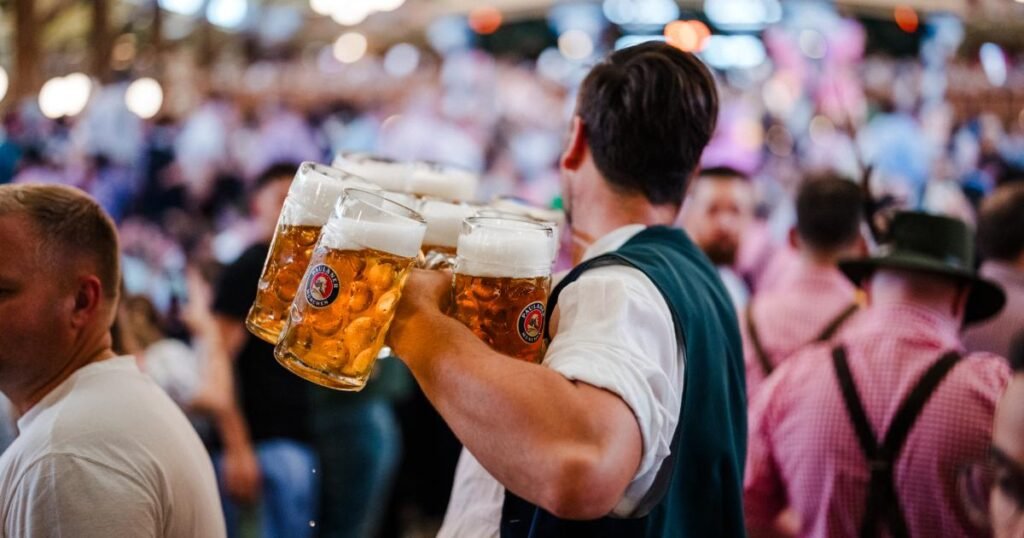
Module 4: Balance Systems — The Core Equation
Beer quality often comes down to balance.
4.1 Sweetness vs Bitterness
Malt sweetness must be balanced by hop bitterness.
Too much of either creates imbalance.
4.2 Body vs Carbonation
- High carbonation → lighter perception
- Low carbonation → heavier mouthfeel
These must align with style intent.
4.3 Alcohol vs Drinkability
Higher alcohol adds:
- Warmth
- Weight
But reduces drinkability.
Balance determines usability.
Module 5: Style Matrix — Mapping the Beer Universe
Beer styles are not random—they exist within a structured space.
5.1 Axes of Classification
You can map beers along key dimensions:
- Light ↔ Dark
- Low alcohol ↔ High alcohol
- Low bitterness ↔ High bitterness
- Simple ↔ Complex
Every beer occupies a position within this matrix.
5.2 Families of Beer
Rather than memorizing styles, think in families:
- Malt-forward
- Hop-forward
- Yeast-driven
- Mixed or experimental
This simplifies understanding.
Module 6: Process Variables — The Hidden Levers
Small technical adjustments create big differences.
6.1 Temperature Control
Affects:
- Fermentation speed
- Flavor development
6.2 Oxygen Management
Too much oxygen:
- Causes staling
Too little during fermentation:
- Limits yeast performance
6.3 Time
Time influences:
- Maturation
- Flavor integration
- Stability
Beer is a time-dependent system.
Module 7: Fault Detection — When Systems Fail
Not all beer works as intended.
7.1 Common Faults
- Oxidation → stale, cardboard-like
- Contamination → sour or off flavors
- Diacetyl → buttery notes (sometimes unwanted)
7.2 Stability Issues
Poor process control leads to:
- Inconsistent flavor
- Short shelf life
Module 8: Modern Optimization — Engineering Beer
Today’s brewers increasingly approach beer scientifically.
8.1 Data-Driven Brewing
Sensors monitor:
- Temperature
- pH
- Fermentation activity
8.2 Recipe Iteration
Brewers refine recipes through:
- Controlled experimentation
- Sensory analysis
8.3 Scaling Challenges
Scaling up production requires:
- Maintaining consistency
- Managing variability
Module 9: The Human Factor
Despite all systemization, beer is still human.
9.1 Creativity
Recipes are not purely logical—they reflect taste and intention.
9.2 Experience
Skilled brewers recognize patterns beyond data.
9.3 Intuition
Some decisions cannot be fully quantified.
Conclusion: Beer as Designed Experience
Beer is not accidental. It is designed, layered, and executed with precision.
From water chemistry to yeast metabolism, from temperature curves to timing decisions, every element contributes to the final experience.
Understanding beer as a system does not make it less enjoyable—it makes each sip more meaningful.
Because once you see the structure, you realize:
Beer is not just something you drink.
It is something that has been engineered for perception.