


























Entrance: The Smell Before the Sight
You don’t see the brewery first—you smell it.
Before the stainless steel tanks come into view, before the hum of machinery becomes clear, there is a warm, almost comforting aroma in the air. It smells like baking bread, caramelizing sugar, damp grain, and something faintly floral.
This is not accidental.
It is the scent of malt being transformed.
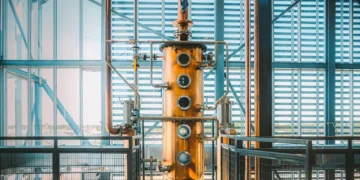
You step inside, and the space opens up: pipes run overhead like veins, tanks rise like quiet monuments, and everything feels both industrial and alive. There is order here, but also motion. Heat, sound, liquid, and time are all in constant interaction.
A brewery is not just a factory.
It is a controlled ecosystem.
Station 1: The Grain Room — Where Beer Begins in Solid Form
The first stop is unexpectedly unglamorous.
Stacks of large sacks—barley, wheat, sometimes oats—line the walls. If you didn’t know better, you might think you had walked into a bakery warehouse.
A brewer picks up a handful of malted barley and lets it fall through their fingers.
“Everything starts here,” they say.
What You Notice
- The grains are dry, slightly sweet-smelling
- Some are pale, others darker, almost roasted
- There is a tactile roughness, a sense of raw material waiting
What Is Actually Happening
These grains have already undergone malting:
- They were soaked, allowed to germinate, then dried
- Enzymes inside them are now ready to convert starch into sugar
Each type of grain will contribute something different later:
- Light malt → fermentable base
- Dark malt → color and roasted flavor
- Specialty grains → nuance, texture
At this stage, beer still feels distant. You’re looking at potential, not product.
Station 2: The Mill — Breaking Structure
The next machine is loud.
Grains are poured into a mill, and as they pass through, they are crushed—not into flour, but into coarse fragments.
You watch the transformation:
- Whole grains become cracked shells
- A faint cloud of dust rises
- The smell intensifies—nutty, warm, alive
Why This Matters
The goal is not destruction—it’s exposure.
- The husk remains mostly intact
- The inner starch is made accessible
Too fine, and the mixture becomes difficult to filter later.
Too coarse, and extraction is inefficient.
Even here, balance matters.
Station 3: The Mash Tun — Where Chemistry Begins
Now things change.
You arrive at a large vessel filled with warm water. The crushed grain is added, and suddenly the room smells like porridge, bread, and sweetness.
This is the mash.
What You See
- A thick, oatmeal-like mixture
- Steam rising slowly
- Gentle mechanical stirring
What You Feel
Warmth. Humidity. A sense that something is quietly happening.
What Is Happening (Unseen)
Inside the mash:
- Enzymes break down starch into sugar
- Temperature controls which enzymes dominate
Lower temperatures → more fermentable sugars → lighter beer
Higher temperatures → more complex sugars → fuller body
This is one of the most decisive moments in brewing.
The brewer is not just making liquid—they are shaping future texture.
Station 4: Lautering — Separation of Worlds
After mashing, the mixture is transferred.
Here, liquid and solid are separated.
What You Observe
- The liquid (now called wort) begins to run clear
- The grain bed acts like a natural filter
- The leftover grain remains behind
Sensory Shift
The smell is sweeter now, less raw, more refined.
What This Means
The wort contains:
- Sugars
- Proteins
- Flavor precursors
The grain has done its job.
What remains is the foundation of beer.
Station 5: The Boil — Energy and Intensity
The wort is moved to a large kettle and brought to a rolling boil.
The atmosphere changes immediately.
What You Experience
- Heat intensifies
- Steam fills the air
- The smell becomes sharper, more defined
This is where hops enter.
Watching the Hop Additions
At different moments, hops are added:
- Early → bitterness
- Middle → flavor
- Late → aroma
You see green pellets dissolve, releasing oils and compounds into the boiling liquid.
Why Boiling Matters
- Sterilizes the wort
- Extracts bitterness
- Stabilizes proteins
This is the most energetic phase—everything is active, volatile, transforming rapidly.
Station 6: Cooling — From Chaos to Control
After the boil, urgency sets in.
The hot wort must be cooled quickly.
Why Speed Matters
- Prevents contamination
- Prepares for yeast
You watch as the liquid moves through a heat exchanger:
- Hot becomes cold in minutes
- Steam disappears
- Calm returns
The smell softens again.
The beer is no longer aggressive—it is ready.
Station 7: Fermentation — The Invisible Work
Now you enter the quietest room.
Tall tanks stand still. No boiling, no steam, no noise.
But this is where the most important transformation occurs.
What You See
- Sealed vessels
- Airlocks or pressure valves
- Occasional bubbling
What You Don’t See
Inside, yeast is alive:
- Consuming sugar
- Producing alcohol
- Creating aroma compounds
Time Feels Different Here
Days pass. Sometimes weeks.
Temperature is carefully controlled.
The brewer explains:
“This is where we lose control a little.”
Despite all preparation, yeast behaves dynamically.
Each fermentation is slightly unique.
Station 8: Conditioning — Refinement Over Time
After fermentation, the beer is not yet finished.
It is:
- Rough
- Slightly unstable
- Still developing
What Happens Here
- Flavors integrate
- Harsh edges soften
- Unwanted compounds dissipate
This stage is less visible, but essential.
It is where beer becomes cohesive.
Station 9: Packaging — From System to Object
Finally, you reach the packaging line.
The beer is transferred into:
- Bottles
- Cans
- Kegs
The environment is precise, almost clinical.
Key Focus
- Oxygen control
- Cleanliness
- Consistency
At this moment, the beer becomes:
- Transportable
- Sellable
- Shareable
What began as grain is now a finished product.
Station 10: Tasting Room — Completion of the Journey
You return to where the journey ends—and begins again.
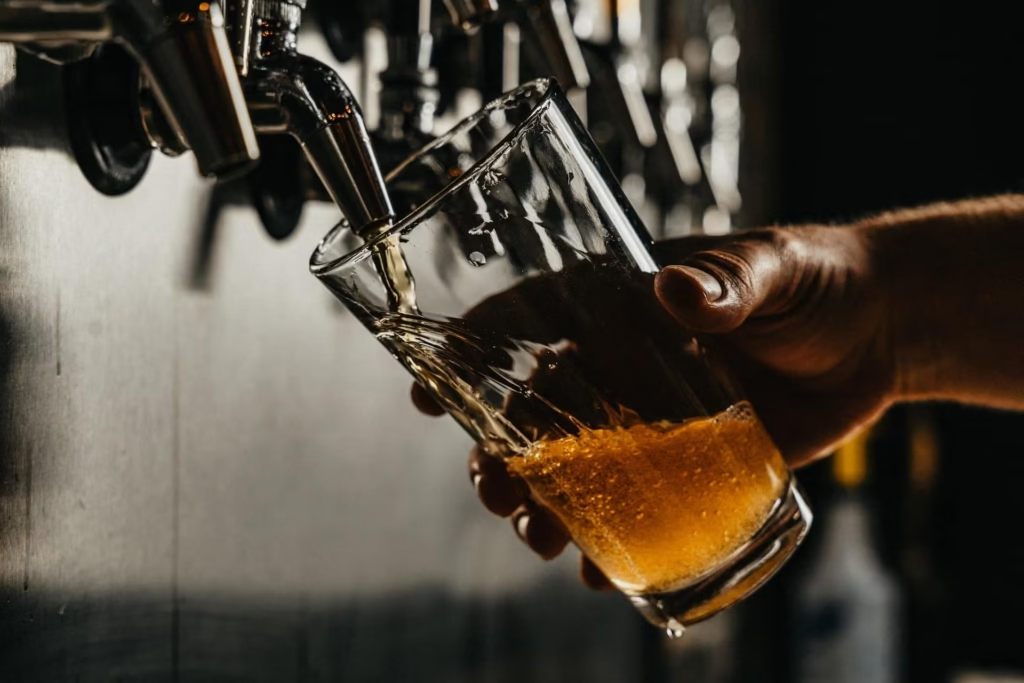
A glass is poured.
You take a sip.
What Changes Now
You don’t just taste bitterness or sweetness anymore.
You recognize:
- The grain behind the body
- The hops behind the aroma
- The yeast behind the complexity
You taste the process.
Reflection: A Brewery Is Not a Place, but a Flow
Walking through a brewery reveals something fundamental:
Beer is not made in a single moment.
It is a chain of transformations:
- Solid to liquid
- Sugar to alcohol
- Chaos to balance
Each station is a phase, each phase a decision, each decision a direction.
A brewery is not just equipment.
It is a sequence of controlled changes—guided by human intention, executed by natural processes.
Epilogue: The Hidden Complexity of a Simple Drink
The next time you hold a glass of beer, it will look the same as before.
Golden, dark, hazy—it doesn’t matter.
But you will know something different.
You will know that behind that glass is:
- Agriculture
- Chemistry
- Time
- Precision
- And a little unpredictability
Beer may be one of the most accessible drinks in the world.
But inside the brewery, you realize:
It is anything but simple.