






























SipsavorLife
  • Home
  • Wine
    Wine Pairings: Can They Change the Flavor Profile of a Dish?

    Wine Pairings: Can They Change the Flavor Profile of a Dish?

    How Do Wine Glasses Influence the Tasting Experience?

    How Do Wine Glasses Influence the Tasting Experience?

    Is Organic Wine Healthier Than Conventional Wine?

    Is Organic Wine Healthier Than Conventional Wine?

    Why Do Some Wines Taste Better from Specific Vintages?

    Why Do Some Wines Taste Better from Specific Vintages?

    Wine Tasting: Can It Truly Be an Art Form?

    Wine Tasting: Can It Truly Be an Art Form?

    What Does Terroir Actually Mean for Your Wine?

    What Does Terroir Actually Mean for Your Wine?

  • Whiskey
    Can Beer Be an Effective Ingredient in Culinary Cooking?

    Can Beer Be an Effective Ingredient in Culinary Cooking?

    Second Fermentation in Champagne: Is It Really That Crucial?

    Second Fermentation in Champagne: Is It Really That Crucial?

    How Do Different Grains Impact the Flavor Profile of Distilled Spirits?

    How Do Different Grains Impact the Flavor Profile of Distilled Spirits?

    How Do Whiskey Master Blenders Create Perfection?

    How Do Whiskey Master Blenders Create Perfection?

    Wine Pairings: Can They Change the Flavor Profile of a Dish?

    Wine Pairings: Can They Change the Flavor Profile of a Dish?

    Beer the Ultimate Beverage for Pairing with Spicy Food?

    Beer the Ultimate Beverage for Pairing with Spicy Food?

  • Beer
    Can Beer Be an Effective Ingredient in Culinary Cooking?

    Can Beer Be an Effective Ingredient in Culinary Cooking?

    Beer the Ultimate Beverage for Pairing with Spicy Food?

    Beer the Ultimate Beverage for Pairing with Spicy Food?

    How Did Ancient Civilizations Brew Beer Without Modern Technology?

    How Did Ancient Civilizations Brew Beer Without Modern Technology?

    Is It Possible to Brew a Beer with No Alcohol and No Compromise on Taste?

    Is It Possible to Brew a Beer with No Alcohol and No Compromise on Taste?

    Why Does Beer Taste Different at High Altitudes?

    Why Does Beer Taste Different at High Altitudes?

    Is Hops the Secret Ingredient Behind Beer’s Bold Flavor?

    Is Hops the Secret Ingredient Behind Beer’s Bold Flavor?

  • Grain Spirits
    How Do Different Grains Impact the Flavor Profile of Distilled Spirits?

    How Do Different Grains Impact the Flavor Profile of Distilled Spirits?

    Grain Spirits the Unsung Heroes of Modern Mixology

    Grain Spirits the Unsung Heroes of Modern Mixology

    What Makes Grain-Based Whiskey So Different from Its Peated Cousins?

    What Makes Grain-Based Whiskey So Different from Its Peated Cousins?

    Grain Spirits: Could They Be the Next Big Trend in Craft Cocktails?

    Grain Spirits: Could They Be the Next Big Trend in Craft Cocktails?

    Why Are Grain Spirits Often Overlooked in the World of Fine Liquor?

    Why Are Grain Spirits Often Overlooked in the World of Fine Liquor?

    Is There a Secret Art to Distilling Grain Spirits?

    Is There a Secret Art to Distilling Grain Spirits?

  • Champagne
    Second Fermentation in Champagne: Is It Really That Crucial?

    Second Fermentation in Champagne: Is It Really That Crucial?

    The Science Behind the ‘Bubble Size’ in Champagne

    The Science Behind the ‘Bubble Size’ in Champagne

    Why Do Some Champagnes Use a High Proportion of Pinot Meunier?

    Why Do Some Champagnes Use a High Proportion of Pinot Meunier?

    Role of Terroir in Champagne Production

    Role of Terroir in Champagne Production

    Champagne Can Be Aged in Wood?

    Champagne Can Be Aged in Wood?

    Is There a Difference Between Blanc de Blancs and Blanc de Noirs Champagne?

    Is There a Difference Between Blanc de Blancs and Blanc de Noirs Champagne?

  • ALL
    Can Beer Be an Effective Ingredient in Culinary Cooking?

    Can Beer Be an Effective Ingredient in Culinary Cooking?

    Second Fermentation in Champagne: Is It Really That Crucial?

    Second Fermentation in Champagne: Is It Really That Crucial?

    How Do Different Grains Impact the Flavor Profile of Distilled Spirits?

    How Do Different Grains Impact the Flavor Profile of Distilled Spirits?

    How Do Whiskey Master Blenders Create Perfection?

    How Do Whiskey Master Blenders Create Perfection?

    Wine Pairings: Can They Change the Flavor Profile of a Dish?

    Wine Pairings: Can They Change the Flavor Profile of a Dish?

    Beer the Ultimate Beverage for Pairing with Spicy Food?

    Beer the Ultimate Beverage for Pairing with Spicy Food?

SipsavorLife
  • Home
  • Wine
    Wine Pairings: Can They Change the Flavor Profile of a Dish?

    Wine Pairings: Can They Change the Flavor Profile of a Dish?

    How Do Wine Glasses Influence the Tasting Experience?

    How Do Wine Glasses Influence the Tasting Experience?

    Is Organic Wine Healthier Than Conventional Wine?

    Is Organic Wine Healthier Than Conventional Wine?

    Why Do Some Wines Taste Better from Specific Vintages?

    Why Do Some Wines Taste Better from Specific Vintages?

    Wine Tasting: Can It Truly Be an Art Form?

    Wine Tasting: Can It Truly Be an Art Form?

    What Does Terroir Actually Mean for Your Wine?

    What Does Terroir Actually Mean for Your Wine?

  • Whiskey
    Can Beer Be an Effective Ingredient in Culinary Cooking?

    Can Beer Be an Effective Ingredient in Culinary Cooking?

    Second Fermentation in Champagne: Is It Really That Crucial?

    Second Fermentation in Champagne: Is It Really That Crucial?

    How Do Different Grains Impact the Flavor Profile of Distilled Spirits?

    How Do Different Grains Impact the Flavor Profile of Distilled Spirits?

    How Do Whiskey Master Blenders Create Perfection?

    How Do Whiskey Master Blenders Create Perfection?

    Wine Pairings: Can They Change the Flavor Profile of a Dish?

    Wine Pairings: Can They Change the Flavor Profile of a Dish?

    Beer the Ultimate Beverage for Pairing with Spicy Food?

    Beer the Ultimate Beverage for Pairing with Spicy Food?

  • Beer
    Can Beer Be an Effective Ingredient in Culinary Cooking?

    Can Beer Be an Effective Ingredient in Culinary Cooking?

    Beer the Ultimate Beverage for Pairing with Spicy Food?

    Beer the Ultimate Beverage for Pairing with Spicy Food?

    How Did Ancient Civilizations Brew Beer Without Modern Technology?

    How Did Ancient Civilizations Brew Beer Without Modern Technology?

    Is It Possible to Brew a Beer with No Alcohol and No Compromise on Taste?

    Is It Possible to Brew a Beer with No Alcohol and No Compromise on Taste?

    Why Does Beer Taste Different at High Altitudes?

    Why Does Beer Taste Different at High Altitudes?

    Is Hops the Secret Ingredient Behind Beer’s Bold Flavor?

    Is Hops the Secret Ingredient Behind Beer’s Bold Flavor?

  • Grain Spirits
    How Do Different Grains Impact the Flavor Profile of Distilled Spirits?

    How Do Different Grains Impact the Flavor Profile of Distilled Spirits?

    Grain Spirits the Unsung Heroes of Modern Mixology

    Grain Spirits the Unsung Heroes of Modern Mixology

    What Makes Grain-Based Whiskey So Different from Its Peated Cousins?

    What Makes Grain-Based Whiskey So Different from Its Peated Cousins?

    Grain Spirits: Could They Be the Next Big Trend in Craft Cocktails?

    Grain Spirits: Could They Be the Next Big Trend in Craft Cocktails?

    Why Are Grain Spirits Often Overlooked in the World of Fine Liquor?

    Why Are Grain Spirits Often Overlooked in the World of Fine Liquor?

    Is There a Secret Art to Distilling Grain Spirits?

    Is There a Secret Art to Distilling Grain Spirits?

  • Champagne
    Second Fermentation in Champagne: Is It Really That Crucial?

    Second Fermentation in Champagne: Is It Really That Crucial?

    The Science Behind the ‘Bubble Size’ in Champagne

    The Science Behind the ‘Bubble Size’ in Champagne

    Why Do Some Champagnes Use a High Proportion of Pinot Meunier?

    Why Do Some Champagnes Use a High Proportion of Pinot Meunier?

    Role of Terroir in Champagne Production

    Role of Terroir in Champagne Production

    Champagne Can Be Aged in Wood?

    Champagne Can Be Aged in Wood?

    Is There a Difference Between Blanc de Blancs and Blanc de Noirs Champagne?

    Is There a Difference Between Blanc de Blancs and Blanc de Noirs Champagne?

  • ALL
    Can Beer Be an Effective Ingredient in Culinary Cooking?

    Can Beer Be an Effective Ingredient in Culinary Cooking?

    Second Fermentation in Champagne: Is It Really That Crucial?

    Second Fermentation in Champagne: Is It Really That Crucial?

    How Do Different Grains Impact the Flavor Profile of Distilled Spirits?

    How Do Different Grains Impact the Flavor Profile of Distilled Spirits?

    How Do Whiskey Master Blenders Create Perfection?

    How Do Whiskey Master Blenders Create Perfection?

    Wine Pairings: Can They Change the Flavor Profile of a Dish?

    Wine Pairings: Can They Change the Flavor Profile of a Dish?

    Beer the Ultimate Beverage for Pairing with Spicy Food?

    Beer the Ultimate Beverage for Pairing with Spicy Food?

SipsavorLife
No Result
View All Result
Home ALL

Why Is the Shape of Champagne Bottles So Different from Traditional Wine Bottles?

July 4, 2025
in ALL, Champagne
Why Is the Shape of Champagne Bottles So Different from Traditional Wine Bottles?

When you think of Champagne, one of the first things that catches your attention is its distinctive bottle shape. The slender, curved design is unmistakable, setting Champagne apart from the more traditional, straight-sided wine bottles used for still wines. But have you ever wondered why Champagne bottles look so different, and what the unique shape means for the wine inside?

While the shape may seem like a mere design feature, the bottle shape of Champagne is the result of centuries of tradition, practical considerations, and the specific requirements for sparkling wine production. From the pressures inside the bottle to the desire for prestige and aesthetic appeal, the design is far from arbitrary.

Let’s explore the reasons behind the unique Champagne bottle shape, and how it enhances the safety, storage, and drinking experience of this iconic sparkling wine.


1. The Pressure Factor: Why Champagne Bottles Need to Be Stronger

One of the primary reasons why Champagne bottles have a distinctive shape is because of the high pressure inside them. Unlike still wines, which are stored in bottles under ambient pressure, Champagne bottles need to withstand much higher pressures due to the carbon dioxide gas produced during secondary fermentation. This process, which takes place in the sealed bottle, creates the bubbles that are the hallmark of Champagne.

  • Internal Pressure: A bottle of Champagne can be under pressure equal to about 3 atmospheres, or 3 times the pressure of a car tire. This is because the yeast in the bottle continues to ferment, producing carbon dioxide, which dissolves in the wine and creates the signature effervescence.
  • Strong Glass: The bulging design of Champagne bottles helps the glass withstand this internal pressure. The rounded shoulders and thicker glass give the bottle the necessary strength to hold the bubbly contents securely without risk of rupture.
  • Shape and Strength: The conical shape of Champagne bottles, often referred to as the “punt”, which is the indentation at the bottom, serves a dual purpose. Not only does it give the bottle structural strength, but it also helps distribute the pressure evenly throughout the bottle. This feature ensures that the glass doesn’t break under the strain of the internal carbon dioxide gas.

2. The Tradition of the “Punt”

The punt is the indentation at the bottom of a bottle that has become synonymous with Champagne bottles. But what exactly does this feature do, and why is it so important?

  • Pressure Distribution: The punt allows the pressure to be distributed evenly along the base of the bottle, which strengthens the bottle’s structure. In addition, the depth of the punt increases the bottle’s stability, preventing it from tipping over too easily, especially when it is filled with Champagne under high pressure.
  • Ease of Handling: The punt also makes it easier to handle the bottle when pouring. By inserting a finger into the punt, it provides a natural grip for the person pouring the Champagne, offering a more controlled and smooth pour.
  • Aesthetic Tradition: Historically, the punt was also a feature of early glassblowing techniques. In the past, bottles were hand-blown, and the punt was a practical feature that allowed for a stronger seal and a more stable bottle. Over time, it became a traditional design feature, even though modern bottles are produced using more advanced manufacturing processes.

3. The Role of the Bottle’s Shape in Aging Champagne

Another reason Champagne bottles are designed with such care is because of the aging process that many high-quality Champagnes undergo. Champagne is often aged on its lees, the dead yeast cells that remain in the bottle after secondary fermentation. The shape of the bottle can have an impact on how the wine interacts with these lees and the overall aging process.

  • Lees Contact: The traditional shape of the Champagne bottle ensures that the wine remains in close contact with the lees, which imparts complex flavors and bready, biscuity notes. The slight angle of the bottle encourages the yeast to settle at the bottom rather than floating through the wine, allowing for a more controlled aging environment.
  • Aging and Maturation: The punt helps keep the lees in place at the bottom of the bottle, ensuring the wine’s interaction with the yeast is consistent throughout the aging process. This design allows for the development of the complex, autolytic flavors that define quality Champagne, contributing to the wine’s depth and texture.

4. Prestige and Luxury: The Symbolic Nature of the Bottle Design

Beyond the technical aspects of pressure and aging, the shape of the Champagne bottle also carries a heavy symbolic weight. Champagne has long been associated with celebration, luxury, and prestige, and the bottle shape plays a role in communicating this image.

  • Elegant Appearance: The tall, slender neck and curved shoulders of the Champagne bottle give it a more elegant and refined appearance, making it stand out in any setting. The design reflects the premium nature of Champagne and is part of the wine’s identity as a drink for special occasions.
  • Historical Significance: The bottle design, particularly the punt, dates back to the 18th century and beyond, and is tied to the tradition and history of Champagne production. The distinctive shape has remained largely unchanged as a nod to the heritage and craftsmanship of Champagne houses, helping to maintain its reputation as a wine of luxury and class.
  • Visual Identity: The unique design of the Champagne bottle has become an iconic feature of the product itself. Just as you can instantly recognize the distinctive shape of a Champagne bottle, it also symbolizes the occasion and ritual of enjoying this sparkling wine. The bottle’s appearance tells you something about the special nature of the experience inside.
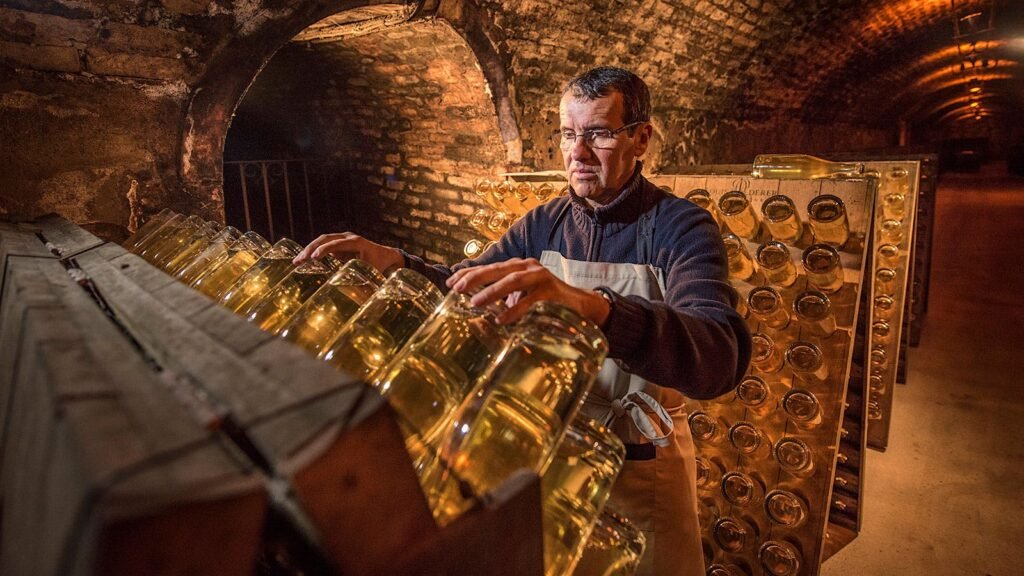
5. Practical Considerations: Storage and Transportation

The shape of Champagne bottles also has practical applications when it comes to storage and transportation.

  • Stackability: The slightly tapered design of Champagne bottles makes them easier to stack and store in cellars. This design is important for both the aging process and the shipping of Champagne. Since Champagne is often stored for long periods (sometimes years) before it is consumed, the shape allows for efficient storage while minimizing the risk of breakage during handling.
  • Shipping and Handling: The punt and overall bottle design also make the Champagne bottle more stable during transport, helping it withstand potential knocks and bumps. Additionally, the thick glass and reinforced structure prevent breakage during shipping.

6. Modern Variations and Bottle Shapes

While the traditional Champagne bottle shape has remained largely unchanged, some producers have started experimenting with different bottle shapes to appeal to different market segments or create a unique identity for their brand.

  • Boutique Producers: Some smaller, boutique Champagne producers may choose more modern or unconventional bottle shapes as part of their branding. These bottles might be more squat, round, or even artistic, but they still maintain the necessary structural integrity to withstand the pressure inside.
  • Magnum Bottles: Larger bottles, like magnums (1.5 liters), are also popular for aging Champagne and are typically designed with the same structural elements to ensure the wine ages properly and maintains the right balance of effervescence. Magnum bottles are also more impressive visually, enhancing their appeal as premium products.

Conclusion: The Art and Science Behind Champagne Bottles

The distinctive shape of Champagne bottles is not just for show—it is the result of centuries of craftsmanship, tradition, and practical necessity. From the pressure-resistant design to the aesthetic appeal, the shape of the bottle plays a crucial role in ensuring that Champagne is stored, aged, and enjoyed in the best possible way. Whether you’re sipping an everyday non-vintage Champagne or celebrating with an exquisite vintage, the bottle’s shape is integral to the experience.

So the next time you pop a cork and watch the bubbles rise, take a moment to appreciate the design of the bottle that holds the sparkling magic. It’s a symbol of the heritage, science, and luxury that defines Champagne.


Tags: champagneCultureFamous brand wineHealthHistoryInnovationluxurytaste
ShareTweetShare

Related Posts

Can Beer Be an Effective Ingredient in Culinary Cooking?
ALL

Can Beer Be an Effective Ingredient in Culinary Cooking?

January 22, 2026
Second Fermentation in Champagne: Is It Really That Crucial?
ALL

Second Fermentation in Champagne: Is It Really That Crucial?

January 22, 2026
How Do Different Grains Impact the Flavor Profile of Distilled Spirits?
ALL

How Do Different Grains Impact the Flavor Profile of Distilled Spirits?

January 22, 2026
How Do Whiskey Master Blenders Create Perfection?
ALL

How Do Whiskey Master Blenders Create Perfection?

January 22, 2026
Wine Pairings: Can They Change the Flavor Profile of a Dish?
ALL

Wine Pairings: Can They Change the Flavor Profile of a Dish?

January 22, 2026
Beer the Ultimate Beverage for Pairing with Spicy Food?
ALL

Beer the Ultimate Beverage for Pairing with Spicy Food?

January 21, 2026
Leave Comment
  • Trending
  • Comments
  • Latest
What Hidden Craftsmanship Lies Behind a Bottle of Quality Grain Spirits?

What Hidden Craftsmanship Lies Behind a Bottle of Quality Grain Spirits?

July 3, 2025
How Is Champagne Made? The Secrets Behind the Sparkle

How Is Champagne Made? The Secrets Behind the Sparkle

April 15, 2025
Grain Spirits vs. Traditional Distilled Spirits: Which One Suits Your Taste?

Grain Spirits vs. Traditional Distilled Spirits: Which One Suits Your Taste?

July 3, 2025
Champagne Bubbles: How Do They Perfectly Convey Celebration, Joy, and Luxury?

Champagne Bubbles: How Do They Perfectly Convey Celebration, Joy, and Luxury?

July 2, 2025
The Timeless Elegance of Wine: A Journey Through History and Culture

The Timeless Elegance of Wine: A Journey Through History and Culture

Why Is Château Lafite Rothschild the Pinnacle of Fine Wine?

Why Is Château Lafite Rothschild the Pinnacle of Fine Wine?

How Did Château Lafite Rothschild Become a Global Icon of Luxury?

How Did Château Lafite Rothschild Become a Global Icon of Luxury?

What Makes Chateau Lafite Rothschild the Pinnacle of Bordeaux Wines?

What Makes Chateau Lafite Rothschild the Pinnacle of Bordeaux Wines?

Can Beer Be an Effective Ingredient in Culinary Cooking?

Can Beer Be an Effective Ingredient in Culinary Cooking?

January 22, 2026
Second Fermentation in Champagne: Is It Really That Crucial?

Second Fermentation in Champagne: Is It Really That Crucial?

January 22, 2026
How Do Different Grains Impact the Flavor Profile of Distilled Spirits?

How Do Different Grains Impact the Flavor Profile of Distilled Spirits?

January 22, 2026
How Do Whiskey Master Blenders Create Perfection?

How Do Whiskey Master Blenders Create Perfection?

January 22, 2026
SipsavorLife

Welcome to our comprehensive beverage guide, where you can explore the fascinating world of alcoholic drinks. From exquisite wines and rich whiskeys to refreshing beers and sparkling champagnes, we provide insights, tips, and recommendations for enthusiasts and casual drinkers alike. Discover your next favorite libation with us!

© 2025 sipsavorlife.com. contacts:sipsavorlife-35376@gmail.com

No Result
View All Result
  • Home
  • Wine
  • Whiskey
  • Beer
  • Grain Spirits
  • Champagne
  • ALL

© 2025 sipsavorlife.com. contacts:sipsavorlife-35376@gmail.com

Welcome Back!

Login to your account below

Forgotten Password?

Retrieve your password

Please enter your username or email address to reset your password.

Log In





