



















SipsavorLife
  • Home
  • Wine
    The History, Culture, and Global Influence of Humanity’s Most Celebrated Beverage

    The Wine Revolution: How Modern Winemaking Transformed a Global Industry

    The History, Culture, and Global Influence of Humanity’s Most Celebrated Beverage

    Wine Styles of the World: A Complete Guide to Red, White, Rosé, Sparkling, and Fortified Wines

    The History, Culture, and Global Influence of Humanity’s Most Celebrated Beverage

    The Global Wine Industry: Markets, Trade, Tourism, and Economic Impact

    The History, Culture, and Global Influence of Humanity’s Most Celebrated Beverage

    The Science of Wine: Grapes, Fermentation, and Flavor Development

    The History, Culture, and Global Influence of Humanity’s Most Celebrated Beverage

    The History, Culture, and Global Influence of Humanity’s Most Celebrated Beverage

    The Cultural History of Wine: From Ancient Rituals to Modern Luxury

    The Psychology of Wine: Why Humans Associate Wine with Emotion, Memory, and Identity

  • Whiskey
    Can Beer Be an Effective Ingredient in Culinary Cooking?

    Can Beer Be an Effective Ingredient in Culinary Cooking?

    Second Fermentation in Champagne: Is It Really That Crucial?

    Second Fermentation in Champagne: Is It Really That Crucial?

    How Do Different Grains Impact the Flavor Profile of Distilled Spirits?

    How Do Different Grains Impact the Flavor Profile of Distilled Spirits?

    How Do Whiskey Master Blenders Create Perfection?

    How Do Whiskey Master Blenders Create Perfection?

    Wine Pairings: Can They Change the Flavor Profile of a Dish?

    Wine Pairings: Can They Change the Flavor Profile of a Dish?

    Beer the Ultimate Beverage for Pairing with Spicy Food?

    Beer the Ultimate Beverage for Pairing with Spicy Food?

  • Beer
    Malt Beer: Why Does Its Sweet Malty Aroma Always Bring Endless Satisfaction?

    The Craft Beer Revolution: How Independent Breweries Changed the World of Beer

    Beer: The World’s Oldest and Most Influential Beverage

    Beer Styles of the World: A Complete Guide to Lager, Ale, Stout, IPA, and Beyond

    Beer: The World’s Oldest and Most Influential Beverage

    The Global Beer Industry: Markets, Brands, and Economic Impact

    Beer: The World’s Oldest and Most Influential Beverage

    The Science of Beer: Ingredients, Fermentation, and Flavor

    Beer: The World’s Oldest and Most Influential Beverage

    Beer: The World’s Oldest and Most Influential Beverage

    Beer as a Cultural and Social Force: From Ancient Brew to Modern Identity

    Women in Brewing: The Untold History and Modern Transformation of Beer Culture

  • Grain Spirits
    Grain Spirits: The Origins, Science, and Global Evolution of Distilled Grain Alcohol

    Bourbon: America’s Native Grain Spirit and the Global Story of Corn, Oak, Fire, and Time

    Grain Spirits: The Origins, Science, and Global Evolution of Distilled Grain Alcohol

    Gin: Botanicals, History, Cocktail Culture, and the Artistic Evolution of the World’s Most Aromatic Grain Spirit

    Grain Spirits: The Origins, Science, and Global Evolution of Distilled Grain Alcohol

    Vodka: The Global Rise of the World’s Most Versatile Grain Spirit

    Grain Spirits: The Origins, Science, and Global Evolution of Distilled Grain Alcohol

    Whiskey and the Soul of Grain Spirits: History, Craftsmanship, Culture, and the Global Rise of the World’s Most Iconic Distilled Grain Beverage

    Grain Spirits: The Origins, Science, and Global Evolution of Distilled Grain Alcohol

    Grain Spirits: The Origins, Science, and Global Evolution of Distilled Grain Alcohol

    Grain Spirits Explained — The Foundation of Global Distillation

    The Future of Grain Spirits — Technology, Sustainability, and the Next Era of Distillation

  • Champagne
    Champagne: The Sparkling Wine That Changed Global Celebration Culture

    Dom Pérignon, Cristal, Krug, and Beyond: The World’s Most Famous Champagne Houses and Their Legacy

    Champagne Beyond Celebration: The History, Craftsmanship, and Global Influence of the World’s Most Iconic Sparkling Wine

    The Future of Champagne: Climate Change, Innovation, Sustainability, and the Next Era of Sparkling Wine

    Champagne Beyond Celebration: The History, Craftsmanship, and Global Influence of the World’s Most Iconic Sparkling Wine

    Champagne and Luxury Culture: How Sparkling Wine Became a Global Symbol of Wealth, Celebration, and Prestige

    Champagne Beyond Celebration: The History, Craftsmanship, and Global Influence of the World’s Most Iconic Sparkling Wine

    The Art of Champagne Production: Inside the Science, Skill, and Tradition Behind Every Bottle

    Champagne Beyond Celebration: The History, Craftsmanship, and Global Influence of the World’s Most Iconic Sparkling Wine

    Champagne Beyond Celebration: The History, Craftsmanship, and Global Influence of the World’s Most Iconic Sparkling Wine

    Champagne: The Sparkling Wine That Changed Global Celebration Culture

    Champagne vs Prosecco vs Cava: How the World’s Sparkling Wines Reflect Culture, Geography, and Taste

  • ALL
    Can Beer Be an Effective Ingredient in Culinary Cooking?

    Can Beer Be an Effective Ingredient in Culinary Cooking?

    Second Fermentation in Champagne: Is It Really That Crucial?

    Second Fermentation in Champagne: Is It Really That Crucial?

    How Do Different Grains Impact the Flavor Profile of Distilled Spirits?

    How Do Different Grains Impact the Flavor Profile of Distilled Spirits?

    How Do Whiskey Master Blenders Create Perfection?

    How Do Whiskey Master Blenders Create Perfection?

    Wine Pairings: Can They Change the Flavor Profile of a Dish?

    Wine Pairings: Can They Change the Flavor Profile of a Dish?

    Beer the Ultimate Beverage for Pairing with Spicy Food?

    Beer the Ultimate Beverage for Pairing with Spicy Food?

SipsavorLife
  • Home
  • Wine
    The History, Culture, and Global Influence of Humanity’s Most Celebrated Beverage

    The Wine Revolution: How Modern Winemaking Transformed a Global Industry

    The History, Culture, and Global Influence of Humanity’s Most Celebrated Beverage

    Wine Styles of the World: A Complete Guide to Red, White, Rosé, Sparkling, and Fortified Wines

    The History, Culture, and Global Influence of Humanity’s Most Celebrated Beverage

    The Global Wine Industry: Markets, Trade, Tourism, and Economic Impact

    The History, Culture, and Global Influence of Humanity’s Most Celebrated Beverage

    The Science of Wine: Grapes, Fermentation, and Flavor Development

    The History, Culture, and Global Influence of Humanity’s Most Celebrated Beverage

    The History, Culture, and Global Influence of Humanity’s Most Celebrated Beverage

    The Cultural History of Wine: From Ancient Rituals to Modern Luxury

    The Psychology of Wine: Why Humans Associate Wine with Emotion, Memory, and Identity

  • Whiskey
    Can Beer Be an Effective Ingredient in Culinary Cooking?

    Can Beer Be an Effective Ingredient in Culinary Cooking?

    Second Fermentation in Champagne: Is It Really That Crucial?

    Second Fermentation in Champagne: Is It Really That Crucial?

    How Do Different Grains Impact the Flavor Profile of Distilled Spirits?

    How Do Different Grains Impact the Flavor Profile of Distilled Spirits?

    How Do Whiskey Master Blenders Create Perfection?

    How Do Whiskey Master Blenders Create Perfection?

    Wine Pairings: Can They Change the Flavor Profile of a Dish?

    Wine Pairings: Can They Change the Flavor Profile of a Dish?

    Beer the Ultimate Beverage for Pairing with Spicy Food?

    Beer the Ultimate Beverage for Pairing with Spicy Food?

  • Beer
    Malt Beer: Why Does Its Sweet Malty Aroma Always Bring Endless Satisfaction?

    The Craft Beer Revolution: How Independent Breweries Changed the World of Beer

    Beer: The World’s Oldest and Most Influential Beverage

    Beer Styles of the World: A Complete Guide to Lager, Ale, Stout, IPA, and Beyond

    Beer: The World’s Oldest and Most Influential Beverage

    The Global Beer Industry: Markets, Brands, and Economic Impact

    Beer: The World’s Oldest and Most Influential Beverage

    The Science of Beer: Ingredients, Fermentation, and Flavor

    Beer: The World’s Oldest and Most Influential Beverage

    Beer: The World’s Oldest and Most Influential Beverage

    Beer as a Cultural and Social Force: From Ancient Brew to Modern Identity

    Women in Brewing: The Untold History and Modern Transformation of Beer Culture

  • Grain Spirits
    Grain Spirits: The Origins, Science, and Global Evolution of Distilled Grain Alcohol

    Bourbon: America’s Native Grain Spirit and the Global Story of Corn, Oak, Fire, and Time

    Grain Spirits: The Origins, Science, and Global Evolution of Distilled Grain Alcohol

    Gin: Botanicals, History, Cocktail Culture, and the Artistic Evolution of the World’s Most Aromatic Grain Spirit

    Grain Spirits: The Origins, Science, and Global Evolution of Distilled Grain Alcohol

    Vodka: The Global Rise of the World’s Most Versatile Grain Spirit

    Grain Spirits: The Origins, Science, and Global Evolution of Distilled Grain Alcohol

    Whiskey and the Soul of Grain Spirits: History, Craftsmanship, Culture, and the Global Rise of the World’s Most Iconic Distilled Grain Beverage

    Grain Spirits: The Origins, Science, and Global Evolution of Distilled Grain Alcohol

    Grain Spirits: The Origins, Science, and Global Evolution of Distilled Grain Alcohol

    Grain Spirits Explained — The Foundation of Global Distillation

    The Future of Grain Spirits — Technology, Sustainability, and the Next Era of Distillation

  • Champagne
    Champagne: The Sparkling Wine That Changed Global Celebration Culture

    Dom Pérignon, Cristal, Krug, and Beyond: The World’s Most Famous Champagne Houses and Their Legacy

    Champagne Beyond Celebration: The History, Craftsmanship, and Global Influence of the World’s Most Iconic Sparkling Wine

    The Future of Champagne: Climate Change, Innovation, Sustainability, and the Next Era of Sparkling Wine

    Champagne Beyond Celebration: The History, Craftsmanship, and Global Influence of the World’s Most Iconic Sparkling Wine

    Champagne and Luxury Culture: How Sparkling Wine Became a Global Symbol of Wealth, Celebration, and Prestige

    Champagne Beyond Celebration: The History, Craftsmanship, and Global Influence of the World’s Most Iconic Sparkling Wine

    The Art of Champagne Production: Inside the Science, Skill, and Tradition Behind Every Bottle

    Champagne Beyond Celebration: The History, Craftsmanship, and Global Influence of the World’s Most Iconic Sparkling Wine

    Champagne Beyond Celebration: The History, Craftsmanship, and Global Influence of the World’s Most Iconic Sparkling Wine

    Champagne: The Sparkling Wine That Changed Global Celebration Culture

    Champagne vs Prosecco vs Cava: How the World’s Sparkling Wines Reflect Culture, Geography, and Taste

  • ALL
    Can Beer Be an Effective Ingredient in Culinary Cooking?

    Can Beer Be an Effective Ingredient in Culinary Cooking?

    Second Fermentation in Champagne: Is It Really That Crucial?

    Second Fermentation in Champagne: Is It Really That Crucial?

    How Do Different Grains Impact the Flavor Profile of Distilled Spirits?

    How Do Different Grains Impact the Flavor Profile of Distilled Spirits?

    How Do Whiskey Master Blenders Create Perfection?

    How Do Whiskey Master Blenders Create Perfection?

    Wine Pairings: Can They Change the Flavor Profile of a Dish?

    Wine Pairings: Can They Change the Flavor Profile of a Dish?

    Beer the Ultimate Beverage for Pairing with Spicy Food?

    Beer the Ultimate Beverage for Pairing with Spicy Food?

SipsavorLife
No Result
View All Result
Home ALL

Why Is Laphroaig So Distinctive? A Deep Dive into Its Flavors and Characteristics

January 11, 2025
in ALL, Whiskey
Why Is Laphroaig So Distinctive? A Deep Dive into Its Flavors and Characteristics

Introduction

Laphroaig whisky, produced on the rugged island of Islay, is one of the most iconic and divisive spirits in the whisky world. Known for its intensely smoky and peaty flavors, Laphroaig has gained a cult following while simultaneously repelling some whisky drinkers. What is it that makes Laphroaig so special? What are the flavors and characteristics that define this unique whisky? Why do whisky connoisseurs and enthusiasts love it while others turn away in hesitation?

In this article, we will explore the distinctive flavors and characteristics that define Laphroaig. From its peat to its maritime influences, we will break down the key tasting notes and delve into the factors that contribute to Laphroaig’s bold personality. By the end of this article, you will understand why Laphroaig’s flavors are so memorable and why this whisky commands such devotion and controversy.


1. The Origin of Laphroaig’s Flavors: Islay’s Influence

Laphroaig’s signature flavor is the result of many factors, with the island of Islay itself playing an integral role. The location of Laphroaig Distillery, surrounded by peat bogs, salty sea air, and unpredictable weather, provides a unique environment for creating a whisky that cannot be replicated anywhere else. Islay’s character is central to the whisky’s flavor profile.

A. The Role of Peat in Laphroaig’s Flavor

Peat is one of the most defining elements of Laphroaig’s flavor. It plays a critical role in shaping the whisky’s bold and intense characteristics. Peat is an organic material found in boggy wetlands, where decaying plant material accumulates over centuries. The process of using peat to dry the malted barley gives the whisky its distinct smokiness.

Laphroaig is one of the most heavily peated whiskies on the market, with an intense smokiness that is present in every sip. The peat smoke contributes not only to the flavor but also to the aroma, making Laphroaig a sensory experience unlike any other whisky.

B. Maritime Influence: The Saltiness and Brininess of Islay

Islay’s maritime climate influences every drop of Laphroaig. The distillery is situated right on the coast, and the salty sea air permeates the whisky throughout its maturation process. As a result, Laphroaig is known for its briny, seaweed-like qualities. These maritime flavors, often described as “coastal,” contribute to the whisky’s complexity and create a connection between the spirit and its environment.

The combination of salty sea air and peat gives Laphroaig a sense of place that many whisky drinkers find compelling. Some tasters describe it as tasting like the ocean itself, with hints of sea spray and briny water, adding depth and enhancing the smoky profile.


2. Breaking Down the Tasting Notes of Laphroaig

Understanding the flavors of Laphroaig requires breaking down its key tasting notes. These notes are complex and can vary between expressions (such as Laphroaig 10, Quarter Cask, or cask-strength editions), but certain elements remain consistent. Let’s take a closer look at what you might expect when tasting Laphroaig.

A. Smokiness: The Signature Flavor

Laphroaig’s signature flavor is unmistakably smoky. The whisky’s intensity can be overwhelming to some, but for others, the power of the smoke is what makes it so special. The peated barley, dried over burning peat fires, infuses Laphroaig with a rich, earthy smoke that lingers on the palate.

The smokiness in Laphroaig is often described as heavy and robust, like burnt wood or campfire smoke. It is sharp, pungent, and sometimes medicinal in nature, which is a characteristic feature of Laphroaig’s distinctive flavor profile. This intense smoke is a hallmark of Islay whisky, but Laphroaig’s use of peat elevates it to a whole new level.

B. Saltiness and Brine: The Coastal Influence

The salty, briny flavors in Laphroaig are one of its most defining features. As the whisky matures in barrels located near the sea, it takes on characteristics of the surrounding environment. The salt from the sea air seeps into the whisky, lending it a distinct coastal flavor.

This saltiness, often described as “seaweed-like,” is more pronounced in certain expressions of Laphroaig, such as the Quarter Cask, which has greater exposure to the air due to its smaller casks. The brininess adds a layer of complexity, balancing out the intense peat smoke and helping to round out the whisky’s flavor.

C. Medicinal Notes: Iodine and Band-Aid

One of the most polarizing features of Laphroaig is its medicinal character. Many drinkers describe the whisky as having flavors that resemble iodine, antiseptic, or even the taste of a Band-Aid. These medicinal notes are the result of the distillation process, where the intense peat smoke interacts with the copper stills and wood casks, giving Laphroaig a distinctive, sometimes “healing” flavor.

For some, these medicinal notes add an intriguing complexity to the whisky, making it stand out among other peated whiskies. However, for others, the iodine-like flavors can be off-putting. This divisive quality is what makes Laphroaig such a unique and memorable whisky.

D. Sweetness: A Subtle Balancing Act

Despite its bold and intense flavors, Laphroaig also has a surprising sweetness. This sweetness is usually the result of the aging process, with the whisky gaining honeyed, vanilla-like notes from the oak casks. The sweetness contrasts with the smokiness and saltiness, creating a more balanced, layered flavor profile.

Expressions like Laphroaig Quarter Cask and Laphroaig 18-Year-Old tend to showcase this sweetness more prominently, offering rich, smooth vanilla notes that provide relief from the heavy peat smoke. The interplay between sweetness and smoke adds depth and complexity, making Laphroaig a whisky that constantly evolves as you sip it.

E. Fruity and Spicy Notes: Developing Complexity

In some expressions of Laphroaig, particularly those that have been aged for longer periods, additional fruity and spicy flavors emerge. These notes can include dried fruits like raisins, figs, or apricots, as well as subtle spices like cinnamon, cloves, and nutmeg.

These elements become more pronounced with age and are especially noticeable in expressions such as Laphroaig 18-Year-Old or older limited editions. The fruity and spicy flavors add a level of sophistication to the whisky, balancing out the heavy peat and salt with a more delicate and nuanced character.
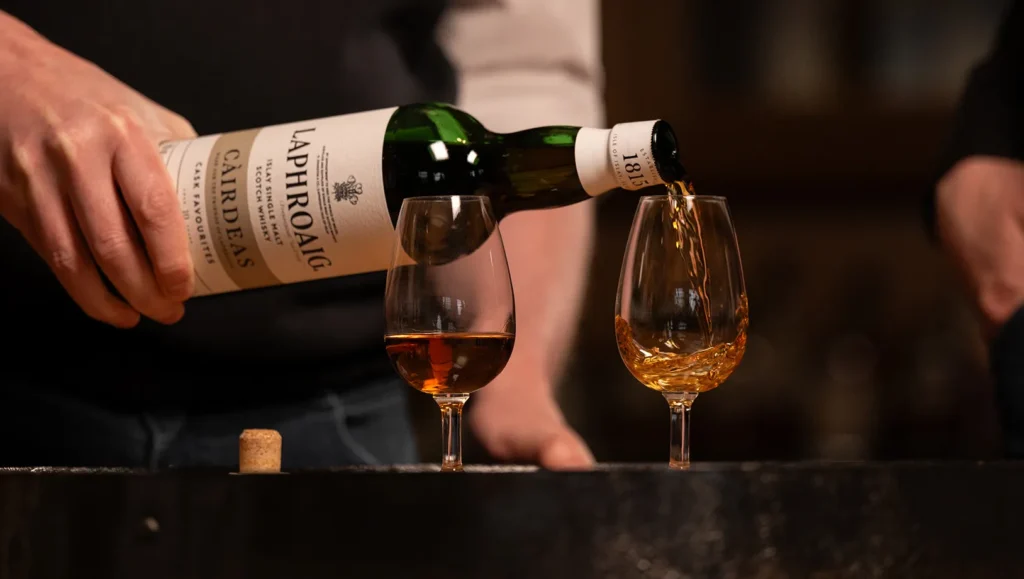

3. Laphroaig’s Production Process: Crafting the Flavors

To truly understand Laphroaig’s flavors, it’s important to examine the production process that brings them to life. Laphroaig’s methods are steeped in tradition and time-honored techniques that have been passed down through generations. Here’s how the distillery crafts its signature flavors.

A. Malting and Peat Drying

The first step in producing Laphroaig whisky is the malting of barley. The barley is soaked in water, allowing it to germinate, after which it is spread out on the floor to dry. This traditional malting method is labor-intensive, but it helps maintain the whisky’s authenticity and character.

Once the barley has been malted, it is dried using peat smoke. The peat fire gives the barley its smoky character, and it’s this stage of the process that imparts the intense, earthy flavors that Laphroaig is known for. The use of peat is critical to the whisky’s overall flavor, contributing to the heavy smokiness that is so central to Laphroaig’s identity.

B. Distillation

Laphroaig is distilled in copper pot stills, which allows for a slower, more precise distillation process. The pot stills contribute to the whisky’s full-bodied flavor, and the interaction between the stills and the peat-heavy distillate creates a distinctive richness that cannot be replicated in other whiskies.

The whisky undergoes double distillation, which is common in Islay whiskies. This helps purify the spirit and allows for the creation of complex flavors. The resulting distillate is a powerful and smoky base that will be aged in oak casks.

C. Maturation in Oak Casks

Once distilled, Laphroaig is aged in oak casks, typically former bourbon barrels, which add sweetness and complexity to the whisky. The maturation process takes place in warehouses near the sea, where the salty air further influences the whisky’s character.

Some Laphroaig expressions, such as the Quarter Cask, are aged in smaller barrels, which provide greater wood contact and allow for faster aging. This results in a whisky that is richer, sweeter, and more rounded, while still retaining the powerful smoky flavors that define the brand.


4. The Uniqueness of Laphroaig: Love It or Hate It

Laphroaig is undoubtedly one of the most polarizing whiskies in the world. Its intense peat smoke, medicinal qualities, and briny flavors evoke strong reactions from whisky drinkers. Some consider it the epitome of fine whisky, while others are repelled by its boldness and complexity.

A. The Fans: Those Who Love the Smoke

Laphroaig has a dedicated following, particularly among whisky enthusiasts who appreciate bold, intense flavors. These fans love the whisky’s unapologetic smokiness and the way it transports them to the rugged, windswept shores of Islay. For these drinkers, Laphroaig represents the essence of Islay whisky, with its briny, coastal influence and rich history.

The distillery has cultivated a loyal fanbase through its commitment to quality and authenticity. Laphroaig drinkers tend to be connoisseurs who appreciate the nuances of a smoky whisky and the distinctive character that each expression brings.

B. The Critics: Those Who Find It Overpowering

On the other hand, there are those who find Laphroaig’s flavor profile overwhelming and too intense. The heavy peat smoke, medicinal notes, and saltiness can be too much for some drinkers, particularly those who are more accustomed to lighter, smoother whiskies.

For these critics, Laphroaig is an acquired taste—one that requires time and patience to fully appreciate. While Laphroaig’s boldness is what makes it unique, it can also alienate those who prefer more subtle flavors.


5. Conclusion: The Legacy of Laphroaig’s Flavors

Laphroaig is a whisky that commands attention, whether you love it or dislike it. Its complex, smoky, and briny flavors are the result of the unique environment in which it is produced, as well as the traditional methods that the distillery has used for centuries. The result is a whisky that is rich, bold, and unmistakable—one that continues to leave an indelible mark on whisky lovers around the world.

Whether you are an experienced whisky drinker or a newcomer to the world of Islay whisky, Laphroaig offers a taste of something truly distinct. Its flavors, while not for everyone, provide a sensory journey that will leave you with a deep appreciation for the art of whisky making. Laphroaig is more than just a drink; it’s a reflection of its environment, its history, and the legacy of a distillery that has stood the test of time.

Tags: CultureHealthHistoryInnovationluxurywhiskey
ShareTweetShare

Related Posts

Why Is Bourbon Only Made in the U.S.?
Whiskey

Luxury Whiskey and the Collector Market: Rarity, Investment, and the Global Obsession

May 24, 2026
The Art of Whiskey: Tradition, Craft, and the Global Renaissance
Whiskey

The Science Behind Aging Whiskey: Time, Wood, Chemistry, and Transformation

May 24, 2026
The Art of Whiskey: Tradition, Craft, and the Global Renaissance
Whiskey

Bourbon Culture in America: History, Identity, and the Spirit of the South

May 24, 2026
The Art of Whiskey: Tradition, Craft, and the Global Renaissance
Whiskey

The Rise of Japanese Whisky: Tradition, Precision, and Global Influence

May 24, 2026
The Art of Whiskey: Tradition, Craft, and the Global Renaissance
Whiskey

The Art of Whiskey: Tradition, Craft, and the Global Renaissance

May 24, 2026
The History of Whisky — From Monastic Origins to Global Industry
Whiskey

The Future of Whisky — Innovation, Sustainability, and Global Trends

April 25, 2026
Leave Comment
  • Trending
  • Comments
  • Latest
Role of Terroir in Champagne Production

Role of Terroir in Champagne Production

January 19, 2026
Champagne Can Be Aged in Wood?

Champagne Can Be Aged in Wood?

January 18, 2026
Is Organic Wine Healthier Than Conventional Wine?

Is Organic Wine Healthier Than Conventional Wine?

January 20, 2026
Why Do Some Champagnes Use a High Proportion of Pinot Meunier?

Why Do Some Champagnes Use a High Proportion of Pinot Meunier?

January 20, 2026
The Timeless Elegance of Wine: A Journey Through History and Culture

The Timeless Elegance of Wine: A Journey Through History and Culture

Why Is Château Lafite Rothschild the Pinnacle of Fine Wine?

Why Is Château Lafite Rothschild the Pinnacle of Fine Wine?

How Did Château Lafite Rothschild Become a Global Icon of Luxury?

How Did Château Lafite Rothschild Become a Global Icon of Luxury?

What Makes Chateau Lafite Rothschild the Pinnacle of Bordeaux Wines?

What Makes Chateau Lafite Rothschild the Pinnacle of Bordeaux Wines?

The History, Culture, and Global Influence of Humanity’s Most Celebrated Beverage

The Wine Revolution: How Modern Winemaking Transformed a Global Industry

June 3, 2026
The History, Culture, and Global Influence of Humanity’s Most Celebrated Beverage

Wine Styles of the World: A Complete Guide to Red, White, Rosé, Sparkling, and Fortified Wines

June 3, 2026
The History, Culture, and Global Influence of Humanity’s Most Celebrated Beverage

The Global Wine Industry: Markets, Trade, Tourism, and Economic Impact

June 3, 2026
The History, Culture, and Global Influence of Humanity’s Most Celebrated Beverage

The Science of Wine: Grapes, Fermentation, and Flavor Development

June 3, 2026
SipsavorLife

Welcome to our comprehensive beverage guide, where you can explore the fascinating world of alcoholic drinks. From exquisite wines and rich whiskeys to refreshing beers and sparkling champagnes, we provide insights, tips, and recommendations for enthusiasts and casual drinkers alike. Discover your next favorite libation with us!

© 2025 sipsavorlife.com. contacts:sipsavorlife-35376@gmail.com

No Result
View All Result
  • Home
  • Wine
  • Whiskey
  • Beer
  • Grain Spirits
  • Champagne
  • ALL

© 2025 sipsavorlife.com. contacts:sipsavorlife-35376@gmail.com

Welcome Back!

Login to your account below

Forgotten Password?

Retrieve your password

Please enter your username or email address to reset your password.

Log In