



























Introduction: Beer as Both Science and Art
To many people, beer appears deceptively simple. At its core, traditional beer requires only four essential ingredients:
- Water
- Malted grain
- Hops
- Yeast
Yet from these basic components emerges an astonishing range of flavors, aromas, colors, textures, and alcohol levels. Beer can taste like coffee, chocolate, citrus, tropical fruit, caramel, pine, smoke, bread, spice, flowers, whiskey, or even tart fruit and wine. Some beers are crisp and refreshing, while others are dense, creamy, and intensely complex.
This extraordinary diversity is possible because brewing is both a scientific process and an artistic craft. Behind every pint lies a sophisticated interaction of biology, chemistry, microbiology, engineering, agriculture, and sensory perception.
Modern brewers must understand enzymes, fermentation behavior, pH balance, oxidation, temperature control, water chemistry, and microbial management. At the same time, they must make creative decisions regarding flavor design, ingredient combinations, and stylistic interpretation.
Beer brewing represents one of humanity’s oldest forms of applied biotechnology. Long before scientists understood microorganisms, ancient brewers were already harnessing yeast to transform grain sugars into alcohol and carbonation.
Today, advanced laboratories and precision brewing systems coexist with centuries-old traditional methods. Whether in a small farmhouse brewery or a massive industrial facility, the fundamental science of brewing remains both elegant and fascinating.
This article explores the scientific foundations of beer production, revealing how chemistry and biology shape every aspect of brewing.
The Four Core Ingredients of Beer
Water: The Foundation of Beer
Beer is mostly water. In many styles, water makes up more than 90 percent of the final product. Because of this, water chemistry plays a major role in flavor and brewing performance.
Water contains dissolved minerals such as:
- Calcium
- Magnesium
- Sulfate
- Chloride
- Sodium
- Bicarbonate
Different mineral balances affect:
- Mouthfeel
- Bitterness perception
- Mash efficiency
- Yeast health
- Overall flavor balance
Historically, regional water profiles influenced the development of beer styles.
Burton-on-Trent
This English city possessed sulfate-rich water ideal for pale ales and IPAs. The high sulfate levels enhanced hop bitterness and crispness.
Pilsen
The Czech city of Pilsen had exceptionally soft water, helping create delicate pale lagers like pilsners.
Dublin
Dublin’s bicarbonate-rich water supported darker roasted beers such as stout.
Modern brewers often adjust water chemistry deliberately to suit specific styles.
Malted Grain: The Source of Sugar
Beer begins with grain, most commonly barley.
What Is Malting?
Raw barley cannot ferment efficiently without preparation. During malting, barley is:
- Soaked in water
- Allowed to germinate
- Dried in kilns
This process activates enzymes that later convert starch into fermentable sugars.
Types of Malt
Different roasting temperatures create various malt flavors and colors.
Pale Malt
Lightly kilned and highly fermentable.
Crystal Malt
Produces caramel sweetness and amber color.
Chocolate Malt
Adds roasted cocoa flavors.
Black Malt
Creates dark color and bitter roast notes.
Smoked Malt
Introduces smoky aromas.
The combination of malts strongly influences beer character.
Hops: Bitterness, Aroma, and Stability
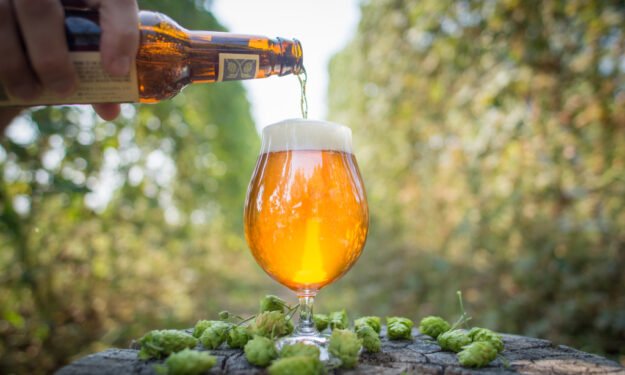
Hops are flowers from the hop vine and serve multiple functions in brewing.
Bitterness
Boiling hops releases alpha acids, which become bitter compounds balancing malt sweetness.
Aroma
Late hop additions preserve volatile oils responsible for aromas such as:
- Citrus
- Pine
- Tropical fruit
- Floral notes
- Herbal spice
Preservation
Hops possess antimicrobial properties that historically helped preserve beer.
Modern Hop Science
Modern breweries analyze hop oils in detail. Important compounds include:
- Myrcene
- Linalool
- Geraniol
- Humulene
These molecules contribute complex aromatic profiles.
Brewers increasingly use advanced techniques such as:
- Dry hopping
- Hop bursting
- Cryogenic hop processing
- Thiol enhancement
Hop science has become one of brewing’s most innovative fields.
Yeast: The Living Engine of Beer
Yeast is arguably the most important ingredient in brewing because it performs fermentation.
What Is Yeast?
Yeast is a single-celled microorganism belonging to the fungi kingdom.
During fermentation, yeast consumes sugars and produces:
- Alcohol
- Carbon dioxide
- Heat
- Flavor compounds
Ale Yeast vs Lager Yeast
Ale Yeast
- Ferments at warmer temperatures
- Produces fruity and spicy flavors
- Typically rises to the top during fermentation
Species: Saccharomyces cerevisiae
Lager Yeast
- Ferments at colder temperatures
- Produces cleaner flavor profiles
- Settles at the bottom
Species: Saccharomyces pastorianus
Yeast Flavor Contributions
Yeast generates numerous flavor compounds including:
- Esters (banana, pear, apple)
- Phenols (clove, pepper, spice)
- Higher alcohols
- Organic acids
Different strains dramatically affect beer character.
The Brewing Process
Milling
Malted grain is crushed to expose starches while preserving husk structure.
Mashing
The crushed grain mixes with hot water.
This activates enzymes that convert starch into fermentable sugars.
Key enzymes include:
- Alpha-amylase
- Beta-amylase
Temperature strongly affects sugar composition.
Lower mash temperatures create more fermentable sugars and drier beers.
Higher temperatures produce fuller body and sweetness.
Understanding Enzymatic Conversion
The mash is essentially a controlled biochemical reaction.
Starch Breakdown
Grain starch molecules are too large for yeast to consume directly.
Enzymes break them into simpler sugars such as:
- Maltose
- Glucose
- Maltotriose
Protein Modification
Proteins also break down during mashing, influencing:
- Foam stability
- Mouthfeel
- Clarity
Precise temperature control is critical during this stage.
Lautering and Sparging
After mashing, brewers separate liquid wort from spent grain.
Lautering
The grain bed acts as a natural filter.
Sparging
Additional hot water rinses remaining sugars from the grain.
Efficient sugar extraction improves brewing yield.
Boiling the Wort
The wort is then boiled, usually for 60 to 90 minutes.
Boiling serves several purposes:
- Sterilization
- Hop isomerization
- Protein coagulation
- Flavor development
- Evaporation of unwanted compounds
Maillard Reactions
Heat-driven chemical reactions between sugars and amino acids create flavors resembling:
- Bread crust
- Toast
- Caramel
These reactions contribute complexity and color.
Fermentation: The Heart of Brewing
Fermentation transforms sweet wort into beer.
Glycolysis and Alcohol Production
Yeast metabolizes sugars through biochemical pathways.
Simplified reaction:
C6H12O6→2C2H5OH+2CO2C_6H_{12}O_6 \rightarrow 2C_2H_5OH + 2CO_2C6H12O6→2C2H5OH+2CO2
Glucose becomes ethanol and carbon dioxide.
Fermentation Conditions
Brewers carefully monitor:
- Temperature
- Pressure
- Oxygen exposure
- Yeast health
- Nutrient levels
Small changes can dramatically alter flavor.
Flavor Byproducts
Yeast creates hundreds of secondary compounds influencing aroma and taste.
Controlled stress sometimes enhances desirable flavors.
Oxygen: Friend and Enemy
Oxygen management is critical in brewing.
Early Brewing Stages
Yeast requires oxygen initially for healthy reproduction.
Post-Fermentation
After fermentation begins, oxygen becomes harmful.
Oxidation causes stale flavors resembling:
- Wet cardboard
- Paper
- Sherry-like aging
Modern breweries use sophisticated oxygen-reduction systems.
Carbonation and Mouthfeel
Carbon dioxide affects more than bubbles.
Carbonation influences:
- Aroma release
- Acidity perception
- Texture
- Refreshment sensation
Different styles require different carbonation levels.
Nitrogen Systems
Some beers use nitrogen for softer texture and creamy foam.
Irish stout famously employs nitrogen dispensing systems.
Beer Color and Optical Science
Beer color derives primarily from malt kilning and roasting.
Measuring Color
Brewers use systems such as:
- SRM (Standard Reference Method)
- EBC (European Brewery Convention)
Light Interaction
Color perception depends on how compounds absorb and reflect light wavelengths.
Dark beers absorb more visible light due to roasted malt compounds.
Foam Science
Beer foam is scientifically complex.
Foam Stability
Foam depends on:
- Proteins
- Hop compounds
- Carbonation
- Glass cleanliness
Negative Factors
Oil and detergent residues rapidly destroy foam.
Importance of Foam
Foam influences:
- Aroma concentration
- Visual appeal
- Mouthfeel
Good foam stability is considered a sign of quality brewing.
Sour Beer and Wild Fermentation
Not all beer relies solely on standard brewing yeast.
Lactic Acid Bacteria
Bacteria such as Lactobacillus produce tart acidity.
Brettanomyces
This wild yeast creates earthy, funky flavors often described as:
- Barnyard
- Leather
- Tropical fruit
- Horse blanket
Spontaneous Fermentation
Some traditional beers ferment through natural airborne microorganisms.
Belgian lambics are famous examples.
Barrel Aging and Flavor Extraction
Barrel aging introduces additional chemical complexity.
Wood Interaction
Barrels contribute compounds including:
- Vanillin
- Tannins
- Lactones
Spirit Barrels
Used whiskey, bourbon, wine, or rum barrels add residual flavors.
Oxidative Aging
Small oxygen exposure during aging creates evolving flavor development.
Microbiology and Sanitation
Brewing requires strict microbial control.
Contamination Risks
Undesirable microorganisms may produce:
- Sourness
- Medicinal flavors
- Sulfur aromas
- Cloudiness
Cleaning Protocols
Breweries employ:
- Chemical sanitizers
- Steam sterilization
- Laboratory testing
Microbial stability is essential for consistency.
Industrial Brewing Technology
Large breweries utilize advanced engineering systems.
Automation
Modern facilities monitor:
- Temperature
- Pressure
- Flow rates
- Fermentation progress
Centrifuges and Filtration
Industrial breweries often clarify beer rapidly using advanced separation systems.
Packaging Science
Packaging affects beer freshness dramatically.
Beer is vulnerable to:
- Oxygen
- Light exposure
- Heat
Brown bottles protect beer from ultraviolet damage better than green or clear bottles.
The Chemistry of Flavor Perception
Beer flavor involves human sensory biology.
Taste Components
Humans detect:
- Sweet
- Bitter
- Sour
- Salty
- Umami
Aroma Dominance
Much of beer “flavor” actually comes from aroma compounds detected retronasally.
Mouthfeel
Texture perception includes:
- Carbonation
- Viscosity
- Alcohol warmth
- Creaminess
Beer tasting combines chemistry and neuroscience.
Non-Alcoholic Brewing Technology
Modern alcohol-free beer production uses advanced techniques including:
- Vacuum distillation
- Membrane filtration
- Arrested fermentation
These methods preserve flavor while reducing alcohol.
Brewing as Applied Biotechnology
Brewing represents one of humanity’s oldest biotechnologies.
Long before microbiology existed as a science, brewers successfully manipulated living organisms for food production.
Today, brewing science influences:
- Biofuel research
- Fermentation medicine
- Food preservation
- Industrial microbiology
Beer brewing contributed significantly to scientific understanding itself.
The Future of Brewing Science
Emerging innovations include:
- Genetically optimized yeast
- AI-assisted recipe development
- Precision fermentation
- Sustainable brewing systems
- Climate-resilient ingredients
At the same time, traditional methods remain highly valued.
The future of brewing will likely combine ancient craftsmanship with modern science.
Conclusion: Beer as Liquid Science
Beer is far more than a casual beverage. Every glass represents a sophisticated interaction between biology, chemistry, agriculture, engineering, and human creativity.
From enzymatic starch conversion to yeast metabolism and aromatic hop chemistry, brewing transforms simple agricultural ingredients into one of humanity’s most culturally significant drinks. Ancient brewers discovered fermentation through observation and experimentation, while modern scientists continue uncovering new dimensions of microbial and chemical complexity.
What makes beer particularly fascinating is that science alone cannot fully explain great brewing. Technical precision must coexist with artistic judgment, sensory intuition, and cultural tradition. Brewing therefore occupies a unique space where scientific rigor and creative expression merge.
Whether produced in a medieval monastery, a small craft brewery, or a highly automated industrial facility, beer remains a living product shaped by microscopic organisms and human imagination alike. Beneath every pint lies a world of invisible science that has accompanied humanity for thousands of years.