

























Whisky is more than a spirit—it is a narrative distilled over centuries. Its story flows through monasteries, royal decrees, illicit stills hidden in remote hills, industrial revolutions, and modern luxury markets. Few beverages carry such a rich intersection of science, culture, and identity.
From its earliest origins as a medicinal elixir to its current status as a global symbol of craftsmanship and prestige, whisky has undergone a remarkable transformation. This article explores that journey—how whisky evolved, spread, and became one of the most influential spirits in the world.
1. The Origins of Distillation
The story of whisky begins not with whisky itself, but with distillation.
Distillation techniques were developed in the ancient world, likely in regions such as Mesopotamia and Egypt, where early chemists experimented with extracting essential oils and perfumes. These methods were later refined by Arab scholars, who improved distillation equipment and processes.
By the early Middle Ages, distillation knowledge had spread into Europe, where it was adopted by monasteries.
2. Monks and the Birth of “Aqua Vitae”
Whisky’s earliest direct ancestor was known as “aqua vitae”, Latin for “water of life.”
Monks in regions that are now Ireland and Scotland began distilling fermented grain mash into a potent spirit.
Initially, this liquid was:
- Used for medicinal purposes
- Believed to have healing properties
- Consumed in small quantities
Over time, it transitioned from medicine to beverage.
3. The Spread Beyond Monasteries
As distillation knowledge spread, whisky production moved beyond monasteries into rural communities.
Farmers began producing whisky:
- Using surplus grain
- As a form of preservation
- As a tradable commodity
Production was small-scale, inconsistent, and largely unregulated.
4. Early Scotch and Irish Whisky Traditions
Although both Ireland and Scotland claim to be the birthplace of whisky, each developed distinct traditions.
Irish Whiskey
- Typically triple-distilled
- Smoother and lighter in profile
- Early dominance in global markets
Scotch Whisky
- Often double-distilled
- More robust and varied
- Strong regional diversity
These differences laid the foundation for modern whisky styles.
5. Taxation and Illicit Distilling
As whisky became more popular, governments began taxing its production.
In Scotland, high taxes led to:
- Widespread illegal distilling
- Hidden stills in remote areas
- A culture of smuggling and secrecy
Illicit whisky was often:
- Stronger
- Less refined
- Produced under challenging conditions
This period contributed to whisky’s rebellious and rugged image.
6. The Excise Act and Legalization
In 1823, the Excise Act in the United Kingdom changed everything.
It:
- Reduced taxes
- Made legal distilling more accessible
- Encouraged standardization
This led to the rise of licensed distilleries and marked the beginning of whisky as a formal industry.
7. The Industrial Revolution and Whisky Expansion
The Industrial Revolution transformed whisky production.
Key innovations included:
- Steam-powered equipment
- Improved transportation
- Scientific understanding of distillation
Perhaps most important was the invention of the column still, which allowed for continuous distillation and large-scale production.
This innovation enabled:
- Greater efficiency
- Consistent quality
- Expansion into global markets
8. Blended Whisky and Market Growth
The development of blended whisky revolutionized the industry.
Blending allowed producers to:
- Combine different whiskies for consistency
- Create smoother, more approachable products
- Scale production
Blended Scotch became a global success, appealing to a wider audience.
9. The Rise and Fall of Irish Whiskey
In the 19th century, Irish whiskey dominated global markets.
However, a combination of factors led to its decline:
- Political conflicts
- Trade restrictions
- Competition from Scotch whisky
- The impact of Prohibition in the United States
By the mid-20th century, Irish whiskey production had dramatically decreased.
10. American Whiskey and Bourbon
Whisky production spread to North America, where it evolved into distinct forms.
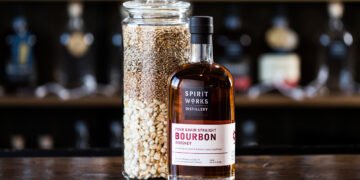
Bourbon
- Made primarily from corn
- Aged in new charred oak barrels
- Sweeter, fuller flavor
American whiskey developed its own identity, influenced by local ingredients and frontier culture.
11. Prohibition and Its Impact
The Prohibition era (1920–1933) in the United States had a profound impact on whisky.
Effects included:
- Closure of many distilleries
- Rise of illegal production (moonshine)
- Loss of skilled craftsmanship
While some distilleries survived by producing medicinal whiskey, the industry took decades to recover.
12. Post-War Decline and Mass Production
After World War II, whisky consumption shifted.
Consumers favored:
- Lighter spirits
- Mass-produced products
This led to:
- Decline in traditional distilling
- Consolidation of brands
- Reduced diversity
13. The Whisky Renaissance
In the late 20th century, whisky experienced a revival.
Key drivers included:
- Growing appreciation for craftsmanship
- Interest in heritage and authenticity
- Rise of premium and single malt whiskies
Consumers began seeking:
- Quality over quantity
- Unique flavor profiles
- Distinct regional identities
14. Global Expansion of Whisky
Today, whisky is produced worldwide.
Notable regions include:
- Japan (precision and balance)
- India (rapidly growing market)
- Taiwan (innovative distilling)
Globalization has expanded whisky beyond its traditional roots.
15. Whisky as a Cultural and Economic Force
Whisky is now:
- A major global industry
- A cultural symbol
- A collector’s item
Rare bottles can command high prices, and distilleries attract tourism worldwide.
Conclusion: A Spirit Shaped by Time
The history of whisky is a story of transformation—of science becoming craft, of necessity becoming luxury, of local tradition becoming global culture.
From monastic experiments to modern distilleries, whisky has adapted to changing times while preserving its essence.
Every glass of whisky carries:
- The legacy of its origins
- The influence of its environment
- The craftsmanship of its makers
And as the world continues to evolve, whisky will continue its journey—aged by time, shaped by history, and defined by those who create and enjoy it.
Whisky is more than a spirit—it is a narrative distilled over centuries. Its story flows through monasteries, royal decrees, illicit stills hidden in remote hills, industrial revolutions, and modern luxury markets. Few beverages carry such a rich intersection of science, culture, and identity.
From its earliest origins as a medicinal elixir to its current status as a global symbol of craftsmanship and prestige, whisky has undergone a remarkable transformation. This article explores that journey—how whisky evolved, spread, and became one of the most influential spirits in the world.
1. The Origins of Distillation
The story of whisky begins not with whisky itself, but with distillation.
Distillation techniques were developed in the ancient world, likely in regions such as Mesopotamia and Egypt, where early chemists experimented with extracting essential oils and perfumes. These methods were later refined by Arab scholars, who improved distillation equipment and processes.
By the early Middle Ages, distillation knowledge had spread into Europe, where it was adopted by monasteries.
2. Monks and the Birth of “Aqua Vitae”
Whisky’s earliest direct ancestor was known as “aqua vitae”, Latin for “water of life.”
Monks in regions that are now Ireland and Scotland began distilling fermented grain mash into a potent spirit.
Initially, this liquid was:
- Used for medicinal purposes
- Believed to have healing properties
- Consumed in small quantities
Over time, it transitioned from medicine to beverage.
3. The Spread Beyond Monasteries
As distillation knowledge spread, whisky production moved beyond monasteries into rural communities.
Farmers began producing whisky:
- Using surplus grain
- As a form of preservation
- As a tradable commodity
Production was small-scale, inconsistent, and largely unregulated.
4. Early Scotch and Irish Whisky Traditions
Although both Ireland and Scotland claim to be the birthplace of whisky, each developed distinct traditions.
Irish Whiskey
- Typically triple-distilled
- Smoother and lighter in profile
- Early dominance in global markets
Scotch Whisky
- Often double-distilled
- More robust and varied
- Strong regional diversity
These differences laid the foundation for modern whisky styles.
5. Taxation and Illicit Distilling
As whisky became more popular, governments began taxing its production.
In Scotland, high taxes led to:
- Widespread illegal distilling
- Hidden stills in remote areas
- A culture of smuggling and secrecy
Illicit whisky was often:
- Stronger
- Less refined
- Produced under challenging conditions
This period contributed to whisky’s rebellious and rugged image.
6. The Excise Act and Legalization
In 1823, the Excise Act in the United Kingdom changed everything.
It:
- Reduced taxes
- Made legal distilling more accessible
- Encouraged standardization
This led to the rise of licensed distilleries and marked the beginning of whisky as a formal industry.
7. The Industrial Revolution and Whisky Expansion
The Industrial Revolution transformed whisky production.
Key innovations included:
- Steam-powered equipment
- Improved transportation
- Scientific understanding of distillation
Perhaps most important was the invention of the column still, which allowed for continuous distillation and large-scale production.
This innovation enabled:
- Greater efficiency
- Consistent quality
- Expansion into global markets

8. Blended Whisky and Market Growth
The development of blended whisky revolutionized the industry.
Blending allowed producers to:
- Combine different whiskies for consistency
- Create smoother, more approachable products
- Scale production
Blended Scotch became a global success, appealing to a wider audience.
9. The Rise and Fall of Irish Whiskey
In the 19th century, Irish whiskey dominated global markets.
However, a combination of factors led to its decline:
- Political conflicts
- Trade restrictions
- Competition from Scotch whisky
- The impact of Prohibition in the United States
By the mid-20th century, Irish whiskey production had dramatically decreased.
10. American Whiskey and Bourbon
Whisky production spread to North America, where it evolved into distinct forms.
Bourbon
- Made primarily from corn
- Aged in new charred oak barrels
- Sweeter, fuller flavor
American whiskey developed its own identity, influenced by local ingredients and frontier culture.
11. Prohibition and Its Impact
The Prohibition era (1920–1933) in the United States had a profound impact on whisky.
Effects included:
- Closure of many distilleries
- Rise of illegal production (moonshine)
- Loss of skilled craftsmanship
While some distilleries survived by producing medicinal whiskey, the industry took decades to recover.
12. Post-War Decline and Mass Production
After World War II, whisky consumption shifted.
Consumers favored:
- Lighter spirits
- Mass-produced products
This led to:
- Decline in traditional distilling
- Consolidation of brands
- Reduced diversity
13. The Whisky Renaissance
In the late 20th century, whisky experienced a revival.
Key drivers included:
- Growing appreciation for craftsmanship
- Interest in heritage and authenticity
- Rise of premium and single malt whiskies
Consumers began seeking:
- Quality over quantity
- Unique flavor profiles
- Distinct regional identities
14. Global Expansion of Whisky
Today, whisky is produced worldwide.
Notable regions include:
- Japan (precision and balance)
- India (rapidly growing market)
- Taiwan (innovative distilling)
Globalization has expanded whisky beyond its traditional roots.
15. Whisky as a Cultural and Economic Force
Whisky is now:
- A major global industry
- A cultural symbol
- A collector’s item
Rare bottles can command high prices, and distilleries attract tourism worldwide.
Conclusion: A Spirit Shaped by Time
The history of whisky is a story of transformation—of science becoming craft, of necessity becoming luxury, of local tradition becoming global culture.
From monastic experiments to modern distilleries, whisky has adapted to changing times while preserving its essence.
Every glass of whisky carries:
- The legacy of its origins
- The influence of its environment
- The craftsmanship of its makers
And as the world continues to evolve, whisky will continue its journey—aged by time, shaped by history, and defined by those who create and enjoy it.