






























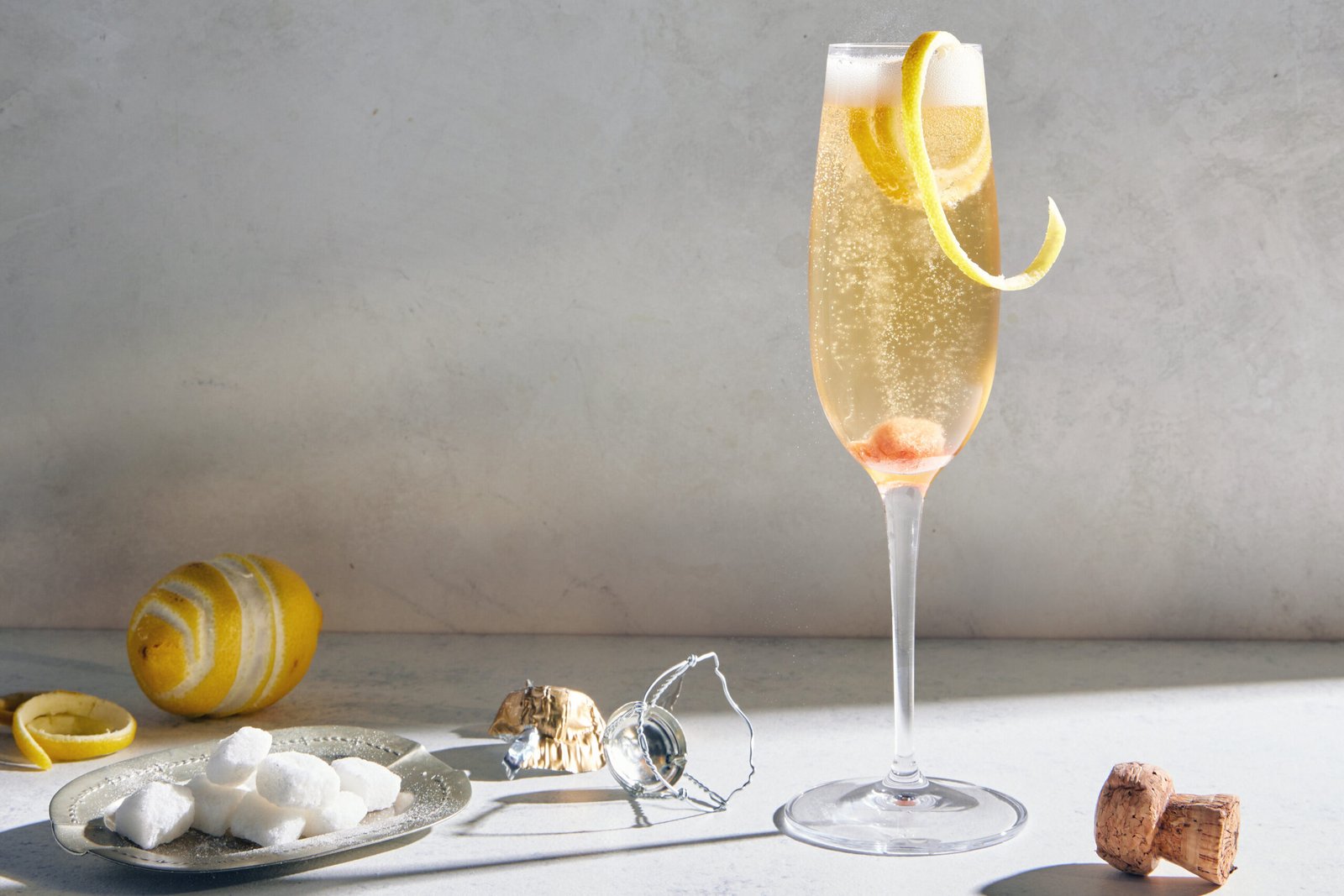
Introduction: A Tradition Under Pressure
For centuries, Champagne has been defined by stability:
- Fixed geography
- Controlled production methods
- Consistent house styles
- Predictable aging processes
But today, this stability is being challenged.
Not by market demand alone, but by something far more fundamental:
The environment itself is changing.
At the same time, technology, consumer preferences, and global competition are reshaping what Champagne can be.
The future of Champagne will not abandon tradition.
But it will redefine it.
Section 1: Climate Change — The Most Immediate Challenge
1.1 Rising Temperatures
The Champagne region has historically relied on a cool climate.
Now, average temperatures are rising.
This leads to:
- Higher sugar levels in grapes
- Lower acidity
- Earlier harvest dates
1.2 Impact on Flavor Profile
Traditional Champagne depends on:
- High acidity
- Freshness
- Structural tension
Warmer conditions can produce:
- Riper fruit flavors
- Softer acidity
- Less precision
This challenges the core identity of Champagne.
1.3 Harvest Timing Shifts
Harvests are occurring:
- Weeks earlier than in previous decades
This affects:
- Fermentation balance
- Aging potential
- House consistency
Section 2: Adaptation in the Vineyard
2.1 Changing Viticulture Practices
Producers are adjusting by:
- Modifying pruning techniques
- Managing canopy growth for shade
- Adjusting harvest strategies
2.2 Exploring New Grape Varieties
Traditionally, Champagne relies on three main grapes.
Now, there is increasing interest in:
- Alternative varieties
- More resilient clones
- Disease-resistant vines
2.3 Soil and Water Management
With changing weather patterns:
- Water retention becomes critical
- Soil health becomes a strategic focus
Chalk soils remain an advantage, but require careful management.
Section 3: Innovation in Production
3.1 Precision Fermentation
Modern technology allows:
- Better temperature control
- Yeast strain optimization
- Micro-level fermentation adjustments
3.2 Data-Driven Blending
Blending decisions are increasingly supported by:
- Analytical data
- Historical records
- Predictive modeling
This enhances consistency across changing vintages.
3.3 Aging Experimentation
Producers are exploring:
- Different lees aging durations
- Alternative storage conditions
- New approaches to flavor development
Section 4: Sustainability and Environmental Responsibility
4.1 Carbon Footprint Reduction
Champagne houses are focusing on:
- Reducing emissions
- Sustainable packaging
- Energy-efficient production
4.2 Organic and Biodynamic Practices
More vineyards are adopting:
- Organic farming
- Biodynamic principles
- Reduced chemical inputs
4.3 Long-Term Land Preservation
Sustainability is no longer optional.
It is essential for:
- Maintaining vineyard health
- Protecting future production
- Preserving regional identity
Section 5: Changing Consumer Preferences
5.1 Shift Toward Drier Styles
Consumers increasingly prefer:
- Lower sugar levels
- Brut Nature or Extra Brut styles
5.2 Interest in Transparency
Modern drinkers want to know:
- Vineyard origin
- Production methods
- Environmental impact
5.3 Growth of Smaller Producers
Independent growers are gaining attention by offering:
- Unique expressions
- Terroir-focused wines
- Limited production runs
Section 6: Competition from Global Sparkling Wines
6.1 Expansion of Sparkling Wine Production
Regions around the world are producing high-quality sparkling wines:
- Italy (Prosecco, Franciacorta)
- Spain (Cava)
- England (emerging sparkling wines)
- New World regions
6.2 Climate Advantage of New Regions
Some regions now have climates similar to historic Champagne conditions.
This creates:
- Strong competition
- Alternative premium options
6.3 Maintaining Distinction
Champagne must continue to differentiate through:
- Heritage
- Quality
- Branding
- Technical mastery
Section 7: Redefining Luxury
7.1 From Status to Authenticity
Luxury is shifting from:
- Pure status display
To:
- Authenticity
- Sustainability
- Craft transparency
7.2 Experience Over Object
Consumers increasingly value:
- Experiences
- Storytelling
- Connection to origin
7.3 Champagne’s Role
Champagne is adapting by emphasizing:
- Vineyard identity
- Production narratives
- Emotional engagement

Section 8: Technology and the Future of Production
8.1 Precision Agriculture
Use of:
- Drones
- Satellite imaging
- Soil sensors
To monitor vineyard health.
8.2 Automation in Cellars
Certain processes are becoming more automated:
- Riddling
- Temperature control
- Quality monitoring
8.3 Data Integration
Data is being used to:
- Predict harvest outcomes
- Optimize blending
- Maintain consistency
Section 9: The Evolution of Champagne Style
9.1 Greater Diversity
Future Champagne may show:
- Wider stylistic range
- More terroir-driven wines
- Increased experimentation
9.2 Vintage Variation Acceptance
Consumers may become more open to:
- Year-to-year differences
- Less uniform house styles
9.3 Balance Between Tradition and Innovation
The challenge is to:
- Preserve identity
- While adapting to change
Section 10: The Core Question — What Must Remain?
As Champagne evolves, key questions emerge:
- Is Champagne defined by geography?
- By method?
- By flavor profile?
- Or by cultural meaning?
The answer may not be singular.
Conclusion: Continuity Through Change
Champagne has always been a product of adaptation.
It began as:
- A problem of unstable fermentation
It became:
- A symbol of celebration
Now, it faces a new transformation:
- Environmental pressure
- Technological evolution
- Cultural shifts
Yet its core strength remains:
The ability to take change—and refine it into something elegant.
The future of Champagne will not look exactly like its past.
But if history is any indication, it will continue to do what it has always done best:
Turn uncertainty into identity.
Final Epilogue: The Next Glass
The next time Champagne is poured, it will carry more than bubbles.
It will carry:
- A changing climate
- New decisions in vineyards
- Advances in technology
- Evolving human expectations
And just like before, those changes will be invisible—
Until the moment the cork is opened.










