






SipsavorLife
  • Home
  • Wine
    Wine as a Cultural Artifact: History, Identity, and the Evolution of Taste

    The Art and Science of Wine & Food Pairing: How to Create Perfect Matches Every Time

    Wine as a Cultural Artifact: History, Identity, and the Evolution of Taste

    A Complete Guide to Wine Styles and Grape Varieties: From Cabernet Sauvignon to Riesling

    Wine as a Cultural Artifact: History, Identity, and the Evolution of Taste

    The Global Wine Industry: Economics, Markets, and the Future of Consumption

    Wine as a Cultural Artifact: History, Identity, and the Evolution of Taste

    The Science of Wine Tasting: How Chemistry, Biology, and Perception Shape Flavor

    Wine as a Cultural Artifact: History, Identity, and the Evolution of Taste

    Wine as a Cultural Artifact: History, Identity, and the Evolution of Taste

    Red Wine — The Liquid Expression of Land, Time, and Human Intention

    The Future of Red Wine — Climate Change, Technology, and the Evolution of Taste

  • Whiskey
    Can Beer Be an Effective Ingredient in Culinary Cooking?

    Can Beer Be an Effective Ingredient in Culinary Cooking?

    Second Fermentation in Champagne: Is It Really That Crucial?

    Second Fermentation in Champagne: Is It Really That Crucial?

    How Do Different Grains Impact the Flavor Profile of Distilled Spirits?

    How Do Different Grains Impact the Flavor Profile of Distilled Spirits?

    How Do Whiskey Master Blenders Create Perfection?

    How Do Whiskey Master Blenders Create Perfection?

    Wine Pairings: Can They Change the Flavor Profile of a Dish?

    Wine Pairings: Can They Change the Flavor Profile of a Dish?

    Beer the Ultimate Beverage for Pairing with Spicy Food?

    Beer the Ultimate Beverage for Pairing with Spicy Food?

  • Beer
    Beer as a Cultural and Social Force: From Ancient Brew to Modern Identity

    The Art of Beer & Food Pairing: Unlocking Flavor Through Balance, Contrast, and Texture

    Beer as a Cultural and Social Force: From Ancient Brew to Modern Identity

    A Complete Guide to Beer Styles: From Lager to Stout, Understanding Flavor, Body, and Character

    Beer as a Cultural and Social Force: From Ancient Brew to Modern Identity

    The Global Beer Industry: Craft Revolution, Market Forces, and the Future of Brewing

    Beer as a Cultural and Social Force: From Ancient Brew to Modern Identity

    The Science of Beer: Brewing Process, Ingredients, and the Chemistry of Flavor

    Beer as a Cultural and Social Force: From Ancient Brew to Modern Identity

    Beer as a Cultural and Social Force: From Ancient Brew to Modern Identity

    The Evolution of Beer — From Ancient Brews to the Craft Revolution

    The Future of Beer — Innovation, Sustainability, and Emerging Trends

  • Grain Spirits
    Grain Spirits Explained — The Foundation of Global Distillation

    The Future of Grain Spirits — Technology, Sustainability, and the Next Era of Distillation

    Grain Spirits Explained — The Foundation of Global Distillation

    Grain Spirits Around the World — Vodka, Whisky Bases, and Industrial Applications

    Grain Spirits Explained — The Foundation of Global Distillation

    Distillation Systems — Pot Still vs Column Still, and the Balance Between Efficiency and Flavor

    Grain Spirits Explained — The Foundation of Global Distillation

    Grain Selection and Fermentation Science — How Raw Ingredients Shape Grain Spirits

    Grain Spirits Explained — The Foundation of Global Distillation

    Grain Spirits Explained — The Foundation of Global Distillation

    Grain Spirits and the Industrial Birth of Neutral Alcohol

    The Future of Grain Spirits — AI Distillation, Sustainability, and the Post-Flavor Alcohol Industry

  • Champagne
    The History of Champagne — From Accidental Sparkle to Global Luxury

    The Future of Champagne — Climate Change, Innovation, and Industry Evolution

    The History of Champagne — From Accidental Sparkle to Global Luxury

    The Culture of Champagne — Luxury, Celebration, and Global Influence

    The History of Champagne — From Accidental Sparkle to Global Luxury

    Champagne Styles Explained — Brut, Rosé, Vintage, and Beyond

    The History of Champagne — From Accidental Sparkle to Global Luxury

    The Craft of Champagne — Terroir, Grapes, and the Méthode Traditionnelle

    The History of Champagne — From Accidental Sparkle to Global Luxury

    The History of Champagne — From Accidental Sparkle to Global Luxury

    The Future of Champagne — Climate Change, Innovation, and the Evolution of Sparkling Wine

    The Future of Champagne — Climate Change, Innovation, and the Evolution of Sparkling Wine

  • ALL
    Can Beer Be an Effective Ingredient in Culinary Cooking?

    Can Beer Be an Effective Ingredient in Culinary Cooking?

    Second Fermentation in Champagne: Is It Really That Crucial?

    Second Fermentation in Champagne: Is It Really That Crucial?

    How Do Different Grains Impact the Flavor Profile of Distilled Spirits?

    How Do Different Grains Impact the Flavor Profile of Distilled Spirits?

    How Do Whiskey Master Blenders Create Perfection?

    How Do Whiskey Master Blenders Create Perfection?

    Wine Pairings: Can They Change the Flavor Profile of a Dish?

    Wine Pairings: Can They Change the Flavor Profile of a Dish?

    Beer the Ultimate Beverage for Pairing with Spicy Food?

    Beer the Ultimate Beverage for Pairing with Spicy Food?

SipsavorLife
  • Home
  • Wine
    Wine as a Cultural Artifact: History, Identity, and the Evolution of Taste

    The Art and Science of Wine & Food Pairing: How to Create Perfect Matches Every Time

    Wine as a Cultural Artifact: History, Identity, and the Evolution of Taste

    A Complete Guide to Wine Styles and Grape Varieties: From Cabernet Sauvignon to Riesling

    Wine as a Cultural Artifact: History, Identity, and the Evolution of Taste

    The Global Wine Industry: Economics, Markets, and the Future of Consumption

    Wine as a Cultural Artifact: History, Identity, and the Evolution of Taste

    The Science of Wine Tasting: How Chemistry, Biology, and Perception Shape Flavor

    Wine as a Cultural Artifact: History, Identity, and the Evolution of Taste

    Wine as a Cultural Artifact: History, Identity, and the Evolution of Taste

    Red Wine — The Liquid Expression of Land, Time, and Human Intention

    The Future of Red Wine — Climate Change, Technology, and the Evolution of Taste

  • Whiskey
    Can Beer Be an Effective Ingredient in Culinary Cooking?

    Can Beer Be an Effective Ingredient in Culinary Cooking?

    Second Fermentation in Champagne: Is It Really That Crucial?

    Second Fermentation in Champagne: Is It Really That Crucial?

    How Do Different Grains Impact the Flavor Profile of Distilled Spirits?

    How Do Different Grains Impact the Flavor Profile of Distilled Spirits?

    How Do Whiskey Master Blenders Create Perfection?

    How Do Whiskey Master Blenders Create Perfection?

    Wine Pairings: Can They Change the Flavor Profile of a Dish?

    Wine Pairings: Can They Change the Flavor Profile of a Dish?

    Beer the Ultimate Beverage for Pairing with Spicy Food?

    Beer the Ultimate Beverage for Pairing with Spicy Food?

  • Beer
    Beer as a Cultural and Social Force: From Ancient Brew to Modern Identity

    The Art of Beer & Food Pairing: Unlocking Flavor Through Balance, Contrast, and Texture

    Beer as a Cultural and Social Force: From Ancient Brew to Modern Identity

    A Complete Guide to Beer Styles: From Lager to Stout, Understanding Flavor, Body, and Character

    Beer as a Cultural and Social Force: From Ancient Brew to Modern Identity

    The Global Beer Industry: Craft Revolution, Market Forces, and the Future of Brewing

    Beer as a Cultural and Social Force: From Ancient Brew to Modern Identity

    The Science of Beer: Brewing Process, Ingredients, and the Chemistry of Flavor

    Beer as a Cultural and Social Force: From Ancient Brew to Modern Identity

    Beer as a Cultural and Social Force: From Ancient Brew to Modern Identity

    The Evolution of Beer — From Ancient Brews to the Craft Revolution

    The Future of Beer — Innovation, Sustainability, and Emerging Trends

  • Grain Spirits
    Grain Spirits Explained — The Foundation of Global Distillation

    The Future of Grain Spirits — Technology, Sustainability, and the Next Era of Distillation

    Grain Spirits Explained — The Foundation of Global Distillation

    Grain Spirits Around the World — Vodka, Whisky Bases, and Industrial Applications

    Grain Spirits Explained — The Foundation of Global Distillation

    Distillation Systems — Pot Still vs Column Still, and the Balance Between Efficiency and Flavor

    Grain Spirits Explained — The Foundation of Global Distillation

    Grain Selection and Fermentation Science — How Raw Ingredients Shape Grain Spirits

    Grain Spirits Explained — The Foundation of Global Distillation

    Grain Spirits Explained — The Foundation of Global Distillation

    Grain Spirits and the Industrial Birth of Neutral Alcohol

    The Future of Grain Spirits — AI Distillation, Sustainability, and the Post-Flavor Alcohol Industry

  • Champagne
    The History of Champagne — From Accidental Sparkle to Global Luxury

    The Future of Champagne — Climate Change, Innovation, and Industry Evolution

    The History of Champagne — From Accidental Sparkle to Global Luxury

    The Culture of Champagne — Luxury, Celebration, and Global Influence

    The History of Champagne — From Accidental Sparkle to Global Luxury

    Champagne Styles Explained — Brut, Rosé, Vintage, and Beyond

    The History of Champagne — From Accidental Sparkle to Global Luxury

    The Craft of Champagne — Terroir, Grapes, and the Méthode Traditionnelle

    The History of Champagne — From Accidental Sparkle to Global Luxury

    The History of Champagne — From Accidental Sparkle to Global Luxury

    The Future of Champagne — Climate Change, Innovation, and the Evolution of Sparkling Wine

    The Future of Champagne — Climate Change, Innovation, and the Evolution of Sparkling Wine

  • ALL
    Can Beer Be an Effective Ingredient in Culinary Cooking?

    Can Beer Be an Effective Ingredient in Culinary Cooking?

    Second Fermentation in Champagne: Is It Really That Crucial?

    Second Fermentation in Champagne: Is It Really That Crucial?

    How Do Different Grains Impact the Flavor Profile of Distilled Spirits?

    How Do Different Grains Impact the Flavor Profile of Distilled Spirits?

    How Do Whiskey Master Blenders Create Perfection?

    How Do Whiskey Master Blenders Create Perfection?

    Wine Pairings: Can They Change the Flavor Profile of a Dish?

    Wine Pairings: Can They Change the Flavor Profile of a Dish?

    Beer the Ultimate Beverage for Pairing with Spicy Food?

    Beer the Ultimate Beverage for Pairing with Spicy Food?

SipsavorLife
No Result
View All Result
Home ALL

What Makes Barbaresco One of Italy’s Most Influential Wines?

January 10, 2025
in ALL, Wine
What Makes Barbaresco One of Italy’s Most Influential Wines?

Introduction: Barbaresco’s Global Impact

Barbaresco, a wine that hails from the Piedmont region in northern Italy, stands as one of the finest expressions of Nebbiolo, a grape known for its complexity and aging potential. Despite its somewhat smaller production area compared to its more famous counterpart, Barolo, Barbaresco has long been revered for its balance, elegance, and deep connection to the land and tradition. Its influence on the world of wine cannot be overstated—both culturally and commercially. Barbaresco has earned its reputation not only through its outstanding quality but also through its resilience, adaptability, and contribution to Italy’s winemaking legacy.

In this article, we explore the culture and influence of Barbaresco, tracing its origins, examining its impact on the global wine market, and understanding the factors that have helped it thrive in the competitive world of fine wines. How did Barbaresco emerge as a force to be reckoned with? What makes this wine so culturally significant? And how has it earned its place among the world’s great wines?


1. The Birth and Evolution of Barbaresco

The Origins of Barbaresco: A History Rooted in Tradition

Barbaresco’s origins date back to the 19th century when it was first recognized as a distinct wine, primarily thanks to the efforts of winemakers in the Langhe region, particularly those in the village of Barbaresco. However, it wasn’t until the mid-1800s that the wine began to gain serious recognition, largely due to the work of a visionary figure, the priest and winemaker Don Giacomo Fenoglio. Fenoglio is credited with refining the winemaking techniques of the area and helping put Barbaresco on the map.

In the early 20th century, Barbaresco remained a relatively small-scale, local wine, often overshadowed by the more famous Barolo. It wasn’t until the 1960s and 1970s that Barbaresco began to gain international recognition, thanks in part to the efforts of pioneering producers like Angelo Gaja. Gaja’s innovative approach to winemaking, which included using modern techniques and focusing on quality, helped elevate Barbaresco’s profile and establish it as one of Italy’s top wines.

The Birth of Barbaresco as a DOCG Wine

The designation of Barbaresco as a Denominazione di Origine Controllata e Garantita (DOCG) in 1980 was a watershed moment for the wine and its producers. This certification, which recognizes wines of the highest quality, ensured that Barbaresco would not only be protected from imitations but would also be given the recognition it deserved on both the domestic and international stage. The DOCG certification represented a shift from a humble, regional wine to a globally recognized benchmark of Italian winemaking.


2. The Cultural Significance of Barbaresco

Barbaresco and the Piedmontese Identity

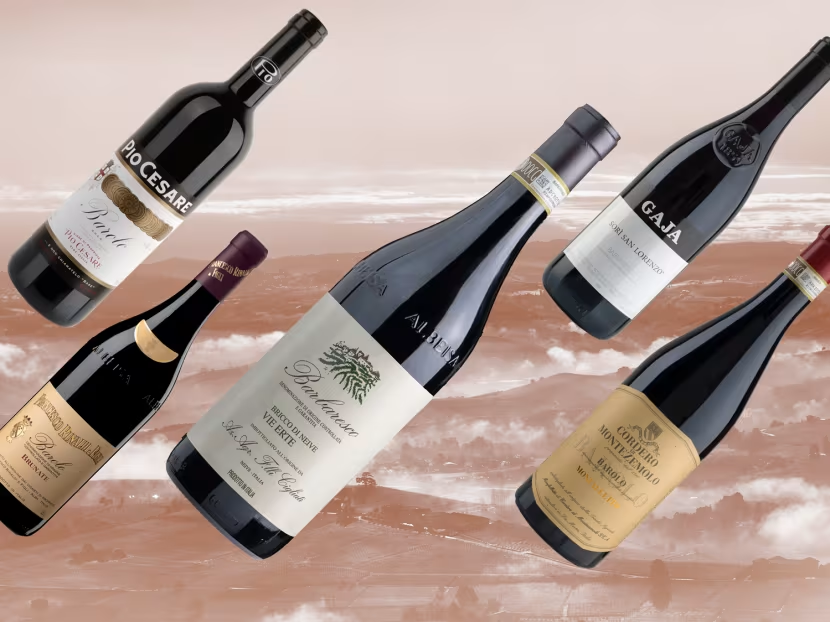
Barbaresco is not just a wine; it is an essential part of the cultural fabric of Piedmont. For centuries, it has been intimately tied to the region’s agricultural, social, and culinary traditions. The wine is often seen as a reflection of the land it comes from: the steep hillsides, the distinctive terroir, and the changing seasons that shape the character of Nebbiolo.

The village of Barbaresco itself, with its picturesque landscapes and rich winemaking history, serves as a symbol of the deep connection between the local people and the wine they produce. In Piedmont, Barbaresco is more than a drink—it’s a source of regional pride, a cultural artifact that speaks to centuries of local winemaking knowledge and tradition.

Barbaresco in Italian Cuisine and Lifestyle

In Italian cuisine, Barbaresco plays an integral role in fine dining. Known for its complex flavor profile, characterized by notes of rose, cherry, tar, and earthy undertones, Barbaresco is a wine that pairs exceptionally well with a range of dishes, from rich meats like braised veal to truffle-infused pastas. The wine’s tannic structure and acidity make it a perfect match for the hearty dishes of Piedmont, further solidifying its place in Italy’s gastronomic culture.

Barbaresco is also celebrated for its ability to age gracefully. It is often enjoyed at special occasions and celebrations, both in Italy and around the world. The wine’s longevity has made it a symbol of the Italian lifestyle, reflecting the values of patience, tradition, and craftsmanship. In this sense, Barbaresco embodies the essence of “la dolce vita” (the sweet life)—a slow, thoughtful enjoyment of life’s finer things.


3. Barbaresco’s Influence on the Global Wine Market

Pioneering Producers: The Role of Gaja and Others

While Barbaresco was historically overshadowed by Barolo, the tireless work of pioneering producers has helped elevate the wine to global acclaim. Angelo Gaja, in particular, played a pivotal role in bringing Barbaresco to the forefront of the international wine scene. Gaja’s decision to modernize winemaking techniques, incorporate barrique aging, and experiment with blending varieties was initially controversial but ultimately proved to be a game-changer. His wines, particularly those made from the Barbaresco DOCG, earned critical acclaim and commanded high prices, thus contributing to the growing reputation of Barbaresco as a luxury wine.

The impact of Gaja’s innovation cannot be overstated—his success has influenced countless other producers in the region, many of whom have adopted similar approaches. Today, Barbaresco’s reputation as a fine wine is not only a result of its traditional production methods but also the willingness of winemakers to adapt and innovate.

Barbaresco’s Role in the Super-Premium Wine Market

In the broader context of the global wine market, Barbaresco occupies a position as one of the most sought-after and valuable wines from Italy. While Barolo is often viewed as the more famous wine from Piedmont, Barbaresco has carved out its own niche in the super-premium wine market. The wine is prized by collectors and connoisseurs alike for its complexity, age-worthiness, and ability to reflect the unique characteristics of its terroir.

Over the past few decades, the demand for Barbaresco has surged, with prices steadily rising, particularly for sought-after vintages from top producers. Wine critics and publications such as Wine Spectator and Robert Parker’s Wine Advocate have showered Barbaresco with high ratings, further cementing its position in the luxury wine market. The international appeal of Barbaresco is also reflected in its strong export market, with the wine being sold to collectors and wine lovers in key markets around the world, including the United States, the United Kingdom, and Japan.

4. The Enduring Legacy of Barbaresco: Challenges and Opportunities

Challenges in the Modern Wine World

Despite its global success, Barbaresco faces several challenges in the modern wine world. One of the biggest concerns is the impact of climate change on Nebbiolo, the grape variety responsible for Barbaresco’s distinctive character. The warming climate in Piedmont has led to earlier harvests, potentially affecting the balance and acidity that give Barbaresco its trademark finesse.

Another challenge lies in maintaining the delicate balance between tradition and innovation. While modern winemaking techniques have undoubtedly helped elevate Barbaresco’s profile, some traditionalists in the region argue that these innovations may erode the authenticity of the wine. Striking the right balance between preserving the cultural heritage of Barbaresco and embracing new approaches will be crucial in maintaining its position as one of Italy’s premier wines.

Opportunities for Growth and Development

Despite these challenges, Barbaresco’s future remains bright. The ongoing investment in sustainable viticulture, innovation in winemaking practices, and growing demand for high-quality Italian wines present significant opportunities for Barbaresco producers. As wine lovers around the world continue to seek out authentic, terroir-driven wines, Barbaresco’s reputation for complexity, elegance, and tradition will continue to draw attention.

Furthermore, the increasing popularity of food and wine tourism in Piedmont presents an opportunity for Barbaresco to expand its cultural influence. Visitors to the region can now explore the picturesque vineyards of Barbaresco, participate in tastings, and learn about the winemaking process firsthand. This growing interest in wine tourism could contribute to an even stronger connection between Barbaresco and global wine lovers.


Conclusion: A Wine That Continues to Inspire

Barbaresco is not just a wine; it is a symbol of the enduring cultural heritage of Piedmont, a reflection of centuries of tradition, and a testament to the skill and passion of its winemakers. From its early origins to its current status as a global luxury wine, Barbaresco’s influence continues to grow, shaping the way we understand and appreciate fine Italian wines.

With a unique combination of history, culture, and quality, Barbaresco has earned its place among the world’s great wines. As the wine continues to evolve in response to changing market conditions and climate challenges, its legacy will undoubtedly endure, continuing to inspire generations of wine enthusiasts and connoisseurs around the world.

Tags: CultureFamous brand wineHealthHistoryInnovationluxurytasteWine
ShareTweetShare

Related Posts

Wine as a Cultural Artifact: History, Identity, and the Evolution of Taste
Wine

The Art and Science of Wine & Food Pairing: How to Create Perfect Matches Every Time

April 26, 2026
Wine as a Cultural Artifact: History, Identity, and the Evolution of Taste
Wine

A Complete Guide to Wine Styles and Grape Varieties: From Cabernet Sauvignon to Riesling

April 26, 2026
Wine as a Cultural Artifact: History, Identity, and the Evolution of Taste
Wine

The Global Wine Industry: Economics, Markets, and the Future of Consumption

April 26, 2026
Wine as a Cultural Artifact: History, Identity, and the Evolution of Taste
Wine

The Science of Wine Tasting: How Chemistry, Biology, and Perception Shape Flavor

April 26, 2026
Wine as a Cultural Artifact: History, Identity, and the Evolution of Taste
Wine

Wine as a Cultural Artifact: History, Identity, and the Evolution of Taste

April 26, 2026
Red Wine — The Liquid Expression of Land, Time, and Human Intention
Wine

The Future of Red Wine — Climate Change, Technology, and the Evolution of Taste

April 22, 2026
Leave Comment
  • Trending
  • Comments
  • Latest
Role of Terroir in Champagne Production

Role of Terroir in Champagne Production

January 19, 2026
Champagne Can Be Aged in Wood?

Champagne Can Be Aged in Wood?

January 18, 2026
Is Organic Wine Healthier Than Conventional Wine?

Is Organic Wine Healthier Than Conventional Wine?

January 20, 2026
Why Do Some Champagnes Use a High Proportion of Pinot Meunier?

Why Do Some Champagnes Use a High Proportion of Pinot Meunier?

January 20, 2026
The Timeless Elegance of Wine: A Journey Through History and Culture

The Timeless Elegance of Wine: A Journey Through History and Culture

Why Is Château Lafite Rothschild the Pinnacle of Fine Wine?

Why Is Château Lafite Rothschild the Pinnacle of Fine Wine?

How Did Château Lafite Rothschild Become a Global Icon of Luxury?

How Did Château Lafite Rothschild Become a Global Icon of Luxury?

What Makes Chateau Lafite Rothschild the Pinnacle of Bordeaux Wines?

What Makes Chateau Lafite Rothschild the Pinnacle of Bordeaux Wines?

Beer as a Cultural and Social Force: From Ancient Brew to Modern Identity

The Art of Beer & Food Pairing: Unlocking Flavor Through Balance, Contrast, and Texture

April 26, 2026
Beer as a Cultural and Social Force: From Ancient Brew to Modern Identity

A Complete Guide to Beer Styles: From Lager to Stout, Understanding Flavor, Body, and Character

April 26, 2026
Beer as a Cultural and Social Force: From Ancient Brew to Modern Identity

The Global Beer Industry: Craft Revolution, Market Forces, and the Future of Brewing

April 26, 2026
Beer as a Cultural and Social Force: From Ancient Brew to Modern Identity

The Science of Beer: Brewing Process, Ingredients, and the Chemistry of Flavor

April 26, 2026
SipsavorLife

Welcome to our comprehensive beverage guide, where you can explore the fascinating world of alcoholic drinks. From exquisite wines and rich whiskeys to refreshing beers and sparkling champagnes, we provide insights, tips, and recommendations for enthusiasts and casual drinkers alike. Discover your next favorite libation with us!

© 2025 sipsavorlife.com. contacts:sipsavorlife-35376@gmail.com

No Result
View All Result
  • Home
  • Wine
  • Whiskey
  • Beer
  • Grain Spirits
  • Champagne
  • ALL

© 2025 sipsavorlife.com. contacts:sipsavorlife-35376@gmail.com

Welcome Back!

Login to your account below

Forgotten Password?

Retrieve your password

Please enter your username or email address to reset your password.

Log In