






























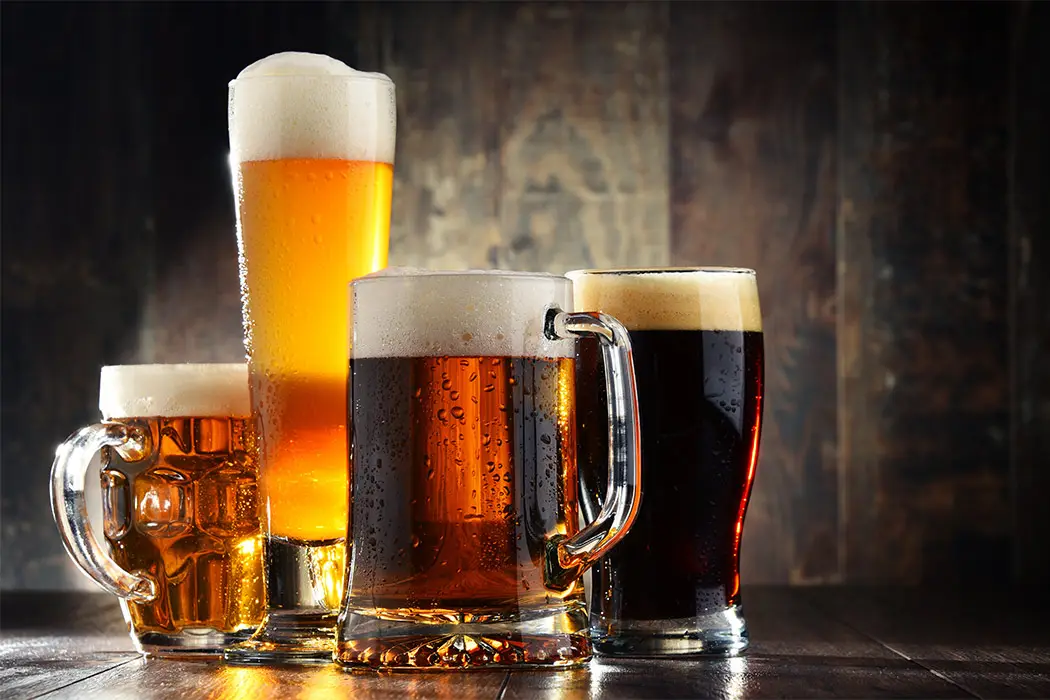
Introduction: Brewing as Controlled Transformation
At first glance, beer seems simple—just water, grain, hops, and yeast. Yet behind this simplicity lies one of the most intricate biochemical processes in food and beverage production.
Brewing is not merely mixing ingredients; it is a carefully controlled transformation. Starches become sugars, sugars become alcohol, and a wide range of chemical reactions create the flavors, aromas, and textures we associate with different beer styles.
Understanding the science of beer reveals why a crisp lager tastes so clean, why an IPA bursts with citrus aroma, and why a stout can feel rich and velvety. It also explains why small changes in process can lead to dramatically different results.
I. The Four Core Ingredients
Every beer is built on four fundamental ingredients. Each plays a specific role, and their interaction determines the final product.
1. Water: The Invisible Foundation
Beer is over 90% water, yet it is often overlooked.
Water composition—especially mineral content—affects:
- Flavor perception
- Mouthfeel
- Brewing efficiency
For example:
- High calcium levels can enhance clarity and stability
- Sulfates can accentuate hop bitterness
- Chlorides can enhance malt sweetness
Historically, local water profiles influenced regional beer styles. This is why certain cities became famous for particular types of beer.
2. Malt: The Source of Sugar and Body
Malt is typically made from barley that has been germinated and then dried.
Its functions include:
- Providing fermentable sugars
- Contributing color
- Adding flavor (bread, caramel, chocolate, coffee notes)
The malting process activates enzymes that later convert starch into sugar during brewing.
Different roasting levels produce different flavors:
- Pale malt → light, bready
- Crystal malt → caramel sweetness
- Roasted malt → dark, bitter, coffee-like
3. Hops: Bitterness and Aroma
Hops are the flowers of the hop plant, and they serve multiple roles:
- Add bitterness to balance sweetness
- Provide aroma (citrus, pine, floral, tropical)
- Act as a natural preservative
Key compounds in hops:
- Alpha acids → bitterness
- Essential oils → aroma
Timing is crucial:
- Early addition → more bitterness
- Late addition → more aroma
Modern brewing often emphasizes hop aroma, especially in styles like IPAs.
4. Yeast: The Living Engine
Yeast is a microorganism responsible for fermentation.
Its primary role:
- Convert sugar into alcohol and carbon dioxide
But yeast also produces:
- Esters (fruity flavors)
- Phenols (spicy, clove-like notes)
- Other flavor-active compounds
Different yeast strains create dramatically different flavor profiles, making yeast one of the most influential ingredients in beer.
II. The Brewing Process: Step by Step
Brewing is a sequence of controlled stages, each with a specific purpose.
1. Mashing: Converting Starch to Sugar
Crushed malt is mixed with hot water.
Enzymes break down starch into fermentable sugars.
Temperature matters:
- Lower temperatures → more fermentable sugars (drier beer)
- Higher temperatures → more residual sugars (fuller body)
2. Lautering: Separating Liquid from Grain
The liquid (wort) is separated from the spent grain.
This step ensures clarity and prepares the wort for boiling.
3. Boiling: Sterilization and Transformation
The wort is boiled, and hops are added.
This stage:
- Sterilizes the liquid
- Extracts bitterness from hops
- Drives off unwanted compounds
Chemical reactions during boiling also affect color and flavor.
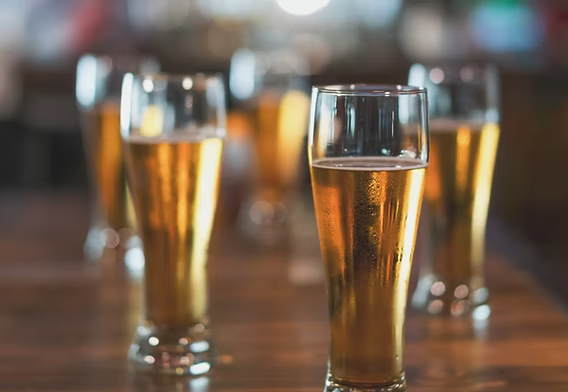
4. Fermentation: The Core Transformation
Yeast is added to the cooled wort.
During fermentation:
- Sugars → alcohol + CO₂
- Flavor compounds are produced
This stage defines the beer’s character more than any other.
5. Conditioning: Refinement
After fermentation, beer is allowed to mature.
This stage:
- Smooths flavors
- Removes unwanted byproducts
- Improves clarity
Some beers are aged for weeks, others for months or even years.
III. Types of Fermentation
Fermentation style is one of the biggest distinctions in beer.
1. Ale Fermentation
- Uses top-fermenting yeast
- Warmer temperatures
- Faster process
Produces:
- Fruity, complex flavors
2. Lager Fermentation
- Uses bottom-fermenting yeast
- Cooler temperatures
- Longer process
Produces:
- Clean, crisp flavors
3. Wild and Spontaneous Fermentation
- Uses natural or wild yeast
- Less controlled
Produces:
- Funky, sour, unpredictable flavors
IV. The Chemistry of Flavor
Beer flavor is the result of complex chemical interactions.
1. Bitterness
Measured in IBUs (International Bitterness Units).
Derived from hop compounds.
Balance is key—too much bitterness can overwhelm.
2. Sweetness
Comes from residual sugars.
Influences body and drinkability.
3. Aromatics
Hundreds of volatile compounds create aroma.
These include:
- Fruity esters
- Herbal hop oils
- Roasted malt compounds
4. Carbonation
CO₂ affects:
- Mouthfeel
- Aroma release
- Perceived freshness
V. Texture and Mouthfeel
Beer is not just tasted—it is felt.
Factors influencing mouthfeel:
- Alcohol → warmth
- Proteins → body
- Carbonation → crispness
- Residual sugars → smoothness
These elements combine to create sensations ranging from light and refreshing to rich and creamy.
VI. Why Small Changes Matter
One of the most fascinating aspects of brewing is sensitivity.
Small changes in:
- Temperature
- Timing
- Ingredient ratios
can lead to entirely different outcomes.
This is why brewing is both a science and an art.
VII. Modern Brewing Innovations
Today’s brewers are pushing boundaries using science and technology.
1. Precision Fermentation
Advanced control of yeast behavior for consistent results.
2. New Hop Varieties
Breeding programs create hops with unique aromas.
3. Experimental Techniques
- Dry hopping
- Barrel aging
- Mixed fermentation
These techniques expand flavor possibilities.
VIII. The Balance Between Science and Creativity
While brewing is grounded in science, it is also an act of creativity.
A brewer must decide:
- Which flavors to emphasize
- How to balance components
- When to follow tradition and when to innovate
The best beers are not just technically correct—they are expressive.
Conclusion: Understanding Enhances Enjoyment
Beer may appear simple, but its complexity is profound.
By understanding the science behind brewing, we gain a deeper appreciation for what is in the glass. Every sip reflects a series of deliberate choices, chemical transformations, and creative decisions.
And yet, despite all this complexity, beer remains approachable.
That is its unique strength: it is both scientifically fascinating and effortlessly enjoyable.










