






























SipsavorLife
  • Home
  • Wine
    Wine as a Cultural Artifact: History, Identity, and the Evolution of Taste

    The Art and Science of Wine & Food Pairing: How to Create Perfect Matches Every Time

    Wine as a Cultural Artifact: History, Identity, and the Evolution of Taste

    A Complete Guide to Wine Styles and Grape Varieties: From Cabernet Sauvignon to Riesling

    Wine as a Cultural Artifact: History, Identity, and the Evolution of Taste

    The Global Wine Industry: Economics, Markets, and the Future of Consumption

    Wine as a Cultural Artifact: History, Identity, and the Evolution of Taste

    The Science of Wine Tasting: How Chemistry, Biology, and Perception Shape Flavor

    Wine as a Cultural Artifact: History, Identity, and the Evolution of Taste

    Wine as a Cultural Artifact: History, Identity, and the Evolution of Taste

    Red Wine — The Liquid Expression of Land, Time, and Human Intention

    The Future of Red Wine — Climate Change, Technology, and the Evolution of Taste

  • Whiskey
    Can Beer Be an Effective Ingredient in Culinary Cooking?

    Can Beer Be an Effective Ingredient in Culinary Cooking?

    Second Fermentation in Champagne: Is It Really That Crucial?

    Second Fermentation in Champagne: Is It Really That Crucial?

    How Do Different Grains Impact the Flavor Profile of Distilled Spirits?

    How Do Different Grains Impact the Flavor Profile of Distilled Spirits?

    How Do Whiskey Master Blenders Create Perfection?

    How Do Whiskey Master Blenders Create Perfection?

    Wine Pairings: Can They Change the Flavor Profile of a Dish?

    Wine Pairings: Can They Change the Flavor Profile of a Dish?

    Beer the Ultimate Beverage for Pairing with Spicy Food?

    Beer the Ultimate Beverage for Pairing with Spicy Food?

  • Beer
    Beer as a Cultural and Social Force: From Ancient Brew to Modern Identity

    The Art of Beer & Food Pairing: Unlocking Flavor Through Balance, Contrast, and Texture

    Beer as a Cultural and Social Force: From Ancient Brew to Modern Identity

    A Complete Guide to Beer Styles: From Lager to Stout, Understanding Flavor, Body, and Character

    Beer as a Cultural and Social Force: From Ancient Brew to Modern Identity

    The Global Beer Industry: Craft Revolution, Market Forces, and the Future of Brewing

    Beer as a Cultural and Social Force: From Ancient Brew to Modern Identity

    The Science of Beer: Brewing Process, Ingredients, and the Chemistry of Flavor

    Beer as a Cultural and Social Force: From Ancient Brew to Modern Identity

    Beer as a Cultural and Social Force: From Ancient Brew to Modern Identity

    The Evolution of Beer — From Ancient Brews to the Craft Revolution

    The Future of Beer — Innovation, Sustainability, and Emerging Trends

  • Grain Spirits
    Grain Spirits Explained — The Foundation of Global Distillation

    The Future of Grain Spirits — Technology, Sustainability, and the Next Era of Distillation

    Grain Spirits Explained — The Foundation of Global Distillation

    Grain Spirits Around the World — Vodka, Whisky Bases, and Industrial Applications

    Grain Spirits Explained — The Foundation of Global Distillation

    Distillation Systems — Pot Still vs Column Still, and the Balance Between Efficiency and Flavor

    Grain Spirits Explained — The Foundation of Global Distillation

    Grain Selection and Fermentation Science — How Raw Ingredients Shape Grain Spirits

    Grain Spirits Explained — The Foundation of Global Distillation

    Grain Spirits Explained — The Foundation of Global Distillation

    Grain Spirits and the Industrial Birth of Neutral Alcohol

    The Future of Grain Spirits — AI Distillation, Sustainability, and the Post-Flavor Alcohol Industry

  • Champagne
    The History of Champagne — From Accidental Sparkle to Global Luxury

    The Future of Champagne — Climate Change, Innovation, and Industry Evolution

    The History of Champagne — From Accidental Sparkle to Global Luxury

    The Culture of Champagne — Luxury, Celebration, and Global Influence

    The History of Champagne — From Accidental Sparkle to Global Luxury

    Champagne Styles Explained — Brut, Rosé, Vintage, and Beyond

    The History of Champagne — From Accidental Sparkle to Global Luxury

    The Craft of Champagne — Terroir, Grapes, and the Méthode Traditionnelle

    The History of Champagne — From Accidental Sparkle to Global Luxury

    The History of Champagne — From Accidental Sparkle to Global Luxury

    The Future of Champagne — Climate Change, Innovation, and the Evolution of Sparkling Wine

    The Future of Champagne — Climate Change, Innovation, and the Evolution of Sparkling Wine

  • ALL
    Can Beer Be an Effective Ingredient in Culinary Cooking?

    Can Beer Be an Effective Ingredient in Culinary Cooking?

    Second Fermentation in Champagne: Is It Really That Crucial?

    Second Fermentation in Champagne: Is It Really That Crucial?

    How Do Different Grains Impact the Flavor Profile of Distilled Spirits?

    How Do Different Grains Impact the Flavor Profile of Distilled Spirits?

    How Do Whiskey Master Blenders Create Perfection?

    How Do Whiskey Master Blenders Create Perfection?

    Wine Pairings: Can They Change the Flavor Profile of a Dish?

    Wine Pairings: Can They Change the Flavor Profile of a Dish?

    Beer the Ultimate Beverage for Pairing with Spicy Food?

    Beer the Ultimate Beverage for Pairing with Spicy Food?

SipsavorLife
  • Home
  • Wine
    Wine as a Cultural Artifact: History, Identity, and the Evolution of Taste

    The Art and Science of Wine & Food Pairing: How to Create Perfect Matches Every Time

    Wine as a Cultural Artifact: History, Identity, and the Evolution of Taste

    A Complete Guide to Wine Styles and Grape Varieties: From Cabernet Sauvignon to Riesling

    Wine as a Cultural Artifact: History, Identity, and the Evolution of Taste

    The Global Wine Industry: Economics, Markets, and the Future of Consumption

    Wine as a Cultural Artifact: History, Identity, and the Evolution of Taste

    The Science of Wine Tasting: How Chemistry, Biology, and Perception Shape Flavor

    Wine as a Cultural Artifact: History, Identity, and the Evolution of Taste

    Wine as a Cultural Artifact: History, Identity, and the Evolution of Taste

    Red Wine — The Liquid Expression of Land, Time, and Human Intention

    The Future of Red Wine — Climate Change, Technology, and the Evolution of Taste

  • Whiskey
    Can Beer Be an Effective Ingredient in Culinary Cooking?

    Can Beer Be an Effective Ingredient in Culinary Cooking?

    Second Fermentation in Champagne: Is It Really That Crucial?

    Second Fermentation in Champagne: Is It Really That Crucial?

    How Do Different Grains Impact the Flavor Profile of Distilled Spirits?

    How Do Different Grains Impact the Flavor Profile of Distilled Spirits?

    How Do Whiskey Master Blenders Create Perfection?

    How Do Whiskey Master Blenders Create Perfection?

    Wine Pairings: Can They Change the Flavor Profile of a Dish?

    Wine Pairings: Can They Change the Flavor Profile of a Dish?

    Beer the Ultimate Beverage for Pairing with Spicy Food?

    Beer the Ultimate Beverage for Pairing with Spicy Food?

  • Beer
    Beer as a Cultural and Social Force: From Ancient Brew to Modern Identity

    The Art of Beer & Food Pairing: Unlocking Flavor Through Balance, Contrast, and Texture

    Beer as a Cultural and Social Force: From Ancient Brew to Modern Identity

    A Complete Guide to Beer Styles: From Lager to Stout, Understanding Flavor, Body, and Character

    Beer as a Cultural and Social Force: From Ancient Brew to Modern Identity

    The Global Beer Industry: Craft Revolution, Market Forces, and the Future of Brewing

    Beer as a Cultural and Social Force: From Ancient Brew to Modern Identity

    The Science of Beer: Brewing Process, Ingredients, and the Chemistry of Flavor

    Beer as a Cultural and Social Force: From Ancient Brew to Modern Identity

    Beer as a Cultural and Social Force: From Ancient Brew to Modern Identity

    The Evolution of Beer — From Ancient Brews to the Craft Revolution

    The Future of Beer — Innovation, Sustainability, and Emerging Trends

  • Grain Spirits
    Grain Spirits Explained — The Foundation of Global Distillation

    The Future of Grain Spirits — Technology, Sustainability, and the Next Era of Distillation

    Grain Spirits Explained — The Foundation of Global Distillation

    Grain Spirits Around the World — Vodka, Whisky Bases, and Industrial Applications

    Grain Spirits Explained — The Foundation of Global Distillation

    Distillation Systems — Pot Still vs Column Still, and the Balance Between Efficiency and Flavor

    Grain Spirits Explained — The Foundation of Global Distillation

    Grain Selection and Fermentation Science — How Raw Ingredients Shape Grain Spirits

    Grain Spirits Explained — The Foundation of Global Distillation

    Grain Spirits Explained — The Foundation of Global Distillation

    Grain Spirits and the Industrial Birth of Neutral Alcohol

    The Future of Grain Spirits — AI Distillation, Sustainability, and the Post-Flavor Alcohol Industry

  • Champagne
    The History of Champagne — From Accidental Sparkle to Global Luxury

    The Future of Champagne — Climate Change, Innovation, and Industry Evolution

    The History of Champagne — From Accidental Sparkle to Global Luxury

    The Culture of Champagne — Luxury, Celebration, and Global Influence

    The History of Champagne — From Accidental Sparkle to Global Luxury

    Champagne Styles Explained — Brut, Rosé, Vintage, and Beyond

    The History of Champagne — From Accidental Sparkle to Global Luxury

    The Craft of Champagne — Terroir, Grapes, and the Méthode Traditionnelle

    The History of Champagne — From Accidental Sparkle to Global Luxury

    The History of Champagne — From Accidental Sparkle to Global Luxury

    The Future of Champagne — Climate Change, Innovation, and the Evolution of Sparkling Wine

    The Future of Champagne — Climate Change, Innovation, and the Evolution of Sparkling Wine

  • ALL
    Can Beer Be an Effective Ingredient in Culinary Cooking?

    Can Beer Be an Effective Ingredient in Culinary Cooking?

    Second Fermentation in Champagne: Is It Really That Crucial?

    Second Fermentation in Champagne: Is It Really That Crucial?

    How Do Different Grains Impact the Flavor Profile of Distilled Spirits?

    How Do Different Grains Impact the Flavor Profile of Distilled Spirits?

    How Do Whiskey Master Blenders Create Perfection?

    How Do Whiskey Master Blenders Create Perfection?

    Wine Pairings: Can They Change the Flavor Profile of a Dish?

    Wine Pairings: Can They Change the Flavor Profile of a Dish?

    Beer the Ultimate Beverage for Pairing with Spicy Food?

    Beer the Ultimate Beverage for Pairing with Spicy Food?

SipsavorLife
No Result
View All Result
Home ALL

What Makes Chateau Margaux One of the Most Exceptional Wines in the World?

January 10, 2025
in ALL, Wine
What Makes Chateau Margaux One of the Most Exceptional Wines in the World?

Introduction: The Art of Chateau Margaux – A Wine Like No Other

  • Opening Hook: For centuries, Chateau Margaux has epitomized the very best of Bordeaux winemaking. With its rich history, refined craftsmanship, and an unmistakable expression of terroir, Chateau Margaux has become synonymous with luxury, elegance, and unparalleled quality. But what is it that truly sets this wine apart, making it one of the most sought-after and admired wines in the world? The answer lies not only in its heritage but in the exceptional flavors and characteristics that define each bottle.
  • Purpose of the Article: This article will delve into the distinctive flavors and characteristics of Chateau Margaux, examining its style, the influence of terroir, the role of grape varieties, and the aging potential that makes it a benchmark of fine wine. We will explore how these elements combine to create a wine of remarkable depth and complexity, capturing the essence of Bordeaux in every sip.

1. Understanding Chateau Margaux: A Brief Overview of Its Legacy

  • A History of Excellence: To appreciate the flavors of Chateau Margaux, it is essential to understand the legacy behind this extraordinary wine. One of the five First Growths classified in the 1855 Bordeaux Classification, Chateau Margaux has long been revered for producing wines that embody refinement and sophistication. The estate’s commitment to quality, innovation, and tradition has helped it maintain its stature as a leader in the wine world.
  • The Role of Terroir in Shaping Flavor: Located in the Margaux appellation of Bordeaux, the estate benefits from a unique combination of soil, climate, and topography that creates the ideal conditions for producing exceptional wine. Understanding the role of terroir—the interaction of the land, climate, and vineyard practices—helps explain why Chateau Margaux’s wines are so distinctive.

2. The Grape Varieties: A Perfect Balance of Cabernet Sauvignon and Merlot

  • Cabernet Sauvignon: The Backbone of Chateau Margaux: The dominant grape variety in Chateau Margaux’s wines is Cabernet Sauvignon, which provides structure, tannin, and aging potential. This variety is known for its deep color, powerful flavor, and ability to create wines that age gracefully. At Chateau Margaux, Cabernet Sauvignon is crafted into a wine that delivers rich flavors of dark fruit, tobacco, and earthiness, balanced by a velvety mouthfeel and elegant tannins.
  • Merlot: Softness and Roundness: Merlot, the second most prevalent grape at Chateau Margaux, contributes roundness and smoothness to the wine. This variety’s softer tannins and fruity profile bring balance to the powerful structure of Cabernet Sauvignon. Merlot adds notes of plum, black cherry, and cocoa, enhancing the wine’s complexity and approachability in its youth.
  • The Role of Other Grapes: While Cabernet Sauvignon and Merlot are the primary grape varieties used at Chateau Margaux, small amounts of other Bordeaux varietals like Petit Verdot and Cabernet Franc are also included in some vintages. These grapes provide additional depth, spice, and aromatic complexity. This section will explore how the blend of these varieties works in harmony to create the unique flavor profile of Chateau Margaux.

3. The Flavors of Chateau Margaux: An Exploration of Key Notes and Aromas

  • Fruit Profile: Rich and Ripe Dark Fruits: Chateau Margaux is renowned for its distinctive fruit profile, which reflects the ripeness and purity of the grapes. The wine typically features intense dark fruit flavors, including blackcurrant (cassis), blackberry, and plum. These rich fruit flavors are balanced by subtle hints of red fruit, such as raspberry and cherry, which add complexity and lift to the wine’s profile.
  • Earthy Undertones: Tobacco, Leather, and Forest Floor: As Chateau Margaux ages, it develops layers of earthy complexity. Aromas of tobacco, leather, and wet forest floor emerge, adding depth and maturity to the wine. These earthy notes are a hallmark of well-aged Bordeaux wines and contribute to the wine’s sense of place, reflecting the estate’s terroir and the careful handling of the wine during its long maturation.
  • Floral Notes: Elegance and Refined Aromatics: One of the defining characteristics of Chateau Margaux is its subtle, yet captivating, floral bouquet. Notes of violets and rose petals often appear in both the aroma and the flavor profile, adding an element of freshness and elegance. These floral undertones balance the richness of the dark fruit and the earthiness of the wine, enhancing its complexity and appeal.
  • Spices and Oak Influence: Cinnamon, Clove, and Vanilla: Aging in French oak barrels imparts a subtle spice profile to Chateau Margaux. Aromas of cinnamon, clove, and vanilla are often present, adding warmth and a touch of sweetness to the wine’s overall character. The oak also contributes structure and smoothness, allowing the wine to develop its signature texture—silky and well-integrated.
  • Minerality and Freshness: Chateau Margaux’s wines also display an intriguing minerality, with hints of graphite, flint, and crushed stone. This mineral edge adds precision and balance to the wine, ensuring that the fruit and earthy notes are not overpowering. The minerality also lends a freshness to the wine, keeping it vibrant even in its more mature forms.
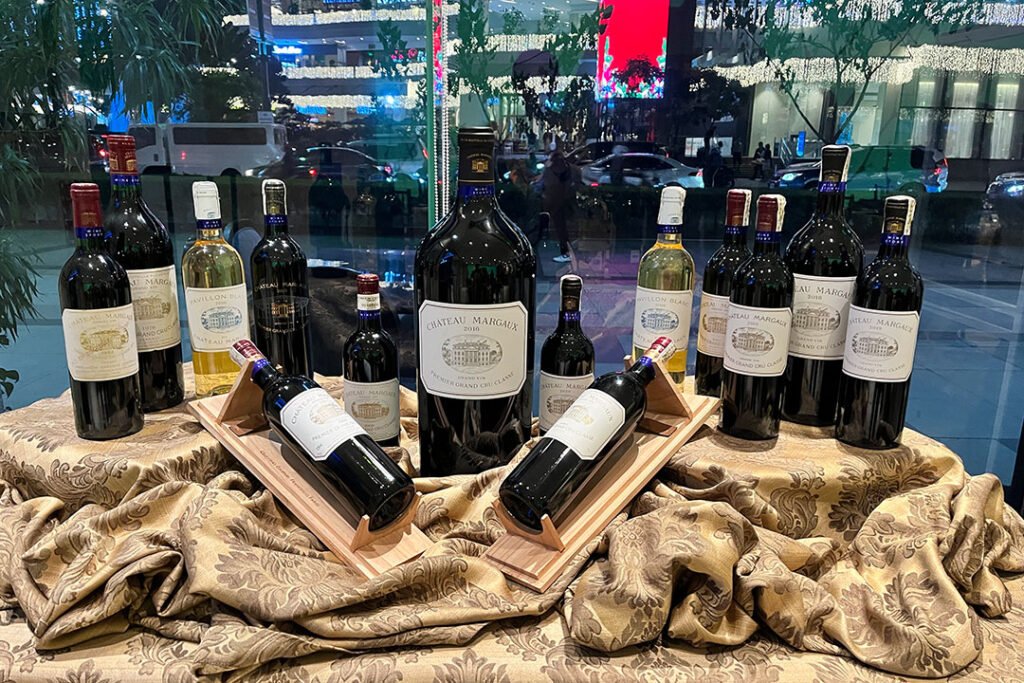
4. Structure and Mouthfeel: The Signature Elegance of Chateau Margaux

  • Tannins and Texture: Chateau Margaux is known for its fine, velvety tannins that provide both structure and elegance. Unlike some other Bordeaux wines, the tannins in Chateau Margaux are never harsh or astringent; instead, they contribute to a smooth and supple mouthfeel. This section will discuss how the estate’s meticulous vineyard practices and winemaking techniques ensure that the tannins are well-integrated, allowing the wine to evolve beautifully over time.
  • Acidity: Vitality and Freshness: The wine’s natural acidity plays an essential role in preserving its freshness and vitality. Chateau Margaux’s acidity is crisp yet balanced, enhancing the wine’s aging potential and giving it the liveliness needed to complement its deep flavors. The acidity helps maintain the wine’s equilibrium, preventing it from becoming overly heavy or cloying.
  • Balance and Harmony: One of the most celebrated aspects of Chateau Margaux is its remarkable balance. The interplay of fruit, tannin, acidity, and oak is seamless, creating a wine that feels harmonious on the palate. Every component works in concert, allowing the wine to reveal its complexity without any single flavor overwhelming the others. This section will dive into how Chateau Margaux achieves this elusive balance and what makes it stand out among other Bordeaux wines.

5. Aging Potential: How Chateau Margaux Evolves Over Time

  • Youthful Vigor: In its youth, Chateau Margaux is already an exceptional wine, with vibrant fruit flavors, fresh acidity, and soft tannins. However, like many great Bordeaux wines, it has an extraordinary capacity to age. This section will explore how Chateau Margaux’s wines develop in their early years, with an emphasis on the fruit-driven profile and the evolution of its tannins.
  • The Maturation Process: As Chateau Margaux ages, its flavor profile becomes more complex and refined. The tannins soften, and the primary fruit flavors give way to secondary aromas of tobacco, leather, and spice. The wine takes on a more nuanced, elegant character, with the oak influence becoming more integrated and subtle. This section will explore how the wine evolves with age and the key factors that contribute to its development.
  • The Role of Decanting and Cellaring: Proper storage and decanting are essential for unlocking the full potential of Chateau Margaux. This section will provide recommendations on how best to cellar Chateau Margaux and the benefits of decanting older bottles to allow them to fully express their aromas and flavors.
  • Longevity and Optimal Drinking Windows: Chateau Margaux is a wine that can be enjoyed at various stages of its life. While younger bottles offer vibrant fruit and freshness, older vintages reveal more mature, complex flavors. This section will provide guidance on when to drink Chateau Margaux based on the vintage and the wine’s aging potential.

6. Chateau Margaux’s Signature Style: What Sets It Apart

  • Elegance Over Power: Unlike many other Bordeaux wines, Chateau Margaux is often characterized by its elegance rather than sheer power. It is a wine that speaks to sophistication, restraint, and harmony, with a refined balance of fruit, acidity, and tannin. This section will explore how Chateau Margaux’s winemaking philosophy emphasizes elegance, setting it apart from other top Bordeaux estates.
  • Consistency Across Vintages: One of the hallmarks of Chateau Margaux’s reputation is its consistency. Despite variations in weather and vintage conditions, the estate has maintained a remarkably consistent style that is instantly recognizable. This section will examine how the estate’s commitment to quality and precision ensures that each vintage of Chateau Margaux remains true to its signature characteristics.
  • The Role of Terroir in Defining Style: The terroir of the Margaux appellation plays a critical role in defining the style of Chateau Margaux. With its gravel-rich soil, well-drained vineyards, and temperate climate, the terroir imparts a unique expression to the wine. This section will explore how the estate’s location contributes to the signature flavor profile and style of Chateau Margaux.

Conclusion: Chateau Margaux’s Enduring Charm and Timeless Appeal

  • Summary of Key Characteristics: Chateau Margaux’s wines are known for their exceptional balance, elegance, and complexity. With a deep, rich fruit profile, earthy undertones, and subtle floral notes, the wine offers a sophisticated and harmonious drinking experience. Its ability to age gracefully and evolve over time only adds to its allure, making it one of the most coveted wines in the world.
  • The Legacy of Chateau Margaux: Chateau Margaux’s commitment to quality and tradition ensures that its wines will continue to be celebrated for generations to come. Whether enjoyed in its youth or after many years of aging, Chateau Margaux remains a benchmark of excellence in the world of fine wine.

Tags: CultureFamous brand wineHealthHistoryInnovationluxurytasteWine
ShareTweetShare

Related Posts

Wine as a Cultural Artifact: History, Identity, and the Evolution of Taste
Wine

The Art and Science of Wine & Food Pairing: How to Create Perfect Matches Every Time

April 26, 2026
Wine as a Cultural Artifact: History, Identity, and the Evolution of Taste
Wine

A Complete Guide to Wine Styles and Grape Varieties: From Cabernet Sauvignon to Riesling

April 26, 2026
Wine as a Cultural Artifact: History, Identity, and the Evolution of Taste
Wine

The Global Wine Industry: Economics, Markets, and the Future of Consumption

April 26, 2026
Wine as a Cultural Artifact: History, Identity, and the Evolution of Taste
Wine

The Science of Wine Tasting: How Chemistry, Biology, and Perception Shape Flavor

April 26, 2026
Wine as a Cultural Artifact: History, Identity, and the Evolution of Taste
Wine

Wine as a Cultural Artifact: History, Identity, and the Evolution of Taste

April 26, 2026
Red Wine — The Liquid Expression of Land, Time, and Human Intention
Wine

The Future of Red Wine — Climate Change, Technology, and the Evolution of Taste

April 22, 2026
Leave Comment
  • Trending
  • Comments
  • Latest
Role of Terroir in Champagne Production

Role of Terroir in Champagne Production

January 19, 2026
Champagne Can Be Aged in Wood?

Champagne Can Be Aged in Wood?

January 18, 2026
Is Organic Wine Healthier Than Conventional Wine?

Is Organic Wine Healthier Than Conventional Wine?

January 20, 2026
Why Do Some Champagnes Use a High Proportion of Pinot Meunier?

Why Do Some Champagnes Use a High Proportion of Pinot Meunier?

January 20, 2026
The Timeless Elegance of Wine: A Journey Through History and Culture

The Timeless Elegance of Wine: A Journey Through History and Culture

Why Is Château Lafite Rothschild the Pinnacle of Fine Wine?

Why Is Château Lafite Rothschild the Pinnacle of Fine Wine?

How Did Château Lafite Rothschild Become a Global Icon of Luxury?

How Did Château Lafite Rothschild Become a Global Icon of Luxury?

What Makes Chateau Lafite Rothschild the Pinnacle of Bordeaux Wines?

What Makes Chateau Lafite Rothschild the Pinnacle of Bordeaux Wines?

Beer as a Cultural and Social Force: From Ancient Brew to Modern Identity

The Art of Beer & Food Pairing: Unlocking Flavor Through Balance, Contrast, and Texture

April 26, 2026
Beer as a Cultural and Social Force: From Ancient Brew to Modern Identity

A Complete Guide to Beer Styles: From Lager to Stout, Understanding Flavor, Body, and Character

April 26, 2026
Beer as a Cultural and Social Force: From Ancient Brew to Modern Identity

The Global Beer Industry: Craft Revolution, Market Forces, and the Future of Brewing

April 26, 2026
Beer as a Cultural and Social Force: From Ancient Brew to Modern Identity

The Science of Beer: Brewing Process, Ingredients, and the Chemistry of Flavor

April 26, 2026
SipsavorLife

Welcome to our comprehensive beverage guide, where you can explore the fascinating world of alcoholic drinks. From exquisite wines and rich whiskeys to refreshing beers and sparkling champagnes, we provide insights, tips, and recommendations for enthusiasts and casual drinkers alike. Discover your next favorite libation with us!

© 2025 sipsavorlife.com. contacts:sipsavorlife-35376@gmail.com

No Result
View All Result
  • Home
  • Wine
  • Whiskey
  • Beer
  • Grain Spirits
  • Champagne
  • ALL

© 2025 sipsavorlife.com. contacts:sipsavorlife-35376@gmail.com

Welcome Back!

Login to your account below

Forgotten Password?

Retrieve your password

Please enter your username or email address to reset your password.

Log In






