















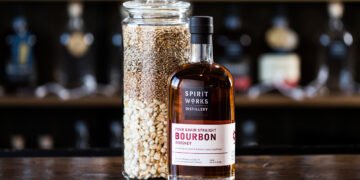






Among all grain spirits, bourbon occupies a uniquely American position. It is not merely a whiskey style but a cultural symbol deeply connected to the history, agriculture, industry, mythology, and identity of the United States. Bourbon represents frontier survival, southern craftsmanship, industrial innovation, hospitality, rebellion, luxury, and modern global prestige all at once.
For centuries bourbon evolved from a rough frontier alcohol into one of the world’s most respected premium spirits. What was once distilled in isolated rural communities eventually became an international luxury product served in Michelin-starred restaurants, collector auctions, luxury hotels, and elite whiskey bars around the globe.
Unlike Scotch whisky, which often emphasizes restraint and regional subtlety, bourbon frequently celebrates richness, sweetness, and bold oak influence. Corn gives it warmth and approachability, while charred new oak barrels contribute layers of:
- Vanilla
- Caramel
- Smoke
- Spice
- Toast
- Brown sugar
Bourbon also reflects the broader American story. Its rise parallels:
- Westward expansion
- Agricultural development
- Industrialization
- Prohibition
- Globalization
- Luxury branding
Today bourbon stands at the center of a global whiskey boom. Rare bottles command astonishing prices, tourism flourishes along the Kentucky Bourbon Trail, and distilleries continue balancing tradition with innovation.
This article explores bourbon’s history, production science, cultural importance, economic influence, and enduring role within grain spirit culture.
What Is Bourbon?
Bourbon is a type of American whiskey produced primarily from corn.
To qualify legally as bourbon in the United States, the spirit must:
- Contain at least 51% corn
- Be aged in new charred oak barrels
- Be distilled below specific proof limits
- Contain no added flavoring or coloring
Although strongly associated with Kentucky, bourbon may legally be produced anywhere in the United States.
However, Kentucky remains bourbon’s spiritual and historical heart.
The Origins of Bourbon
The precise origins of bourbon remain partly mythologized.
Most historians believe bourbon developed during the late eighteenth century as settlers moved westward into Kentucky and surrounding regions.
Frontier Distilling
Early American farmers often converted grain into whiskey because distilled alcohol was:
- Easier to transport
- More valuable
- Longer lasting
Corn became especially important because it grew abundantly in frontier environments.
Rather than allowing excess grain to spoil, farmers distilled it into whiskey.
Why Kentucky Became Bourbon Country
Kentucky possessed several advantages ideal for whiskey production:
- Fertile farmland
- Limestone-filtered water
- Favorable climate
- Abundant corn
Limestone naturally removes iron from water while adding calcium, improving fermentation quality.
These conditions helped Kentucky emerge as America’s whiskey capital.
The Bourbon Name
The origin of the word “bourbon” remains debated.
Possible explanations include:
- Bourbon County, Kentucky
- Bourbon Street in New Orleans
- French Bourbon royal influence
Regardless of exact origin, the term eventually became synonymous with corn-based American whiskey.
Corn: The Heart of Bourbon
Corn defines bourbon more than any other ingredient.
Because bourbon must contain at least 51% corn, the grain shapes its essential character.
Corn contributes:
- Sweetness
- Rich body
- Vanilla-friendly softness
- Caramel notes
Higher corn percentages often create smoother and sweeter bourbon styles.
Secondary Grains
Although corn dominates, other grains influence complexity.
Rye in Bourbon
Many bourbons use rye as a secondary grain.
Rye contributes:
- Pepper spice
- Dryness
- Herbal structure
High-rye bourbons often taste bolder and sharper.
Wheat in Bourbon
Some producers replace rye with wheat.
Wheated bourbons typically display:
- Softer texture
- Creaminess
- Gentle sweetness
Famous wheated bourbons became especially popular among collectors.
Malted Barley
Most bourbon mash bills include small amounts of malted barley.
Its enzymes assist starch conversion during mashing.
Barley also contributes subtle cereal complexity.
The Science of Bourbon Production
Bourbon production combines:
- Agriculture
- Microbiology
- Chemistry
- Engineering
- Sensory artistry
Every production decision shapes final character.
Milling and Mashing
Grains are ground before mixing with hot water.
This process extracts starches and converts them into fermentable sugars.
Temperature management is critical.
Different temperature stages activate different enzymes responsible for sugar conversion.
Sour Mash Process
Most bourbon uses the sour mash process.
This involves adding a portion of previously fermented mash into new batches.
Benefits include:
- Stable acidity
- Fermentation consistency
- Bacterial control
Despite the name, sour mash does not make bourbon taste sour.
Fermentation
Yeast transforms sugar into alcohol during fermentation.
This stage also produces:
- Esters
- Fruit notes
- Aromatic compounds
- Acids
Different yeast strains strongly influence bourbon character.
Some distilleries protect proprietary yeast strains for decades.
Distillation
Bourbon is commonly distilled using:
- Column stills
- Doubler systems
- Pot still components
Distillation concentrates alcohol while preserving desired flavor compounds.
Unlike vodka, bourbon intentionally retains grain character.
The Importance of New Charred Oak
No rule defines bourbon more clearly than the requirement for new charred oak barrels.
This single law profoundly shapes bourbon flavor.
Barrel Charring
Before filling, barrels are exposed to intense fire.
Charring:
- Caramelizes wood sugars
- Creates charcoal layers
- Generates flavor compounds
The result contributes:
- Vanilla
- Smoke
- Toast
- Caramel
- Spice
This explains bourbon’s rich sweetness.
American Oak
Most bourbon barrels use American white oak.
This wood contains high concentrations of:
- Vanillin
- Lactones
- Sweet aromatic compounds
American oak strongly influences bourbon’s dessert-like profile.
Aging and Climate
Kentucky’s climate plays a crucial role in maturation.
Hot summers and cold winters cause whiskey to expand and contract within wood pores.
This accelerates flavor extraction.
Climate therefore acts almost like an invisible ingredient.
Rickhouses
Bourbon barrels age in large warehouses called rickhouses.
Temperature variations inside rickhouses affect maturation dramatically.
Barrels stored on higher floors often age faster due to heat.
This creates flavor variation even within the same distillery.
The Angel’s Share
As bourbon ages, some alcohol evaporates through wood.
This evaporation is called:
“The angel’s share.”
Kentucky warehouses often smell intensely sweet because of evaporating bourbon vapor.
Bottling Strength and Proof
Bourbon may be bottled at different proof levels.
Standard Bourbon
Many bourbons are diluted to around:
- 80 proof
- 90 proof
for broad accessibility.
Barrel Proof Bourbon
Barrel proof releases are bottled without dilution.
These whiskies often display:
- Greater intensity
- Richer texture
- More concentrated flavor
Collectors and enthusiasts strongly value barrel-strength bourbon.
Single Barrel Bourbon
Single barrel releases come from one individual barrel rather than large blends.
Because every barrel ages differently, single barrels offer unique character.
This concept helped fuel bourbon’s premiumization.
Bourbon and American History
Bourbon is deeply intertwined with American political and economic history.
The Whiskey Rebellion
In the 1790s, the U.S. government imposed whiskey taxes.
Frontier farmers resisted violently during the Whiskey Rebellion.
The event became an important test of federal authority in early American history.
Bourbon and Slavery
The bourbon industry historically relied partly on enslaved labor before abolition.
Modern whiskey culture increasingly acknowledges these historical realities while recognizing contributions from Black distillers and workers.
Prohibition
American Prohibition devastated bourbon production.
Many distilleries closed permanently.
Some survived by producing “medicinal whiskey” legally through pharmacies.
After repeal, bourbon gradually rebuilt its industry.
Bourbon’s Mid-Century Decline
During the late twentieth century, vodka and lighter spirits became more fashionable globally.
Bourbon temporarily acquired an old-fashioned image.
Consumption declined significantly.
The Bourbon Renaissance
Everything changed in the late twentieth and early twenty-first centuries.
Consumers rediscovered bourbon through:
- Craft cocktail culture
- Premium releases
- Heritage marketing
- Whiskey tourism
Demand exploded internationally.
Pappy Van Winkle and Collectibility
Few bourbons influenced luxury whiskey culture more than Pappy Van Winkle.
Limited supply and intense demand transformed certain bottles into:
- Collector items
- Investment assets
- Auction sensations
This helped redefine bourbon as a luxury product.
Bourbon and Cocktail Culture
Bourbon remains foundational in classic American cocktails.
Old Fashioned
One of the oldest whiskey cocktails.
Combines:
- Bourbon
- Sugar
- Bitters
- Citrus oils
The drink highlights bourbon’s natural sweetness beautifully.
Mint Julep
The mint julep became associated with:
- Southern culture
- Kentucky Derby traditions
- Hospitality
Crushed ice and mint create refreshing contrast against bourbon richness.
Manhattan
Although traditionally rye-based, bourbon versions remain popular.
Sweet vermouth complements bourbon’s caramel notes exceptionally well.
Bourbon Tourism
The Kentucky Bourbon Trail became one of America’s major tourism industries.
Visitors seek:
- Distillery tours
- Warehouse tastings
- Food pairings
- Cocktail experiences
Bourbon tourism combines:
- Hospitality
- education
- regional identity
Craft Bourbon Distilling
Small distilleries increasingly experiment with:
- Local grains
- Alternative aging methods
- Specialty mash bills
- Unique barrel finishes
Craft bourbon culture emphasizes authenticity and innovation simultaneously.
Sustainability Challenges
Bourbon production requires enormous resources:
- Water
- Grain
- Wood
- Energy
Modern distilleries increasingly invest in:
- Renewable energy
- Water recycling
- Sustainable forestry
- Regenerative agriculture
Environmental responsibility is becoming essential.
Bourbon and Global Markets
International demand for bourbon continues rising rapidly.
Major export markets include:
- Europe
- Japan
- Australia
- South Korea
American whiskey increasingly competes globally with Scotch and Japanese whisky.
The Psychology of Bourbon
Bourbon’s emotional appeal often relates to:
- Warmth
- Comfort
- Nostalgia
- Craftsmanship
- Americana
Its sweetness and oak richness create approachable complexity.
Unlike highly austere spirits, bourbon often feels generous and inviting.
Bourbon in Popular Culture
Bourbon appears constantly in:
- Western films
- Southern literature
- Country music
- Modern television dramas
It symbolizes:
- Authenticity
- Masculinity
- Independence
- Tradition
Modern branding increasingly expands beyond these traditional associations.
The Future of Bourbon
Future bourbon trends may include:
- Experimental grain varieties
- Climate adaptation
- Sustainable distilling
- Premium single barrels
- Global collaborations
At the same time, bourbon’s traditional foundations remain extremely important commercially.
Why Bourbon Endures
Bourbon remains globally respected because it combines:
- Agricultural identity
- Historical depth
- Flavor richness
- Luxury potential
- Accessibility
It can function equally well as:
- A casual drink
- A cocktail base
- A contemplative sipping whiskey
- A luxury collectible
Few spirits possess such broad cultural range.
Conclusion
Bourbon stands as one of the most important grain spirits ever created — a whiskey style that transformed simple frontier corn distillation into a globally respected symbol of craftsmanship, history, and American identity. Its story reflects the broader evolution of the United States itself, from agricultural frontier society to modern luxury culture.
Every bottle of bourbon represents an extraordinary combination of factors: fertile farmland, fermentation science, distillation expertise, charred oak chemistry, climate-driven aging, and years of patient maturation. Corn provides sweetness, oak contributes complexity, and time unites everything into a spirit both powerful and approachable.
Beyond flavor, bourbon carries deep emotional and cultural meaning. It evokes ideas of hospitality, resilience, craftsmanship, and authenticity. Its role in cocktails, literature, cinema, music, and tourism helped make bourbon not just a beverage, but a cultural icon.
Today bourbon continues evolving through craft distilling, premiumization, sustainability efforts, and international expansion. Yet despite modernization, its essential identity remains rooted in grain, fire, wood, and patience.
Ultimately, bourbon endures because it transforms humble agricultural ingredients into something profoundly expressive — a spirit capable of telling the story of a nation through aroma, flavor, and time.