






























Introduction
In the world of craft beer, few styles evoke as much curiosity and excitement as spontaneously fermented beers. At first glance, these beers seem like a contradiction—brewed with wild, unpredictable forces that result in uniquely complex flavors. Yet, despite their inherent chaos, they have become a symbol of creativity and craftsmanship within the brewing community. But are spontaneously fermented beers really just “controlled chaos”? This article delves into the fascinating world of these beers, exploring their fermentation process, the delicate balance between control and unpredictability, and the artistry behind every bottle.
What is Spontaneous Fermentation?
Spontaneous fermentation is an ancient brewing technique where wild yeast and bacteria from the environment are allowed to ferment the beer. Unlike traditional brewing, where a specific strain of yeast is added to the wort, spontaneous fermentation relies on the natural microflora present in the brewery environment—be it the air, equipment, or even the wooden barrels used for aging.
The most famous example of spontaneously fermented beers is lambic beer, particularly in Belgium’s Pajottenland region. Lambics, and their derivatives like Gueuze and Kriek, are brewed in a way that invites the wild yeast and bacteria—often referred to as Brettanomyces, Lactobacillus, and Pediococcus—to naturally ferment the beer. This results in a beer that’s not only unique in flavor but also in production.
A Dance of Nature and Technique
At the heart of spontaneous fermentation lies the concept of balance. While the process might sound like pure chaos—wild organisms interacting unpredictably with the wort—the brewers are not without control. The method they employ allows for randomness, but it’s a randomness shaped by experience and environment. In a sense, it’s controlled chaos.
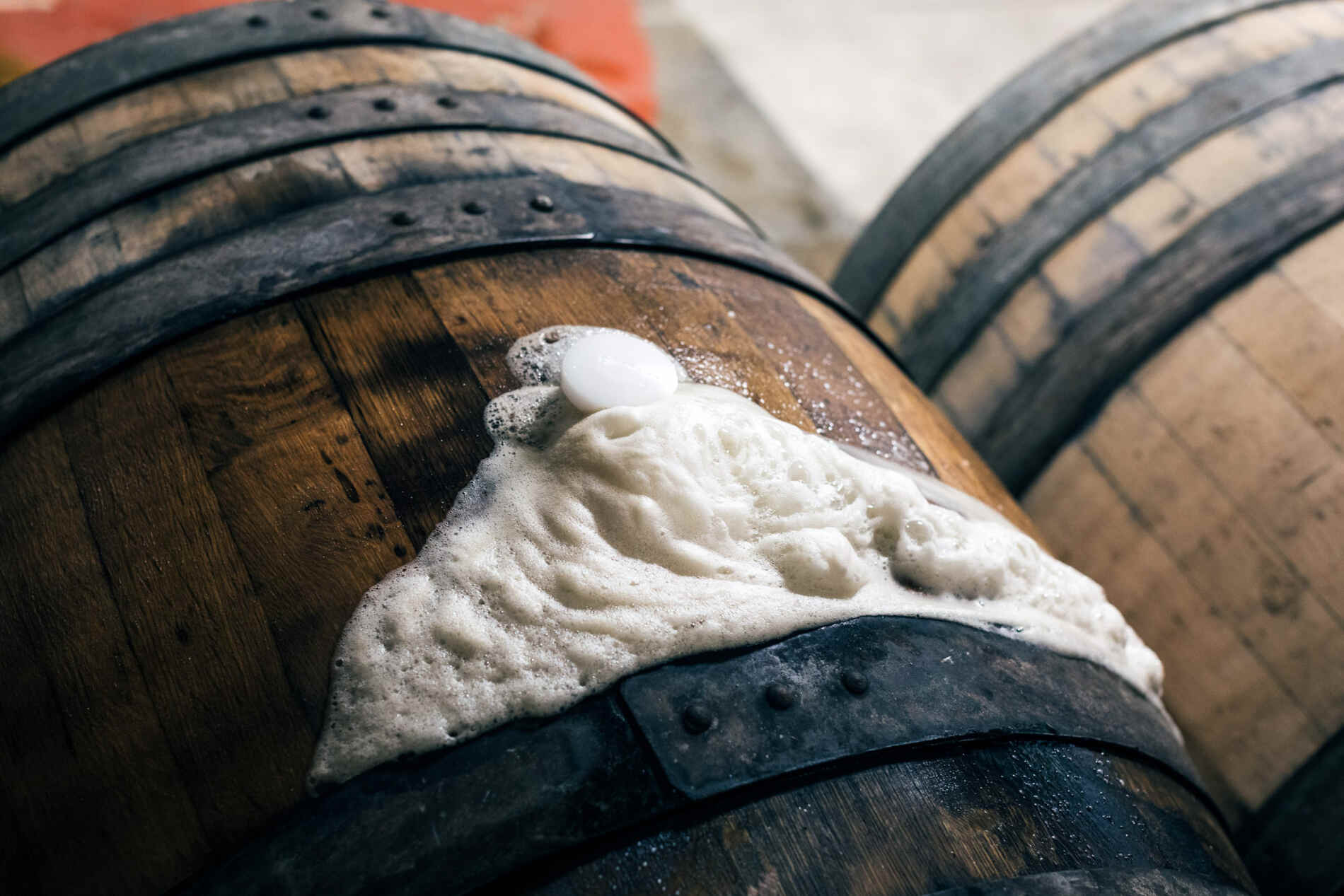
Temperature, humidity, the type of grain, and the condition of the fermenting vessel all influence how the wild yeast and bacteria will behave. Barrel-aging, particularly in old oak casks, is often used to cultivate the ideal environment for fermentation. The porous nature of wood allows microorganisms to thrive, contributing to the beer’s flavor development in subtle, yet significant ways.
This careful management of environmental factors gives the brewer the ability to predict, at least in part, how the beer will turn out. However, there is no recipe or guarantee for what will emerge from the barrel after several months or years. The final product is shaped by the whims of nature and the time the beer spends in the barrel. And it’s this unpredictability that creates the charm of spontaneously fermented beers.
The Science Behind the Chaos
The wild yeast strains that dominate spontaneous fermentation are typically Brettanomyces—a yeast known for producing funky, earthy, and sometimes barnyard-like flavors. While this yeast is commonly seen as a contaminant in many other types of brewing, in spontaneous fermentation, it is not only tolerated, but encouraged. Brettanomyces produces a broad range of flavors, from fruity to leathery, smoky to spicy, and even vinegar-like tartness, depending on how long it’s allowed to ferment the beer.
In addition to yeast, lactic acid bacteria (Lactobacillus and Pediococcus) also play a crucial role. These bacteria contribute to the beer’s tartness, adding layers of complexity and a characteristic sourness that many find appealing. The interplay between these microorganisms leads to a fermentation process that is, in essence, a natural cocktail of unpredictable reactions.
However, there are ways to temper this unpredictability. Experienced brewers have learned how to manage the microbial environment to avoid contamination from unwanted bacteria or spoilage yeast. Over time, they have developed a deep understanding of how different strains of yeast and bacteria interact and how to create a consistent environment for fermentation, even if the result is still somewhat mysterious.
The Role of Time in Spontaneous Fermentation
One of the most fascinating aspects of spontaneously fermented beers is the role of time. Unlike traditional beers, which ferment relatively quickly, spontaneously fermented beers can take months, if not years, to fully develop. The aging process is not just about allowing the yeast to finish fermenting the sugars; it’s about allowing the beer to mature, allowing the wild organisms to continue their work, producing new flavors over time.
For example, in the case of lambic beers, brewers often age the beer in barrels for one to three years, blending older and younger batches to create the signature Gueuze style. As the beer ages, the wild yeast and bacteria continue to produce more complex flavors—turning a young, tart beer into a more rounded and sophisticated beverage. The flavors can evolve and change with each passing day, which is why the beer’s character can vary so widely, even from one batch to the next.
The Art of Blending: A Brewer’s Touch
While spontaneous fermentation is wild in nature, blending is where the brewer’s skill truly shines. Once the beer has aged, brewers often blend different barrels of beer together to achieve a harmonious balance of flavors. This is an essential part of the process, as no two barrels will ever taste exactly the same. A brewer must have a keen sense of how to blend different batches to create a final product that meets the desired profile.
The skill of blending is especially important in the creation of Gueuze, which is made by combining young and old lambics in precise ratios. The younger beer contributes freshness and brightness, while the older beer brings depth and complexity. The magic lies in the balance—too much young beer, and the final product can be too sharp; too much old beer, and it can be too flat. The final blend is a product of not only the wild fermentation but also the careful artistry of the brewer.

Why People Love Spontaneously Fermented Beers
Spontaneously fermented beers have garnered a cult following, and for good reason. Their flavor profiles are unlike any other style of beer. The complexity and depth that develop during the fermentation and aging process offer a sensory experience that can vary with each sip. This variability makes these beers a perfect fit for enthusiasts who enjoy exploration and discovery.
The range of flavors that can emerge from spontaneous fermentation is truly vast. Sourness, earthiness, funkiness, and fruitiness can all play a part in the final profile. Some drinkers might experience an intense tartness akin to sour cherries, while others might detect a more subtle leathery, smoky, or woody character. This level of complexity is rare in more traditional beer styles, where the yeast strain is carefully selected for a specific flavor profile.
For those with an adventurous palate, these beers are like a journey through unknown territories. Every bottle holds the potential for something new, something surprising, something that could never be replicated. It’s this sense of unpredictability and the depth of flavor that have made spontaneous fermentation so beloved.
The Challenges of Brewing Spontaneously Fermented Beers
While spontaneous fermentation is an art, it’s not without its challenges. Brewing spontaneously fermented beers requires not just a deep understanding of the process but also patience and diligence. There’s no rush in spontaneous fermentation—things take time, and there’s always the possibility that a batch might not turn out as expected.
For brewers, it’s crucial to maintain a clean and controlled environment. The risk of introducing unwanted microorganisms that could spoil the beer or produce off-flavors is high. Some brewers mitigate this risk by using dedicated equipment or separate brewing spaces for their wild beers. However, it’s impossible to fully eliminate the influence of the environment.
Then, there’s the challenge of time. As previously mentioned, spontaneous fermentation can take months or years to produce a finished beer. This is a long waiting game for brewers, and not all of them are prepared for the uncertainty that comes with this lengthy process. Some batches may not turn out as planned, which is part of the inherent risk of the style. But for many brewers, this risk is part of the thrill.
Conclusion: The Beauty of Chaos
Spontaneously fermented beers are the epitome of controlled chaos. They are wild, unpredictable, and sometimes difficult to tame, yet they also offer the brewer a canvas for artistry. Through a combination of nature, time, and skillful blending, a good brewer can turn chaos into something extraordinary—beers that are full of character and complexity.
While they may not follow the typical rules of brewing, spontaneously fermented beers offer a glimpse into the potential for innovation within tradition. The process may be chaotic, but it’s a controlled chaos that has stood the test of time and continues to captivate beer lovers around the world.










