






























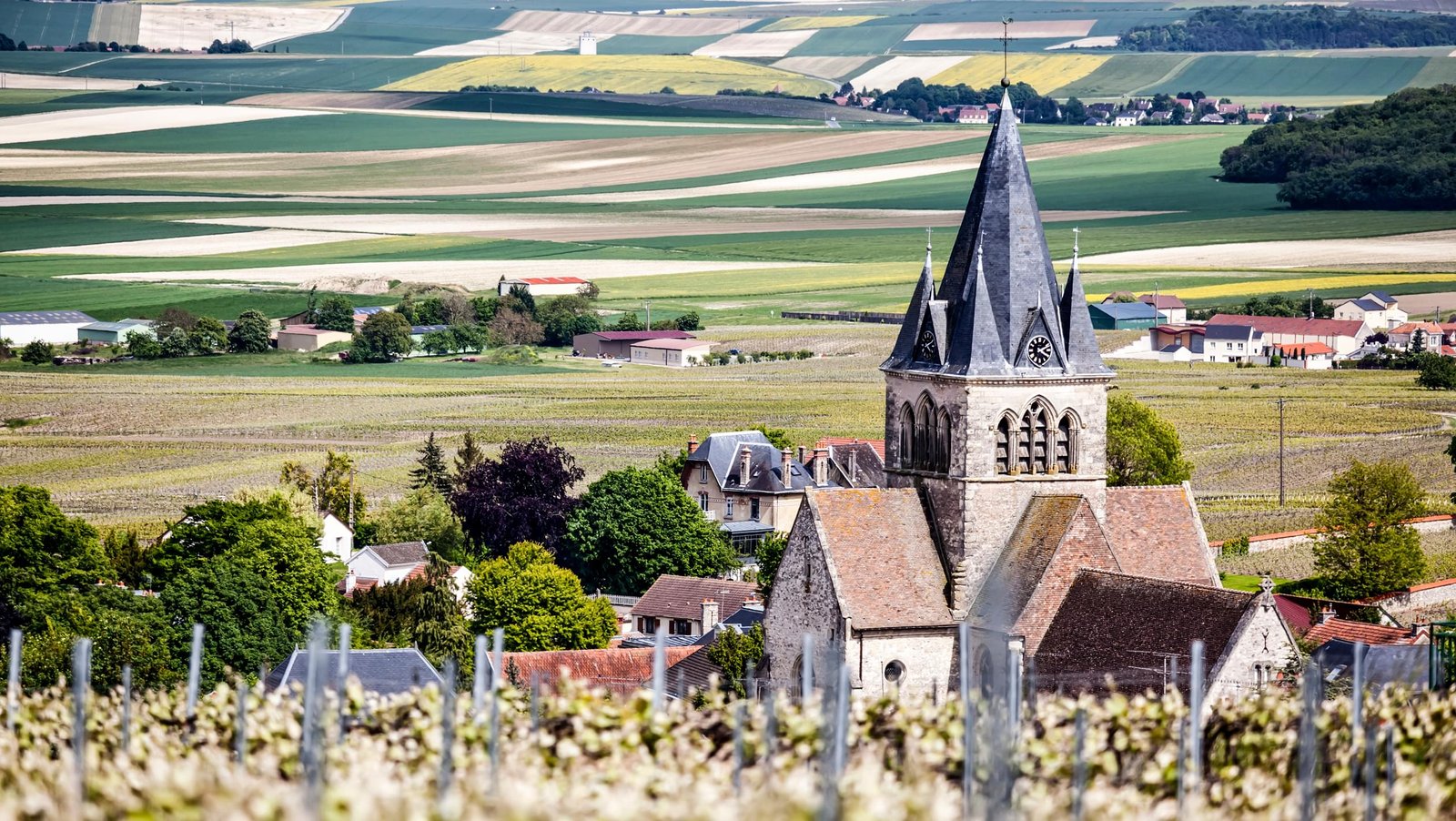
When most people hear the word “Champagne,” a sparkling, golden beverage immediately springs to mind, effervescent and celebratory, usually served in a slender flute. Yet, before it was a drink, Champagne was first and foremost a place—a rolling expanse of vineyards in northeastern France, defined by its chalky soil, cool climate, and centuries of history. Understanding Champagne requires a journey into geography, history, and culture, because the magic of the drink is inseparable from the land where it is born.
The Land That Made Bubbles Famous
Champagne is not just any region. Located roughly 90 miles northeast of Paris, the Champagne region stretches across five departments: Marne, Aube, Haute-Marne, Aisne, and Ardennes. Its unique climate is classified as cool continental, with cold winters and just enough sun in summer to ripen grapes. The soil—primarily chalk with layers of marl and limestone—is what gives Champagne its signature crispness and minerality.
This chalk isn’t just a geological quirk; it acts as a natural water reservoir. During the dry months, the roots of the vines tap into this chalky sponge, ensuring a consistent supply of water. Meanwhile, in the harsh winters, the soil retains heat and protects the vines, contributing subtly but profoundly to the grape’s character. The importance of terroir—how soil, climate, and topography influence taste—is essential in understanding why Champagne the drink is distinct.
Historical Origins of the Region
Long before bubbles danced in flutes, Champagne was a land of strategic importance. During the Middle Ages, its fertile plains were coveted for agriculture, while its towns became hubs of commerce. Champagne fairs, held between the 12th and 14th centuries, brought traders from across Europe to cities like Troyes and Reims, establishing the region as an early center of international trade.
Reims, in particular, is notable for its cathedral, where French kings were traditionally crowned. The intertwining of religion, power, and prestige in Champagne created a symbolic association with celebration and grandeur long before the sparkling wine put it on the global map.
The Grape Varieties of Champagne
When thinking about Champagne, three main grape varieties come to mind: Chardonnay, Pinot Noir, and Pinot Meunier. Each contributes unique characteristics:
- Chardonnay: Brings elegance, finesse, and citrusy freshness.
- Pinot Noir: Adds body, structure, and red fruit notes, despite being a black grape used for a white wine.
- Pinot Meunier: Offers fruitiness and early drinkability, smoothing out the wine’s texture.

The careful blending of these grapes, combined with meticulous vineyard management, is what produces the bubbles we associate with celebration. The region’s climate often challenges growers, with risks of frost, hail, and erratic weather. Yet, these difficulties, paradoxically, contribute to the distinctive quality of Champagne grapes.
Champagne as a Drink: From Accidental to Iconic
Champagne’s rise as a drink is a tale of accident and innovation. In the 17th century, the fermentation process in bottles was poorly understood. Often, bottles exploded or turned cloudy due to trapped carbon dioxide. This “problem” was gradually refined into the méthode champenoise, or traditional method, where a second fermentation occurs in the bottle, creating controlled bubbles.
The monk Dom Pérignon is often mythologized as the inventor of Champagne, but in reality, he perfected blending techniques and viticultural practices that enhanced consistency. The magic of Champagne is not just in the bubbles but in the delicate balance of acidity, fruit, and effervescence—a product of centuries of experimentation in a challenging environment.
Champagne and Its Terroir Connection
It is impossible to separate Champagne the drink from Champagne the place. The unique combination of chalky soil, cool climate, and grape selection ensures that sparkling wines from this region cannot be replicated elsewhere without losing their identity. In fact, legally, only sparkling wine produced in the Champagne region following strict regulations can bear the name “Champagne.”
This concept of protected designation of origin is critical. It reflects the idea that the character of a wine comes from its geography as much as from human craftsmanship. Much like Bordeaux or Cognac, Champagne embodies the notion that place shapes flavor.
Economic and Cultural Impact
Champagne is more than a drink; it is a global symbol of luxury. The region’s wineries—ranging from small family operations to giant houses like Moët & Chandon or Veuve Clicquot—export billions of bottles worldwide every year. Beyond the economic value, Champagne carries cultural prestige, marking celebrations, milestones, and rituals across societies.
Interestingly, Champagne tourism has also flourished. Visitors come to tour vineyards, historic cellars, and even participate in grape harvests. Wine festivals, tasting sessions, and immersive educational tours highlight the importance of the land and its centuries-old traditions.
Scientific Insights: Why the Bubbles Matter
Beyond romance and history, there is science behind the bubbles. Carbon dioxide produced during the second fermentation gives Champagne its effervescence. The tiny bubbles do more than tickle the palate—they enhance aroma, texture, and perception of acidity. This is why Champagne tastes fresher, lighter, and more elegant than many still wines.
Furthermore, studies have shown that the shape of a Champagne flute, which minimizes the surface area, preserves the bubbles longer. Even the chemical interaction between yeast, sugar, and acidity contributes to the wine’s complex flavor profile. Every sip reflects not just skill, but also centuries of experimentation in understanding fermentation chemistry.
Global Influence and Innovation
Champagne’s influence extends beyond France. Sparkling wines in other regions—like Italy’s Prosecco, Spain’s Cava, or California sparkling wines—owe their existence to Champagne’s methods. Yet, each region adapts techniques to local terroirs, creating diverse expressions of effervescence.
Innovation continues even in Champagne. Climate change challenges vintners to adapt, and new techniques in sustainable viticulture are emerging. Organic and biodynamic practices, advanced canopy management, and precision fermentation all aim to maintain quality in a changing world.

Champagne and Food Pairing
The versatility of Champagne is remarkable. While often reserved for celebrations, it pairs well with food. Its high acidity cuts through fatty dishes, while its effervescence refreshes the palate. Classic pairings include oysters, caviar, and fried foods, but modern chefs also experiment with desserts, cheeses, and even spicy dishes.
The secret lies in Champagne’s balance. Unlike many wines that are defined by sweetness or body, Champagne harmonizes acidity, fruitiness, and minerality, making it one of the most food-friendly beverages in the world.
Champagne’s Role in Society
From aristocratic courts to modern weddings, Champagne has long symbolized prestige and joy. Its consumption patterns have influenced advertising, lifestyle branding, and even global perceptions of luxury. The phrase “pop the Champagne” has entered the cultural lexicon as shorthand for celebration.
Yet, its roots remain firmly tied to a physical place. Without the vineyards, chalk soil, and historical context of northeastern France, Champagne as we know it would simply not exist. The drink is inseparable from the land—a reminder that geography, climate, and culture together create something timeless.
Conclusion: A Land First, A Drink Second
Ultimately, Champagne is indeed a place before it is a drink. Its identity is rooted in geography, history, and meticulous craft. The sparkling beverage, admired worldwide, carries the essence of a region where chalky soil, delicate climate, and human ingenuity converge. To drink Champagne is to sip history, culture, and the very landscape of northeastern France—a liquid embodiment of place.
Next time you raise a flute, remember that you are celebrating more than just bubbles—you are honoring a region whose soil, climate, and centuries of craftsmanship made this drink possible. Champagne is not just a beverage; it is a testament to the power of place.










