






























SipsavorLife
  • Home
  • Wine
    Wine Pairings: Can They Change the Flavor Profile of a Dish?

    Wine Pairings: Can They Change the Flavor Profile of a Dish?

    How Do Wine Glasses Influence the Tasting Experience?

    How Do Wine Glasses Influence the Tasting Experience?

    Is Organic Wine Healthier Than Conventional Wine?

    Is Organic Wine Healthier Than Conventional Wine?

    Why Do Some Wines Taste Better from Specific Vintages?

    Why Do Some Wines Taste Better from Specific Vintages?

    Wine Tasting: Can It Truly Be an Art Form?

    Wine Tasting: Can It Truly Be an Art Form?

    What Does Terroir Actually Mean for Your Wine?

    What Does Terroir Actually Mean for Your Wine?

  • Whiskey
    Can Beer Be an Effective Ingredient in Culinary Cooking?

    Can Beer Be an Effective Ingredient in Culinary Cooking?

    Second Fermentation in Champagne: Is It Really That Crucial?

    Second Fermentation in Champagne: Is It Really That Crucial?

    How Do Different Grains Impact the Flavor Profile of Distilled Spirits?

    How Do Different Grains Impact the Flavor Profile of Distilled Spirits?

    How Do Whiskey Master Blenders Create Perfection?

    How Do Whiskey Master Blenders Create Perfection?

    Wine Pairings: Can They Change the Flavor Profile of a Dish?

    Wine Pairings: Can They Change the Flavor Profile of a Dish?

    Beer the Ultimate Beverage for Pairing with Spicy Food?

    Beer the Ultimate Beverage for Pairing with Spicy Food?

  • Beer
    Can Beer Be an Effective Ingredient in Culinary Cooking?

    Can Beer Be an Effective Ingredient in Culinary Cooking?

    Beer the Ultimate Beverage for Pairing with Spicy Food?

    Beer the Ultimate Beverage for Pairing with Spicy Food?

    How Did Ancient Civilizations Brew Beer Without Modern Technology?

    How Did Ancient Civilizations Brew Beer Without Modern Technology?

    Is It Possible to Brew a Beer with No Alcohol and No Compromise on Taste?

    Is It Possible to Brew a Beer with No Alcohol and No Compromise on Taste?

    Why Does Beer Taste Different at High Altitudes?

    Why Does Beer Taste Different at High Altitudes?

    Is Hops the Secret Ingredient Behind Beer’s Bold Flavor?

    Is Hops the Secret Ingredient Behind Beer’s Bold Flavor?

  • Grain Spirits
    How Do Different Grains Impact the Flavor Profile of Distilled Spirits?

    How Do Different Grains Impact the Flavor Profile of Distilled Spirits?

    Grain Spirits the Unsung Heroes of Modern Mixology

    Grain Spirits the Unsung Heroes of Modern Mixology

    What Makes Grain-Based Whiskey So Different from Its Peated Cousins?

    What Makes Grain-Based Whiskey So Different from Its Peated Cousins?

    Grain Spirits: Could They Be the Next Big Trend in Craft Cocktails?

    Grain Spirits: Could They Be the Next Big Trend in Craft Cocktails?

    Why Are Grain Spirits Often Overlooked in the World of Fine Liquor?

    Why Are Grain Spirits Often Overlooked in the World of Fine Liquor?

    Is There a Secret Art to Distilling Grain Spirits?

    Is There a Secret Art to Distilling Grain Spirits?

  • Champagne
    Second Fermentation in Champagne: Is It Really That Crucial?

    Second Fermentation in Champagne: Is It Really That Crucial?

    The Science Behind the ‘Bubble Size’ in Champagne

    The Science Behind the ‘Bubble Size’ in Champagne

    Why Do Some Champagnes Use a High Proportion of Pinot Meunier?

    Why Do Some Champagnes Use a High Proportion of Pinot Meunier?

    Role of Terroir in Champagne Production

    Role of Terroir in Champagne Production

    Champagne Can Be Aged in Wood?

    Champagne Can Be Aged in Wood?

    Is There a Difference Between Blanc de Blancs and Blanc de Noirs Champagne?

    Is There a Difference Between Blanc de Blancs and Blanc de Noirs Champagne?

  • ALL
    Can Beer Be an Effective Ingredient in Culinary Cooking?

    Can Beer Be an Effective Ingredient in Culinary Cooking?

    Second Fermentation in Champagne: Is It Really That Crucial?

    Second Fermentation in Champagne: Is It Really That Crucial?

    How Do Different Grains Impact the Flavor Profile of Distilled Spirits?

    How Do Different Grains Impact the Flavor Profile of Distilled Spirits?

    How Do Whiskey Master Blenders Create Perfection?

    How Do Whiskey Master Blenders Create Perfection?

    Wine Pairings: Can They Change the Flavor Profile of a Dish?

    Wine Pairings: Can They Change the Flavor Profile of a Dish?

    Beer the Ultimate Beverage for Pairing with Spicy Food?

    Beer the Ultimate Beverage for Pairing with Spicy Food?

SipsavorLife
  • Home
  • Wine
    Wine Pairings: Can They Change the Flavor Profile of a Dish?

    Wine Pairings: Can They Change the Flavor Profile of a Dish?

    How Do Wine Glasses Influence the Tasting Experience?

    How Do Wine Glasses Influence the Tasting Experience?

    Is Organic Wine Healthier Than Conventional Wine?

    Is Organic Wine Healthier Than Conventional Wine?

    Why Do Some Wines Taste Better from Specific Vintages?

    Why Do Some Wines Taste Better from Specific Vintages?

    Wine Tasting: Can It Truly Be an Art Form?

    Wine Tasting: Can It Truly Be an Art Form?

    What Does Terroir Actually Mean for Your Wine?

    What Does Terroir Actually Mean for Your Wine?

  • Whiskey
    Can Beer Be an Effective Ingredient in Culinary Cooking?

    Can Beer Be an Effective Ingredient in Culinary Cooking?

    Second Fermentation in Champagne: Is It Really That Crucial?

    Second Fermentation in Champagne: Is It Really That Crucial?

    How Do Different Grains Impact the Flavor Profile of Distilled Spirits?

    How Do Different Grains Impact the Flavor Profile of Distilled Spirits?

    How Do Whiskey Master Blenders Create Perfection?

    How Do Whiskey Master Blenders Create Perfection?

    Wine Pairings: Can They Change the Flavor Profile of a Dish?

    Wine Pairings: Can They Change the Flavor Profile of a Dish?

    Beer the Ultimate Beverage for Pairing with Spicy Food?

    Beer the Ultimate Beverage for Pairing with Spicy Food?

  • Beer
    Can Beer Be an Effective Ingredient in Culinary Cooking?

    Can Beer Be an Effective Ingredient in Culinary Cooking?

    Beer the Ultimate Beverage for Pairing with Spicy Food?

    Beer the Ultimate Beverage for Pairing with Spicy Food?

    How Did Ancient Civilizations Brew Beer Without Modern Technology?

    How Did Ancient Civilizations Brew Beer Without Modern Technology?

    Is It Possible to Brew a Beer with No Alcohol and No Compromise on Taste?

    Is It Possible to Brew a Beer with No Alcohol and No Compromise on Taste?

    Why Does Beer Taste Different at High Altitudes?

    Why Does Beer Taste Different at High Altitudes?

    Is Hops the Secret Ingredient Behind Beer’s Bold Flavor?

    Is Hops the Secret Ingredient Behind Beer’s Bold Flavor?

  • Grain Spirits
    How Do Different Grains Impact the Flavor Profile of Distilled Spirits?

    How Do Different Grains Impact the Flavor Profile of Distilled Spirits?

    Grain Spirits the Unsung Heroes of Modern Mixology

    Grain Spirits the Unsung Heroes of Modern Mixology

    What Makes Grain-Based Whiskey So Different from Its Peated Cousins?

    What Makes Grain-Based Whiskey So Different from Its Peated Cousins?

    Grain Spirits: Could They Be the Next Big Trend in Craft Cocktails?

    Grain Spirits: Could They Be the Next Big Trend in Craft Cocktails?

    Why Are Grain Spirits Often Overlooked in the World of Fine Liquor?

    Why Are Grain Spirits Often Overlooked in the World of Fine Liquor?

    Is There a Secret Art to Distilling Grain Spirits?

    Is There a Secret Art to Distilling Grain Spirits?

  • Champagne
    Second Fermentation in Champagne: Is It Really That Crucial?

    Second Fermentation in Champagne: Is It Really That Crucial?

    The Science Behind the ‘Bubble Size’ in Champagne

    The Science Behind the ‘Bubble Size’ in Champagne

    Why Do Some Champagnes Use a High Proportion of Pinot Meunier?

    Why Do Some Champagnes Use a High Proportion of Pinot Meunier?

    Role of Terroir in Champagne Production

    Role of Terroir in Champagne Production

    Champagne Can Be Aged in Wood?

    Champagne Can Be Aged in Wood?

    Is There a Difference Between Blanc de Blancs and Blanc de Noirs Champagne?

    Is There a Difference Between Blanc de Blancs and Blanc de Noirs Champagne?

  • ALL
    Can Beer Be an Effective Ingredient in Culinary Cooking?

    Can Beer Be an Effective Ingredient in Culinary Cooking?

    Second Fermentation in Champagne: Is It Really That Crucial?

    Second Fermentation in Champagne: Is It Really That Crucial?

    How Do Different Grains Impact the Flavor Profile of Distilled Spirits?

    How Do Different Grains Impact the Flavor Profile of Distilled Spirits?

    How Do Whiskey Master Blenders Create Perfection?

    How Do Whiskey Master Blenders Create Perfection?

    Wine Pairings: Can They Change the Flavor Profile of a Dish?

    Wine Pairings: Can They Change the Flavor Profile of a Dish?

    Beer the Ultimate Beverage for Pairing with Spicy Food?

    Beer the Ultimate Beverage for Pairing with Spicy Food?

SipsavorLife
No Result
View All Result
Home ALL

What Makes Bollinger Champagne’s Flavor Profile Stand Out Among the Best?

January 12, 2025
in ALL, Champagne
What Makes Bollinger Champagne’s Flavor Profile Stand Out Among the Best?

Introduction: The Distinctive Essence of Bollinger Champagne

Bollinger Champagne is a name synonymous with luxury, complexity, and exceptional craftsmanship. A brand with nearly two centuries of history, Bollinger has built its legacy around a commitment to producing high-quality, distinctive champagnes. When it comes to the flavor and characteristics of Bollinger, the house is known for creating full-bodied, rich, and complex champagnes that stand out in a crowded market.

What exactly sets Bollinger apart from other champagne houses? What makes its flavor profile so unique and highly prized among connoisseurs and casual drinkers alike? In this article, we explore the specific characteristics that define the flavor of Bollinger Champagne, the winemaking practices that shape these qualities, and why the house’s offerings are revered worldwide.


1. The Core of Bollinger’s Flavor: A Focus on Pinot Noir

The Role of Pinot Noir in Bollinger’s Signature Taste

At the heart of Bollinger’s flavor profile is the Pinot Noir grape. Unlike many other champagne houses that focus on the Chardonnay grape for their non-vintage cuvées, Bollinger emphasizes Pinot Noir, which contributes a depth and richness that is distinctly recognizable in its wines.

  • The Strength of Pinot Noir: Pinot Noir is known for its ability to impart structure, body, and richness to the wine. It offers a higher level of intensity and complexity, producing champagnes that are full-bodied with red fruit notes, spice, and earthy undertones. The concentration of these flavors is a key characteristic of Bollinger’s non-vintage and vintage champagnes.
  • A High Proportion of Pinot Noir: Bollinger typically includes 60-65% Pinot Noir in its cuvées, which is significantly higher than many other Champagne producers. This proportion results in a fuller-bodied champagne with a rich mouthfeel, more prominent fruit flavors, and an overall robust character.

Blending with Pinot Meunier and Chardonnay

While Pinot Noir plays the leading role, Bollinger also blends a small percentage of other grape varieties such as Pinot Meunier and Chardonnay to create a balanced, well-rounded champagne.

  • Pinot Meunier: Known for its roundness, fruitiness, and floral aromas, Pinot Meunier softens the wine, enhancing its smoothness and approachability.
  • Chardonnay: Although it is present in smaller amounts, Chardonnay adds a touch of freshness, crispness, and citrus notes, balancing the fuller flavors of Pinot Noir and Pinot Meunier.

2. The Influence of Terroir: Bollinger’s Vineyard Origins

Champagne’s Grand Cru Vineyards

Bollinger sources its grapes from some of the most prestigious vineyards in the Champagne region, many of which are classified as Grand Cru. This designation indicates the highest quality level in Champagne’s terroir-based classification system.

  • Aÿ: Bollinger’s home base, the village of Aÿ, is located in the Montagne de Reims area, which is famous for producing Pinot Noir. The chalky soil and unique microclimate of Aÿ contribute to the rich, structured flavors of Bollinger’s wines.
  • Other Grand Cru Villages: Bollinger also sources grapes from other prestigious Grand Cru villages, including Verzy and Verzenay. These areas, located along the Montagne de Reims mountain, are particularly favorable for growing Pinot Noir, imparting a distinctive minerality and complexity to the champagne.

The Influence of the Terroir on Flavor

The terroir—a combination of soil, climate, and vineyard location—plays a crucial role in shaping the flavor profile of Bollinger’s champagnes. The high proportion of Pinot Noir and the vineyards’ unique terroir give Bollinger its signature characteristics:

  • Minerality: A defining element of Bollinger champagnes is the minerality that comes from the soil of its Grand Cru vineyards. This provides a subtle backbone to the wine, enhancing its freshness and elegance.
  • Ripe Fruit Flavors: The warm, sunny microclimate of the Champagne region allows the grapes to ripen fully, resulting in rich, ripe fruit flavors that shine through in Bollinger’s wines. Expect notes of blackberry, cherry, and red apple, as well as hints of stone fruit.

3. The Traditional Winemaking Methods: How Bollinger Creates Its Signature Style

Fermentation in Oak Barrels

One of the most significant factors contributing to the unique flavor of Bollinger Champagne is its use of oak barrels for fermentation. Unlike many champagne producers who rely on stainless steel tanks for fermentation, Bollinger uses oak to enhance its champagnes’ complexity.

  • Aging in Oak Barrels: The use of oak allows the wine to take on additional flavors and textures, including brioche, spice, and toasty notes. This method also adds to the champagne’s rich mouthfeel and enhances its complexity as the wine develops in the barrel.
  • Micro-oxygenation: The oak barrels allow a small amount of oxygen to interact with the wine, which softens its tannins and promotes the development of complex aromas and flavors over time.

Lees Aging and the Impact on Flavor

Another hallmark of Bollinger’s winemaking process is the lengthy aging of its champagnes on lees (the dead yeast cells left over after fermentation). This process, known as sur lie aging, contributes to the wine’s texture and flavor profile.

  • Brioche and Toasted Notes: The long contact with the lees imparts brioche, almond, and toasted bread aromas to Bollinger’s champagnes. These flavors add complexity and depth to the wine, enhancing its luxurious mouthfeel.
  • Creamy Texture: The lees aging also adds a creamy texture to Bollinger’s champagnes, giving them a smooth, velvety feel that complements the fruitiness and richness.
4. Bollinger’s Signature Tasting Notes: A Detailed Look at Its Flavor Profile

The Special Cuvée: Bollinger’s Iconic Non-Vintage Champagne

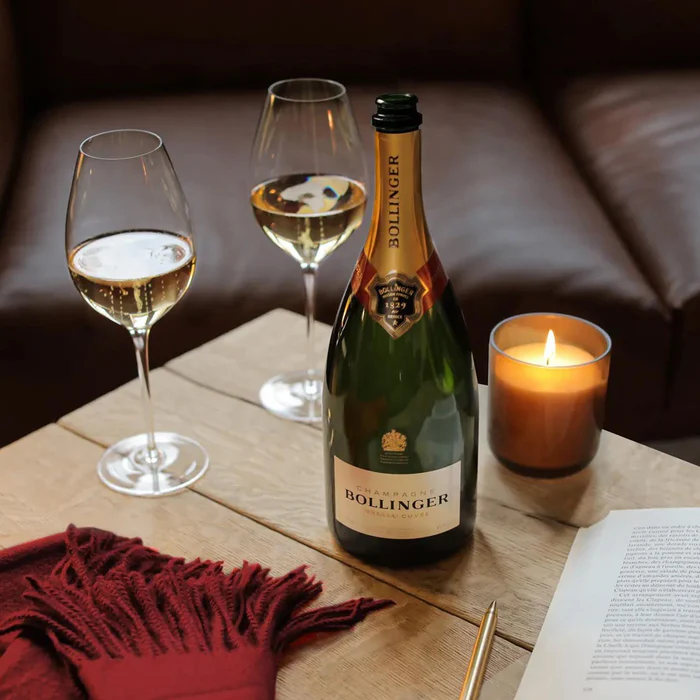
Bollinger’s flagship offering is the Special Cuvée, a non-vintage champagne that represents the house’s core style. The Special Cuvée is an exceptional example of the house’s commitment to quality, with a flavor profile that has become iconic among champagne lovers.

  • Nose: Expect a rich and complex bouquet of aromas, with notes of brioche, hazelnut, apple, and spices. The oak influence is evident, lending a warm, toasty character.
  • Palate: On the palate, the Special Cuvée is round and full-bodied, with flavors of ripe apple, red berries, almond, and a hint of citrus zest. The texture is creamy, with a persistent, well-balanced finish.
  • Finish: The finish is long and elegant, with subtle mineral and spicy notes lingering, leaving a lasting impression.

Bollinger’s Vintage Champagnes: Deeper Complexity and Finesse

Bollinger’s vintage champagnes are produced only in exceptional years, when the grapes meet the highest standards of quality. These wines showcase a deeper level of complexity and finesse.

  • Tasting Notes: The vintage cuvées, such as the Bollinger La Grande Année or Bollinger R.D. (Recently Disgorged), exhibit complex fruit flavors like dark cherry, blackberry, and citrus peel, along with richer, more intense notes of spice, toasted oak, and brioche.
  • Aging Potential: Bollinger’s vintage champagnes have an impressive aging potential, with some bottles reaching their peak after decades of cellaring. As the wine matures, the fruit flavors soften, and more complex notes like honey, vanilla, and chocolate begin to emerge.

5. The Bollinger Style in Context: How It Stands Out from Other Champagne Houses

Bollinger is known for creating champagnes with a rich, full-bodied style that distinguishes it from many other houses that produce lighter, more delicate wines. Its focus on Pinot Noir, oak aging, and long lees contact gives it a unique place in the world of champagne.

  • A Wine for Connoisseurs: Bollinger is often seen as a champagne for connoisseurs, those who appreciate complex, well-structured wines with depth and richness. Its flavor profile appeals to drinkers who seek a champagne that offers intensity and elegance rather than light, effervescent qualities.
  • Perfect Pairing: The robust character of Bollinger’s champagnes makes them ideal for pairing with rich dishes, such as roast chicken, grilled meats, or seafood with creamy sauces. The champagne’s complex flavors stand up to bold flavors in food.

Conclusion: The Enduring Appeal of Bollinger’s Flavor Profile

The distinctive flavor profile of Bollinger Champagne has made it one of the most revered and celebrated names in the world of fine champagne. With its focus on Pinot Noir, the use of oak barrels for fermentation, long lees aging, and commitment to crafting complex, full-bodied champagnes, Bollinger has created a style that stands out in a crowded market. Its bold, rich, and elegant wines continue to be enjoyed by champagne lovers around the world, from casual drinkers to seasoned connoisseurs.

By staying true to its heritage while embracing time-honored winemaking methods, Bollinger has secured its place as one of the most iconic champagne houses of all time, admired for both the quality and the distinctiveness of its wines.


Tags: characteristicsCultureflavorHealthHistoryInnovation
ShareTweetShare

Related Posts

Can Beer Be an Effective Ingredient in Culinary Cooking?
ALL

Can Beer Be an Effective Ingredient in Culinary Cooking?

January 22, 2026
Second Fermentation in Champagne: Is It Really That Crucial?
ALL

Second Fermentation in Champagne: Is It Really That Crucial?

January 22, 2026
How Do Different Grains Impact the Flavor Profile of Distilled Spirits?
ALL

How Do Different Grains Impact the Flavor Profile of Distilled Spirits?

January 22, 2026
How Do Whiskey Master Blenders Create Perfection?
ALL

How Do Whiskey Master Blenders Create Perfection?

January 22, 2026
Wine Pairings: Can They Change the Flavor Profile of a Dish?
ALL

Wine Pairings: Can They Change the Flavor Profile of a Dish?

January 22, 2026
Beer the Ultimate Beverage for Pairing with Spicy Food?
ALL

Beer the Ultimate Beverage for Pairing with Spicy Food?

January 21, 2026
Leave Comment
  • Trending
  • Comments
  • Latest
What Hidden Craftsmanship Lies Behind a Bottle of Quality Grain Spirits?

What Hidden Craftsmanship Lies Behind a Bottle of Quality Grain Spirits?

July 3, 2025
How Is Champagne Made? The Secrets Behind the Sparkle

How Is Champagne Made? The Secrets Behind the Sparkle

April 15, 2025
Grain Spirits vs. Traditional Distilled Spirits: Which One Suits Your Taste?

Grain Spirits vs. Traditional Distilled Spirits: Which One Suits Your Taste?

July 3, 2025
Champagne Bubbles: How Do They Perfectly Convey Celebration, Joy, and Luxury?

Champagne Bubbles: How Do They Perfectly Convey Celebration, Joy, and Luxury?

July 2, 2025
The Timeless Elegance of Wine: A Journey Through History and Culture

The Timeless Elegance of Wine: A Journey Through History and Culture

Why Is Château Lafite Rothschild the Pinnacle of Fine Wine?

Why Is Château Lafite Rothschild the Pinnacle of Fine Wine?

How Did Château Lafite Rothschild Become a Global Icon of Luxury?

How Did Château Lafite Rothschild Become a Global Icon of Luxury?

What Makes Chateau Lafite Rothschild the Pinnacle of Bordeaux Wines?

What Makes Chateau Lafite Rothschild the Pinnacle of Bordeaux Wines?

Can Beer Be an Effective Ingredient in Culinary Cooking?

Can Beer Be an Effective Ingredient in Culinary Cooking?

January 22, 2026
Second Fermentation in Champagne: Is It Really That Crucial?

Second Fermentation in Champagne: Is It Really That Crucial?

January 22, 2026
How Do Different Grains Impact the Flavor Profile of Distilled Spirits?

How Do Different Grains Impact the Flavor Profile of Distilled Spirits?

January 22, 2026
How Do Whiskey Master Blenders Create Perfection?

How Do Whiskey Master Blenders Create Perfection?

January 22, 2026
SipsavorLife

Welcome to our comprehensive beverage guide, where you can explore the fascinating world of alcoholic drinks. From exquisite wines and rich whiskeys to refreshing beers and sparkling champagnes, we provide insights, tips, and recommendations for enthusiasts and casual drinkers alike. Discover your next favorite libation with us!

© 2025 sipsavorlife.com. contacts:sipsavorlife-35376@gmail.com

No Result
View All Result
  • Home
  • Wine
  • Whiskey
  • Beer
  • Grain Spirits
  • Champagne
  • ALL

© 2025 sipsavorlife.com. contacts:sipsavorlife-35376@gmail.com

Welcome Back!

Login to your account below

Forgotten Password?

Retrieve your password

Please enter your username or email address to reset your password.

Log In





