



















Introduction: When Alcohol Stops Being Traditional
For thousands of years, alcohol production was defined by three things:
- Agriculture
- Fermentation
- Distillation
Grain spirits sit at the most industrial end of this spectrum—already stripped of flavor, already optimized for efficiency.
But today, even this “neutral endpoint” is changing.
We are entering a new phase:
A phase where alcohol is no longer just produced—it is modeled, optimized, and engineered by data systems.
Grain spirits are becoming the foundation of what can be called a post-traditional alcohol industry.
Section 1: From Distillation Craft to Data System
1.1 The Shift from Experience to Measurement
Traditional distillation relied on:
- Sensory judgment
- Experience
- Manual adjustments
Modern grain spirit production increasingly relies on:
- Sensors
- Predictive models
- Automated feedback loops
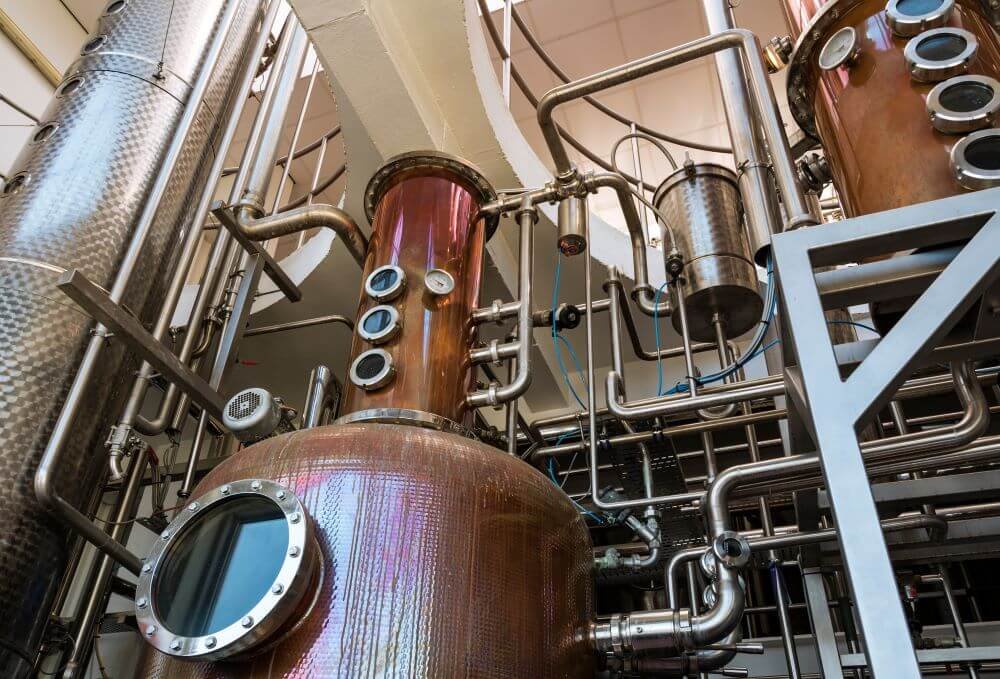
The distillery becomes a data environment.
1.2 Real-Time Chemical Monitoring
Advanced systems now track:
- Alcohol concentration
- Impurity levels
- Temperature gradients
- Vapor composition
Decisions are made continuously, not periodically.
Section 2: AI-Driven Distillation Systems
2.1 Predictive Fermentation Models
AI systems can now:
- Predict fermentation outcomes
- Optimize yeast performance
- Adjust sugar conversion efficiency
This reduces variability and increases yield.
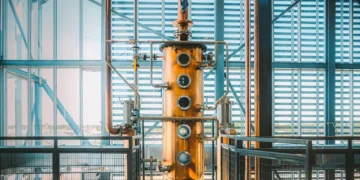
2.2 Adaptive Column Control
In modern column stills:
- AI adjusts reflux ratios
- Controls heat distribution
- Fine-tunes separation efficiency
Distillation becomes adaptive rather than fixed.
2.3 Simulation Before Production
Some systems simulate:
- Grain type impact
- Fermentation curves
- Final alcohol purity
Before production even begins.
Section 3: Sustainability as a Core Constraint
3.1 Energy Optimization
Grain spirit production is energy-intensive.
New systems focus on:
- Heat recovery
- Vapor reuse
- Closed-loop systems
3.2 Water Efficiency
Water is used in:
- Fermentation
- Cooling
- Cleaning systems
Sustainability goals push for:
- Reduced water consumption
- Recycling systems
3.3 Waste Utilization
Byproducts such as spent grain are increasingly used for:
- Animal feed
- Bioenergy
- Agricultural compost
Nothing is treated as pure waste.
Section 4: The Rise of Ultra-Neutral Spirits
4.1 Beyond Vodka
Neutral spirits are becoming even more refined:
- Higher purity ethanol
- Lower impurity thresholds
- Standardized molecular profiles
4.2 The “Blank Alcohol” Concept
A new category is emerging:
Alcohol designed to be completely modular.
It can be:
- Flavored
- Structurally modified
- Chemically adjusted post-production
Section 5: Flavor Engineering Instead of Fermentation Identity
5.1 Shift in Value Creation
Traditional model:
- Flavor comes from fermentation + aging
New model:
- Flavor is designed after distillation
5.2 Molecular Flavor Design
Food science now allows:
- Aroma compound reconstruction
- Controlled flavor layering
- Synthetic-natural hybrid profiles
Grain spirit becomes a carrier system.
Section 6: Personalization of Alcohol
6.1 Data-Driven Taste Profiles
Future systems may:
- Analyze consumer preferences
- Adjust spirit composition accordingly
- Deliver personalized blends
6.2 On-Demand Production
Instead of static products:
- Spirits could be generated in small batches
- Or even on demand in retail environments
Section 7: The Industrial Convergence
Grain spirits are merging with:
- Beverage tech
- Pharmaceutical production
- Flavor science
- Chemical engineering
The boundary between alcohol and industrial ethanol is narrowing.
Section 8: Post-Flavor Economy
8.1 Decline of Fixed Identity Spirits
Traditional categories (vodka, neutral grain spirits) may evolve into:
- Functional bases
- Customizable alcohol platforms
8.2 Rise of Functional Alcohol
Future grain spirits may be designed for:
- Low-calorie consumption
- Controlled intoxication levels
- Hybrid beverage systems
Section 9: Ethical and Cultural Questions
9.1 What Happens to Tradition?
As AI systems take over:
- Human distiller roles may shift
- Craft identity may shrink
9.2 Loss of Sensory Imperfection
Traditional alcohol values:
- Variability
- Aging unpredictability
- Human judgment
Technology reduces all three.
9.3 The Question of Authenticity
If alcohol is fully engineered:
- Is it still a cultural product?
- Or purely a designed substance?
Section 10: The New Definition of Grain Spirits
In the future, grain spirits may no longer be defined by:
- Grain type
- Distillation method
- Regional origin
Instead, they may be defined by:
- Purity level
- Functional role
- Data-driven composition
Conclusion: From Liquid Tradition to Liquid System
Grain spirits have always represented the most industrial side of alcohol.
But their future pushes them further:
From industrial product → to programmable system.
From neutral spirit → to adaptive platform.
From physical output → to data-informed design object.
In this future, grain spirits are no longer just something you drink.
They become something that is:
- Engineered
- Customized
- Continuously optimized
And yet, one thing remains constant:
Even in a fully technological future, alcohol will still serve the same human purpose it always has—
To connect systems, people, and moments in time.
Only now, the system itself is changing.