










Introduction: The Invisible Architecture of Champagne
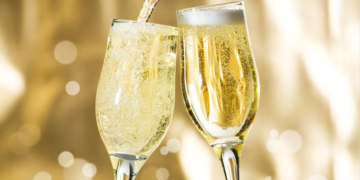
Champagne appears effortless.
A gentle stream of bubbles rises in the glass, aromas unfold delicately, and the texture feels both light and creamy. But behind this elegance lies one of the most technically demanding processes in the world of beverages.
Champagne is not just wine with bubbles—it is a carefully engineered system of pressure, fermentation, and molecular interaction.
To understand Champagne is to understand what happens inside the bottle—where science quietly shapes every sensation.
1. The Second Fermentation: Where Bubbles Are Born
1.1 From Still Wine to Sparkling System
Unlike still wines, Champagne undergoes a second fermentation inside the bottle.
After the base wine is made, producers add:
- Sugar (for yeast to consume)
- Yeast (to trigger fermentation)
This mixture is sealed in a bottle, creating a closed system.
1.2 Carbon Dioxide Trapping
During fermentation:
- Yeast converts sugar into alcohol and CO₂
- Because the bottle is sealed, CO₂ cannot escape
Instead, it dissolves into the liquid, forming carbonation.
This is fundamentally different from artificially carbonated drinks.
1.3 Pressure Build-Up
Inside a Champagne bottle, pressure can reach:
- 5–6 atmospheres
- About three times the pressure of a car tire
This pressure is what allows bubbles to form when the bottle is opened.
2. The Physics of Bubbles
2.1 Nucleation: Where Bubbles Begin
Bubbles don’t form randomly.
They originate from microscopic imperfections in the glass or particles in the liquid—called nucleation sites.
From these points, dissolved CO₂ escapes and forms visible bubbles.
2.2 Why Champagne Bubbles Are So Fine
Compared to other sparkling wines, Champagne is known for:
- Smaller bubbles
- More persistent streams
This is due to:
- Higher pressure
- Longer aging
- Protein and polysaccharide content from yeast
These factors stabilize bubbles and control their release.
2.3 Bubble Dynamics
As bubbles rise:
- They grow in size
- They accelerate
- They burst at the surface
When they burst, they release aromatic compounds into the air, enhancing smell.
3. Yeast Autolysis: The Source of Complexity
3.1 What Is Autolysis?
After fermentation, yeast cells die and break down—a process called autolysis.
This releases compounds into the wine.
3.2 Chemical Contributions
Autolysis adds:
- Amino acids
- Fatty acids
- Polysaccharides
These contribute to:
- Creamy texture
- Bread-like (brioche) aromas
- Greater depth
3.3 Time as a Factor
The longer Champagne ages on lees:
- The more pronounced these characteristics become
- The more integrated the texture feels
This is why high-end Champagne often ages for years.
4. The Chemistry of Aroma
4.1 Volatile Compounds
Champagne aroma comes from volatile molecules such as:
- Esters → fruity notes
- Aldehydes → fresh, green notes
- Ketones → buttery or creamy tones
4.2 The Role of CO₂ in Aroma Delivery
Carbon dioxide does more than create bubbles—it acts as a carrier.
When bubbles burst:
- They release aroma compounds into the air
- They intensify the perception of flavor
Without bubbles, Champagne would taste significantly different.
5. Acidity and Balance
5.1 Why Champagne Is So Fresh
Champagne grapes are harvested with high acidity.
This provides:
- Brightness
- Structure
- Longevity
5.2 Chemical Balance
A great Champagne balances:
- Acidity (sharpness)
- Sugar (softness)
- Alcohol (warmth)
The goal is harmony—not dominance of any one element.
6. Dosage: The Final Adjustment
6.1 What Is Dosage?
After removing sediment, a small amount of sugar solution is added.
This is called dosage.
6.2 Its Scientific Role
Dosage affects:
- Sweetness perception
- Balance of acidity
- Mouthfeel
Even small changes can significantly alter the final taste.
7. Texture: Why Champagne Feels Creamy
7.1 Beyond Carbonation
Champagne’s texture is not just about bubbles.
It is influenced by:
- Dissolved CO₂
- Proteins
- Polysaccharides
7.2 The “Creaminess” Effect
Fine bubbles combined with these compounds create:
- A soft, velvety sensation
- A smooth, integrated mouthfeel
This is often described as “creamy” or “silky.”
8. Temperature and Its Scientific Impact
8.1 Cold vs. Warm
Temperature affects:
- Gas solubility
- Aroma volatility
- Perceived acidity
8.2 Optimal Range
If Champagne is too cold:
- Aromas are muted
- Complexity is hidden
If too warm:
- CO₂ escapes too quickly
- Balance is lost
Precision matters.
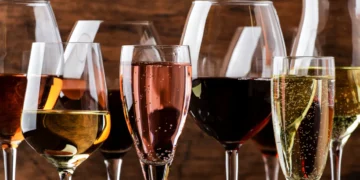
9. Glass Shape and Fluid Dynamics
9.1 Why Flutes Are Not Always Ideal
Tall flutes preserve bubbles but limit aroma.
9.2 Tulip Glass Advantage
Tulip-shaped glasses:
- Concentrate aroma
- Allow bubble development
- Improve overall sensory experience
10. Aging and Chemical Evolution
10.1 Slow Transformation
Over time, Champagne undergoes:
- Oxidation (controlled)
- Flavor integration
- Aroma evolution
10.2 From Fresh to Complex
Young Champagne → citrus, fresh fruit
Aged Champagne → nuts, toast, honey
Time reshapes the molecular profile.
11. Precision and Risk in Production
Champagne production is delicate.
Small errors can cause:
- Overpressure (exploding bottles)
- Off-flavors
- Imbalance
This is why it requires extreme control and expertise.
12. The Future of Champagne Science
12.1 Advanced Research
Scientists are studying:
- Bubble formation mechanics
- Yeast genetics
- Aroma compound behavior
12.2 Innovation Without Losing Tradition
Modern Champagne balances:
- Scientific precision
- Historical methods
It evolves without losing identity.
Conclusion: The Science Behind the Magic
Champagne may feel effortless, but it is anything but simple.
Every bubble, every aroma, every texture is the result of:
- Controlled fermentation
- Chemical balance
- Physical dynamics
Understanding the science does not take away the magic—it reveals it.
Because what seems like elegance is, in fact, precision.
And what feels like celebration is built on chemistry.