






























SipsavorLife
  • Home
  • Wine
    Wine as a Cultural Artifact: History, Identity, and the Evolution of Taste

    The Art and Science of Wine & Food Pairing: How to Create Perfect Matches Every Time

    Wine as a Cultural Artifact: History, Identity, and the Evolution of Taste

    A Complete Guide to Wine Styles and Grape Varieties: From Cabernet Sauvignon to Riesling

    Wine as a Cultural Artifact: History, Identity, and the Evolution of Taste

    The Global Wine Industry: Economics, Markets, and the Future of Consumption

    Wine as a Cultural Artifact: History, Identity, and the Evolution of Taste

    The Science of Wine Tasting: How Chemistry, Biology, and Perception Shape Flavor

    Wine as a Cultural Artifact: History, Identity, and the Evolution of Taste

    Wine as a Cultural Artifact: History, Identity, and the Evolution of Taste

    Red Wine — The Liquid Expression of Land, Time, and Human Intention

    The Future of Red Wine — Climate Change, Technology, and the Evolution of Taste

  • Whiskey
    Can Beer Be an Effective Ingredient in Culinary Cooking?

    Can Beer Be an Effective Ingredient in Culinary Cooking?

    Second Fermentation in Champagne: Is It Really That Crucial?

    Second Fermentation in Champagne: Is It Really That Crucial?

    How Do Different Grains Impact the Flavor Profile of Distilled Spirits?

    How Do Different Grains Impact the Flavor Profile of Distilled Spirits?

    How Do Whiskey Master Blenders Create Perfection?

    How Do Whiskey Master Blenders Create Perfection?

    Wine Pairings: Can They Change the Flavor Profile of a Dish?

    Wine Pairings: Can They Change the Flavor Profile of a Dish?

    Beer the Ultimate Beverage for Pairing with Spicy Food?

    Beer the Ultimate Beverage for Pairing with Spicy Food?

  • Beer
    Beer as a Cultural and Social Force: From Ancient Brew to Modern Identity

    The Art of Beer & Food Pairing: Unlocking Flavor Through Balance, Contrast, and Texture

    Beer as a Cultural and Social Force: From Ancient Brew to Modern Identity

    A Complete Guide to Beer Styles: From Lager to Stout, Understanding Flavor, Body, and Character

    Beer as a Cultural and Social Force: From Ancient Brew to Modern Identity

    The Global Beer Industry: Craft Revolution, Market Forces, and the Future of Brewing

    Beer as a Cultural and Social Force: From Ancient Brew to Modern Identity

    The Science of Beer: Brewing Process, Ingredients, and the Chemistry of Flavor

    Beer as a Cultural and Social Force: From Ancient Brew to Modern Identity

    Beer as a Cultural and Social Force: From Ancient Brew to Modern Identity

    The Evolution of Beer — From Ancient Brews to the Craft Revolution

    The Future of Beer — Innovation, Sustainability, and Emerging Trends

  • Grain Spirits
    Grain Spirits Explained — The Foundation of Global Distillation

    The Future of Grain Spirits — Technology, Sustainability, and the Next Era of Distillation

    Grain Spirits Explained — The Foundation of Global Distillation

    Grain Spirits Around the World — Vodka, Whisky Bases, and Industrial Applications

    Grain Spirits Explained — The Foundation of Global Distillation

    Distillation Systems — Pot Still vs Column Still, and the Balance Between Efficiency and Flavor

    Grain Spirits Explained — The Foundation of Global Distillation

    Grain Selection and Fermentation Science — How Raw Ingredients Shape Grain Spirits

    Grain Spirits Explained — The Foundation of Global Distillation

    Grain Spirits Explained — The Foundation of Global Distillation

    Grain Spirits and the Industrial Birth of Neutral Alcohol

    The Future of Grain Spirits — AI Distillation, Sustainability, and the Post-Flavor Alcohol Industry

  • Champagne
    The History of Champagne — From Accidental Sparkle to Global Luxury

    The Future of Champagne — Climate Change, Innovation, and Industry Evolution

    The History of Champagne — From Accidental Sparkle to Global Luxury

    The Culture of Champagne — Luxury, Celebration, and Global Influence

    The History of Champagne — From Accidental Sparkle to Global Luxury

    Champagne Styles Explained — Brut, Rosé, Vintage, and Beyond

    The History of Champagne — From Accidental Sparkle to Global Luxury

    The Craft of Champagne — Terroir, Grapes, and the Méthode Traditionnelle

    The History of Champagne — From Accidental Sparkle to Global Luxury

    The History of Champagne — From Accidental Sparkle to Global Luxury

    The Future of Champagne — Climate Change, Innovation, and the Evolution of Sparkling Wine

    The Future of Champagne — Climate Change, Innovation, and the Evolution of Sparkling Wine

  • ALL
    Can Beer Be an Effective Ingredient in Culinary Cooking?

    Can Beer Be an Effective Ingredient in Culinary Cooking?

    Second Fermentation in Champagne: Is It Really That Crucial?

    Second Fermentation in Champagne: Is It Really That Crucial?

    How Do Different Grains Impact the Flavor Profile of Distilled Spirits?

    How Do Different Grains Impact the Flavor Profile of Distilled Spirits?

    How Do Whiskey Master Blenders Create Perfection?

    How Do Whiskey Master Blenders Create Perfection?

    Wine Pairings: Can They Change the Flavor Profile of a Dish?

    Wine Pairings: Can They Change the Flavor Profile of a Dish?

    Beer the Ultimate Beverage for Pairing with Spicy Food?

    Beer the Ultimate Beverage for Pairing with Spicy Food?

SipsavorLife
  • Home
  • Wine
    Wine as a Cultural Artifact: History, Identity, and the Evolution of Taste

    The Art and Science of Wine & Food Pairing: How to Create Perfect Matches Every Time

    Wine as a Cultural Artifact: History, Identity, and the Evolution of Taste

    A Complete Guide to Wine Styles and Grape Varieties: From Cabernet Sauvignon to Riesling

    Wine as a Cultural Artifact: History, Identity, and the Evolution of Taste

    The Global Wine Industry: Economics, Markets, and the Future of Consumption

    Wine as a Cultural Artifact: History, Identity, and the Evolution of Taste

    The Science of Wine Tasting: How Chemistry, Biology, and Perception Shape Flavor

    Wine as a Cultural Artifact: History, Identity, and the Evolution of Taste

    Wine as a Cultural Artifact: History, Identity, and the Evolution of Taste

    Red Wine — The Liquid Expression of Land, Time, and Human Intention

    The Future of Red Wine — Climate Change, Technology, and the Evolution of Taste

  • Whiskey
    Can Beer Be an Effective Ingredient in Culinary Cooking?

    Can Beer Be an Effective Ingredient in Culinary Cooking?

    Second Fermentation in Champagne: Is It Really That Crucial?

    Second Fermentation in Champagne: Is It Really That Crucial?

    How Do Different Grains Impact the Flavor Profile of Distilled Spirits?

    How Do Different Grains Impact the Flavor Profile of Distilled Spirits?

    How Do Whiskey Master Blenders Create Perfection?

    How Do Whiskey Master Blenders Create Perfection?

    Wine Pairings: Can They Change the Flavor Profile of a Dish?

    Wine Pairings: Can They Change the Flavor Profile of a Dish?

    Beer the Ultimate Beverage for Pairing with Spicy Food?

    Beer the Ultimate Beverage for Pairing with Spicy Food?

  • Beer
    Beer as a Cultural and Social Force: From Ancient Brew to Modern Identity

    The Art of Beer & Food Pairing: Unlocking Flavor Through Balance, Contrast, and Texture

    Beer as a Cultural and Social Force: From Ancient Brew to Modern Identity

    A Complete Guide to Beer Styles: From Lager to Stout, Understanding Flavor, Body, and Character

    Beer as a Cultural and Social Force: From Ancient Brew to Modern Identity

    The Global Beer Industry: Craft Revolution, Market Forces, and the Future of Brewing

    Beer as a Cultural and Social Force: From Ancient Brew to Modern Identity

    The Science of Beer: Brewing Process, Ingredients, and the Chemistry of Flavor

    Beer as a Cultural and Social Force: From Ancient Brew to Modern Identity

    Beer as a Cultural and Social Force: From Ancient Brew to Modern Identity

    The Evolution of Beer — From Ancient Brews to the Craft Revolution

    The Future of Beer — Innovation, Sustainability, and Emerging Trends

  • Grain Spirits
    Grain Spirits Explained — The Foundation of Global Distillation

    The Future of Grain Spirits — Technology, Sustainability, and the Next Era of Distillation

    Grain Spirits Explained — The Foundation of Global Distillation

    Grain Spirits Around the World — Vodka, Whisky Bases, and Industrial Applications

    Grain Spirits Explained — The Foundation of Global Distillation

    Distillation Systems — Pot Still vs Column Still, and the Balance Between Efficiency and Flavor

    Grain Spirits Explained — The Foundation of Global Distillation

    Grain Selection and Fermentation Science — How Raw Ingredients Shape Grain Spirits

    Grain Spirits Explained — The Foundation of Global Distillation

    Grain Spirits Explained — The Foundation of Global Distillation

    Grain Spirits and the Industrial Birth of Neutral Alcohol

    The Future of Grain Spirits — AI Distillation, Sustainability, and the Post-Flavor Alcohol Industry

  • Champagne
    The History of Champagne — From Accidental Sparkle to Global Luxury

    The Future of Champagne — Climate Change, Innovation, and Industry Evolution

    The History of Champagne — From Accidental Sparkle to Global Luxury

    The Culture of Champagne — Luxury, Celebration, and Global Influence

    The History of Champagne — From Accidental Sparkle to Global Luxury

    Champagne Styles Explained — Brut, Rosé, Vintage, and Beyond

    The History of Champagne — From Accidental Sparkle to Global Luxury

    The Craft of Champagne — Terroir, Grapes, and the Méthode Traditionnelle

    The History of Champagne — From Accidental Sparkle to Global Luxury

    The History of Champagne — From Accidental Sparkle to Global Luxury

    The Future of Champagne — Climate Change, Innovation, and the Evolution of Sparkling Wine

    The Future of Champagne — Climate Change, Innovation, and the Evolution of Sparkling Wine

  • ALL
    Can Beer Be an Effective Ingredient in Culinary Cooking?

    Can Beer Be an Effective Ingredient in Culinary Cooking?

    Second Fermentation in Champagne: Is It Really That Crucial?

    Second Fermentation in Champagne: Is It Really That Crucial?

    How Do Different Grains Impact the Flavor Profile of Distilled Spirits?

    How Do Different Grains Impact the Flavor Profile of Distilled Spirits?

    How Do Whiskey Master Blenders Create Perfection?

    How Do Whiskey Master Blenders Create Perfection?

    Wine Pairings: Can They Change the Flavor Profile of a Dish?

    Wine Pairings: Can They Change the Flavor Profile of a Dish?

    Beer the Ultimate Beverage for Pairing with Spicy Food?

    Beer the Ultimate Beverage for Pairing with Spicy Food?

SipsavorLife
No Result
View All Result
Home Beer

From Grain to Glass: The Complete Brewing Process Explained

March 30, 2026
in Beer
The Global Rise of Craft Beer: A Cultural Revolution in a Glass

Opening Perspective: Beer as a Living Process

Beer is often described as simple—just four main ingredients: water, malt, hops, and yeast. But this simplicity is deceptive. Behind every glass of beer lies a highly intricate process shaped by chemistry, biology, craftsmanship, and time. Brewing is not just manufacturing; it is transformation. Grain becomes sugar, sugar becomes alcohol, and raw materials evolve into something layered, aromatic, and deeply expressive.

Understanding how beer is made changes the way you drink it. Suddenly, bitterness is no longer just a taste—it is the result of carefully timed hop additions. That creamy mouthfeel? A function of proteins and fermentation choices. Even the clarity or haze in your glass tells a story about process decisions.

This article takes you step by step through the brewing journey—from raw grain to finished beer—while explaining not only how beer is made, but why each stage matters.


Part I — The Four Pillars of Beer

Before diving into the process, it’s essential to understand the ingredients. Each one plays a precise and irreplaceable role.

1. Water: The Invisible Foundation

Beer is over 90% water, yet it’s often overlooked. The mineral composition of water can dramatically affect flavor. Historically, entire beer styles developed based on local water chemistry:

  • Soft water → ideal for delicate lagers
  • Hard water → enhances hop bitterness

Modern brewers often adjust water profiles to match specific styles, essentially “engineering” the ideal base.


2. Malt: The Source of Sugar and Body

Malt is typically barley that has been germinated and then dried. This process activates enzymes needed for brewing.

Different roasting levels produce different characteristics:

  • Light malt → clean, bready flavors
  • Medium malt → caramel, toffee notes
  • Dark malt → chocolate, coffee bitterness

Malt doesn’t just provide sugar—it defines the beer’s color, body, and foundational taste.


3. Hops: Bitterness, Aroma, and Balance

Hops are flowers that bring balance to beer. Without them, beer would be overly sweet.

Their roles include:

  • Adding bitterness (to counteract malt sweetness)
  • Providing aroma (citrus, pine, floral, tropical)
  • Acting as a natural preservative

Timing is critical. Hops added early in the boil create bitterness, while late additions enhance aroma.


4. Yeast: The Invisible Creator

Yeast is where the magic happens. It consumes sugar and produces alcohol, carbon dioxide, and a range of flavor compounds.

Different yeast strains create different profiles:

  • Clean and crisp (lagers)
  • Fruity and complex (ales)
  • Funky and wild (sour beers)

Yeast is not just a tool—it is a defining voice in the beer’s character.


Part II — The Brewing Process (Step by Step)

Now that we understand the ingredients, let’s walk through the brewing process itself.


Stage 1: Malting — Preparing the Grain

Although most breweries buy pre-malted grain, the process is fundamental:

  1. Barley is soaked in water
  2. It begins to germinate
  3. Enzymes develop inside the grain
  4. Germination is halted by drying (kilning)

This step prepares starches to be converted into fermentable sugars later.


Stage 2: Milling — Breaking It Down

Before brewing begins, malted grains are crushed. The goal is not to pulverize them, but to crack them open.

  • Outer husk remains mostly intact
  • Inner starches are exposed

Proper milling ensures efficient extraction during the next stage.


Stage 3: Mashing — Turning Starch into Sugar

Mashing is where brewing truly begins.

Crushed grains are mixed with hot water, typically between 62–72°C. During this stage:

  • Enzymes break down starch into sugar
  • Different temperatures produce different sugar types

Lower temperatures → more fermentable sugars → lighter beer
Higher temperatures → more complex sugars → fuller body

The result is a thick mixture called “mash.”


Stage 4: Lautering — Separating Liquid from Grain

After mashing, the liquid (now called “wort”) must be separated from the solid grain.

This involves:

  • Draining the liquid
  • Rinsing grains with hot water (sparging)

The goal is to extract as much sugar as possible without unwanted bitterness.


Stage 5: Boiling — Sterilization and Flavor Building

The wort is then boiled, usually for 60–90 minutes. This stage serves multiple purposes:

  • Sterilizes the liquid
  • Stops enzyme activity
  • Concentrates flavors

Most importantly, this is when hops are added.

Hop timing example:

  • Early boil → bitterness
  • Mid boil → flavor
  • Late boil → aroma

Boiling is where the beer’s structure begins to take shape.


Stage 6: Cooling — Preparing for Life

After boiling, the wort must be cooled quickly.

Why?

  • Yeast cannot survive high temperatures
  • Rapid cooling prevents contamination

At this stage, oxygen is often introduced to support yeast health.

Stage 7: Fermentation — Where Beer Is Born

This is the most critical stage.

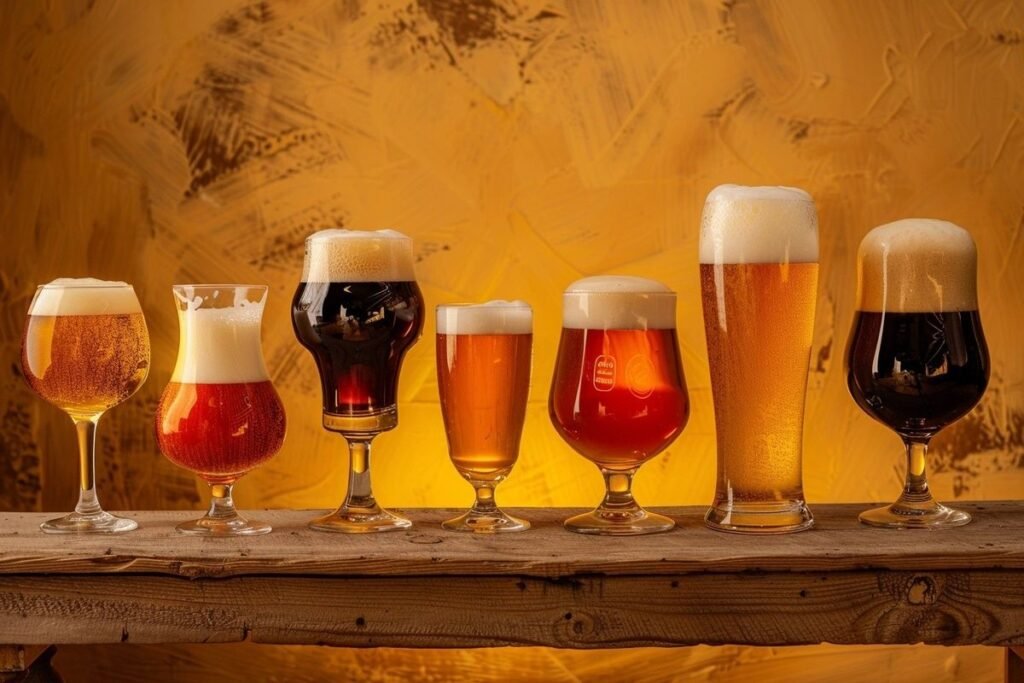
Yeast is added to the cooled wort, and fermentation begins.

During this process:

  • Sugar → alcohol + CO₂
  • Heat and flavor compounds are produced

There are two main fermentation types:

Ale Fermentation

  • Warmer temperatures (15–24°C)
  • Faster process
  • Fruity, complex flavors

Lager Fermentation

  • Cooler temperatures (7–13°C)
  • Slower process
  • Clean, crisp taste

Fermentation can take anywhere from a few days to several weeks.


Stage 8: Conditioning — Refining the Beer

After primary fermentation, beer is often conditioned.

This stage allows:

  • Flavors to mature
  • Harsh notes to soften
  • Carbonation to develop

Some beers are aged in barrels, adding layers like vanilla, oak, or whiskey notes.


Stage 9: Filtration and Packaging

Before reaching consumers, beer may be:

  • Filtered (for clarity)
  • Pasteurized (for stability)

Then it is packaged in:

  • Bottles
  • Cans
  • Kegs

Some craft beers skip filtration to preserve flavor, resulting in a hazy appearance.


Part III — How Process Shapes Flavor

Every step in brewing affects the final result. Even small changes can create dramatically different beers.

Examples:

  • Mash temperature → body and sweetness
  • Yeast strain → fruity vs clean profile
  • Hop variety → citrus vs earthy bitterness
  • Fermentation time → smoothness

Brewing is essentially controlled experimentation.


Part IV — Industrial vs Craft Brewing

While the core process remains the same, scale changes everything.

Industrial Brewing

  • Focus on consistency
  • Automated systems
  • Light, approachable flavors

Craft Brewing

  • Emphasis on creativity
  • Smaller batches
  • Bold, diverse profiles

Craft brewers often push boundaries—adding fruits, spices, or unconventional techniques.


Part V — The Science Behind the Art

Brewing is both art and science.

Chemistry

  • Enzyme activity during mashing
  • Sugar conversion
  • Flavor compound formation

Biology

  • Yeast metabolism
  • Fermentation behavior

Physics

  • Heat transfer
  • Fluid dynamics

Mastering beer requires understanding all three.


Part VI — Why Brewing Knowledge Matters to Consumers

Knowing how beer is made enhances appreciation.

Instead of simply liking or disliking a beer, you begin to understand:

  • Why it tastes the way it does
  • What choices the brewer made
  • How it compares to other styles

It transforms drinking into an experience of discovery.


Closing Reflection: Beer as Transformation

From grain to glass, beer is a journey of transformation. It begins as raw agricultural material and becomes something alive with character, aroma, and complexity.

Every pint carries the imprint of countless decisions—temperature adjustments, ingredient choices, timing precision, and creative intent. Brewing is not just about producing alcohol; it is about shaping experience.

In a world increasingly dominated by speed and uniformity, the brewing process stands as a reminder of something different: that time, care, and craftsmanship still matter.

And the next time you take a sip, you may realize—you’re not just tasting beer. You’re tasting a process, a philosophy, and a story that began long before it reached your glass.


Tags: beerCulturetaste
ShareTweetShare

Related Posts

Beer as a Cultural and Social Force: From Ancient Brew to Modern Identity
Beer

The Art of Beer & Food Pairing: Unlocking Flavor Through Balance, Contrast, and Texture

April 26, 2026
Beer as a Cultural and Social Force: From Ancient Brew to Modern Identity
Beer

A Complete Guide to Beer Styles: From Lager to Stout, Understanding Flavor, Body, and Character

April 26, 2026
Beer as a Cultural and Social Force: From Ancient Brew to Modern Identity
Beer

The Global Beer Industry: Craft Revolution, Market Forces, and the Future of Brewing

April 26, 2026
Beer as a Cultural and Social Force: From Ancient Brew to Modern Identity
Beer

The Science of Beer: Brewing Process, Ingredients, and the Chemistry of Flavor

April 26, 2026
Beer as a Cultural and Social Force: From Ancient Brew to Modern Identity
Beer

Beer as a Cultural and Social Force: From Ancient Brew to Modern Identity

April 26, 2026
The Evolution of Beer — From Ancient Brews to the Craft Revolution
Beer

The Future of Beer — Innovation, Sustainability, and Emerging Trends

April 23, 2026
Leave Comment
  • Trending
  • Comments
  • Latest
Role of Terroir in Champagne Production

Role of Terroir in Champagne Production

January 19, 2026
Champagne Can Be Aged in Wood?

Champagne Can Be Aged in Wood?

January 18, 2026
Is Organic Wine Healthier Than Conventional Wine?

Is Organic Wine Healthier Than Conventional Wine?

January 20, 2026
Why Do Some Champagnes Use a High Proportion of Pinot Meunier?

Why Do Some Champagnes Use a High Proportion of Pinot Meunier?

January 20, 2026
The Timeless Elegance of Wine: A Journey Through History and Culture

The Timeless Elegance of Wine: A Journey Through History and Culture

Why Is Château Lafite Rothschild the Pinnacle of Fine Wine?

Why Is Château Lafite Rothschild the Pinnacle of Fine Wine?

How Did Château Lafite Rothschild Become a Global Icon of Luxury?

How Did Château Lafite Rothschild Become a Global Icon of Luxury?

What Makes Chateau Lafite Rothschild the Pinnacle of Bordeaux Wines?

What Makes Chateau Lafite Rothschild the Pinnacle of Bordeaux Wines?

Beer as a Cultural and Social Force: From Ancient Brew to Modern Identity

The Art of Beer & Food Pairing: Unlocking Flavor Through Balance, Contrast, and Texture

April 26, 2026
Beer as a Cultural and Social Force: From Ancient Brew to Modern Identity

A Complete Guide to Beer Styles: From Lager to Stout, Understanding Flavor, Body, and Character

April 26, 2026
Beer as a Cultural and Social Force: From Ancient Brew to Modern Identity

The Global Beer Industry: Craft Revolution, Market Forces, and the Future of Brewing

April 26, 2026
Beer as a Cultural and Social Force: From Ancient Brew to Modern Identity

The Science of Beer: Brewing Process, Ingredients, and the Chemistry of Flavor

April 26, 2026
SipsavorLife

Welcome to our comprehensive beverage guide, where you can explore the fascinating world of alcoholic drinks. From exquisite wines and rich whiskeys to refreshing beers and sparkling champagnes, we provide insights, tips, and recommendations for enthusiasts and casual drinkers alike. Discover your next favorite libation with us!

© 2025 sipsavorlife.com. contacts:sipsavorlife-35376@gmail.com

No Result
View All Result
  • Home
  • Wine
  • Whiskey
  • Beer
  • Grain Spirits
  • Champagne
  • ALL

© 2025 sipsavorlife.com. contacts:sipsavorlife-35376@gmail.com

Welcome Back!

Login to your account below

Forgotten Password?

Retrieve your password

Please enter your username or email address to reset your password.

Log In





