


























Champagne: the mere mention conjures images of flutes sparkling in the light, celebrations, and that unmistakable pop of joy when the cork flies. Yet, for the discerning palate, Champagne is far more than bubbles and glamour. One of the more intriguing aspects some enthusiasts notice is a subtle, sometimes pronounced, saltiness—a flavor nuance that seems to dance across the tongue, bringing a bracing freshness and a complex depth. But what exactly causes this saline character in Champagne, and why do some bottles carry it more than others? To answer this, we need to dive into the unique intersection of geography, chemistry, winemaking techniques, and human perception.
The Sense of Salt: Not Always as Obvious as You Think
When people describe Champagne as “salty,” they are rarely referring to the overt taste of table salt. Rather, it is a mineral-driven sensation, a briny freshness that can remind one of sea spray or wet stones. This flavor is often subtle, sometimes elusive, and appears most prominently in vintage or prestige cuvées where the winemaking style emphasizes extended aging and terroir expression.
Saltiness in Champagne is more than just flavor—it is an experience. It sharpens the acidity, highlights the fruit, and adds a tactile dimension to the bubbles. For sommeliers and wine enthusiasts, this saline note is not a flaw but a hallmark of sophistication.
Terroir: Geography as the Salty Whisperer
The most fundamental contributor to Champagne’s saline character is terroir, a French term that captures the unique environmental factors shaping a wine: soil composition, climate, and topography.
Chalky Soils: Nature’s Mineral Deposit
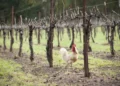
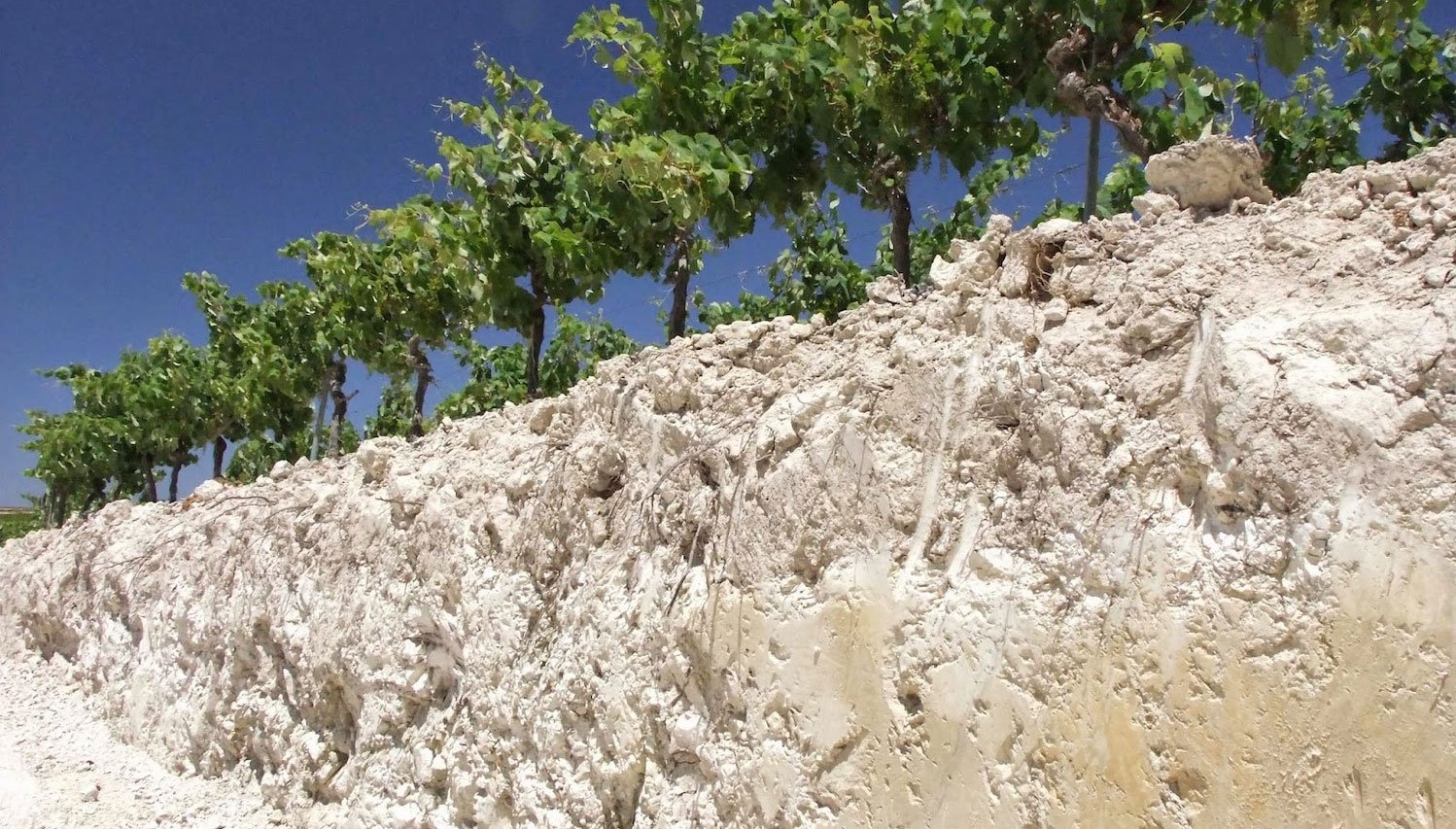
The Champagne region is famous for its chalk subsoil, which underlies vineyards across Montagne de Reims, Vallée de la Marne, and Côte des Blancs. Chalk is porous, excellent at retaining water and reflecting sunlight, and crucially, rich in calcium carbonate. As vine roots penetrate deep into these soils, they absorb minerals that subtly influence the grapes’ composition.
These minerals are not salts in the culinary sense, but they manifest on the palate as a saline or stony sensation—a flavor often described as “salty minerality.” In essence, the chalk acts as a silent architect of taste, giving some Champagnes a bracing, almost maritime character.
Proximity to the Sea: Airborne Influence
Although Champagne is inland, prevailing winds carry traces of oceanic salts from the Atlantic, particularly in the northern parts of the region. While the effect is subtle, it can contribute to that whisper of salinity, especially in older vineyards or exposed sites. Think of it as a light misting of the ocean, captured in each grape.
Grape Varieties and the Role of Acidity
Champagne’s classic grape trio—Chardonnay, Pinot Noir, and Pinot Meunier—each contributes differently to the perception of saltiness.
- Chardonnay, with its high acidity and delicate floral notes, amplifies minerality, making the wine taste crisper and subtly briny.
- Pinot Noir, more structured and fruit-forward, can carry a savory depth that complements the mineral backbone, giving the impression of a more pronounced saline edge.
- Pinot Meunier, often used for roundness and fruitiness in non-vintage blends, tends to smooth the perception of salt but can enhance the wine’s overall tactile quality.
High acidity, common in Champagne due to the cool climate, also enhances the perception of saltiness. The brain interprets the interplay of tartness and minerality as a bracing, sea-like freshness.
Aging on Lees: The Secret Behind Complexity

Another critical factor in Champagne’s saline profile is lees aging. After the second fermentation in the bottle, Champagne spends months or years in contact with dead yeast cells, known as lees. During this process, autolysis occurs: yeast cells break down, releasing amino acids, proteins, and other compounds into the wine.
Yeast-Derived Minerals
These compounds can enhance umami and minerality, producing subtle flavors reminiscent of salted nuts or a hint of the sea. Vintage Champagnes, often aged five years or more, exhibit this characteristic most vividly. Non-vintage blends, while still complex, tend to have a fresher, fruitier profile with less pronounced saline notes.
Interaction with Acidity
Aging on lees doesn’t just contribute flavors—it interacts with Champagne’s natural acidity to create a textural lift, making the wine feel lighter, airier, and more crystalline. This “effervescence texture” accentuates perception of saltiness, turning a chemical nuance into a sensory highlight.
Brut, Extra Brut, and Dosage: How Sugar Masks or Reveals Salt
Sugar dosage—the small amount of sugar added after disgorging—also influences the perception of salt.
- Extra Brut or Brut Nature: Very low sugar levels allow the wine’s mineral and saline qualities to shine, as there is little sweetness to counteract them.
- Brut or Demi-Sec: Higher dosage softens acidity and can mask subtle saltiness, favoring fruitier, rounder profiles.
In essence, Champagne’s balance between sugar, acidity, and bubbles determines whether the saline character is front and center or just a whisper beneath fruit and toast.
The Role of Bubbles: Effervescence as Flavor Enhancer
Champagne is effervescent by definition, and its tiny, persistent bubbles are more than a visual delight—they amplify sensory perception. Carbonation:
- Stimulates taste buds more efficiently, enhancing acidity and minerality.
- Interacts with saliva to bring out subtle compounds, including those responsible for saltiness.
- Amplifies aromatics, letting the nose perceive marine-like notes even before the taste buds detect them.
This means that a lively, fine-bubbled Champagne will often taste “saltier” than a flat sparkling wine, even if their chemical compositions are similar.
The Influence of Vineyard Practices
Modern Champagne producers increasingly embrace precision viticulture, which can affect saline perception:
- Low yields concentrate flavors, including mineral nuances.
- Cover crops and soil management can enhance root health and mineral uptake.
- Harvest timing: Early picking retains acidity and enhances bracing flavors, whereas later picking can produce riper, fruit-forward wines with less perceived salt.
Even tiny adjustments in vineyard management ripple through the final flavor, subtly nudging the wine toward salinity.

Food Pairing: Saltiness in Action
Champagne’s saline character makes it a versatile culinary partner. The briny undertone pairs brilliantly with:
- Seafood, especially oysters, scallops, and lightly smoked fish. The wine echoes the natural salinity of the ingredients.
- Cheeses like aged Comté or Parmigiano-Reggiano, where umami complements the saline sensation.
- Lightly salted snacks, such as almonds or seaweed crisps, which emphasize Champagne’s maritime edge.
In this way, saltiness is not just a tasting note—it actively enhances pairing versatility, bridging the gap between freshness, richness, and savoriness.
Saltiness as a Marker of Prestige
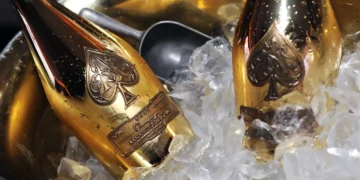
Interestingly, saltiness often correlates with high-quality Champagne. The most celebrated cuvées—Cristal, Dom Pérignon, Salon—frequently display a subtle briny edge, resulting from:
- Extended aging on lees.
- Exceptional vineyard selection with pronounced chalky soils.
- Minimal dosage to preserve terroir expression.
Connoisseurs often seek this saline fingerprint as an indicator of elegance, longevity, and terroir authenticity.
Myth-Busting: Saltiness ≠ Flaw
Some casual drinkers might perceive a briny note as unusual or even unpleasant, but in Champagne, it is generally a positive complexity. Unlike wines that taste “sodium-heavy” due to flawed winemaking, genuine Champagne saltiness is:
- Balanced with acidity, fruit, and toast.
- Subtle and fleeting, enhancing other sensory elements.
- A reflection of terroir and craftsmanship rather than added ingredients.
It’s a flavor that rewards patience and attention, revealing layers as the wine evolves in the glass.
Champagne, Climate Change, and Saline Perception
Climate shifts are subtly altering the Champagne landscape. Warmer temperatures increase grape ripeness, sometimes reducing acidity and, consequently, the perception of briny freshness. Some winemakers respond by:
- Emphasizing earlier harvests to retain sharpness.
- Experimenting with rootstock and vineyard locations to maintain mineral expression.
- Exploring low-dosage styles to let terroir shine.
This highlights an ongoing dance between nature, technique, and perception—where saltiness is both a product and a marker of adaptation.
Sensory Science: Why Saltiness Is Perceived in Champagne
From a physiological standpoint, the sensation of saltiness in Champagne is not purely sodium-based. It involves:
- Ion exchange on the tongue from mineral-rich compounds.
- Flavor interactions between acids, aldehydes, and esters.
- Mouthfeel cues from carbonation and yeast-derived compounds.
Neuroscientists note that our brains can interpret mineral and umami signals as “salty,” even when sodium chloride is minimal. In Champagne, this creates the illusion of a gentle brine that lifts the overall tasting experience.
Conclusion: A Symphony of Sea, Soil, and Bubbles
Saltiness in Champagne is a multi-layered phenomenon—an interplay of terroir, grape variety, fermentation, aging, and human perception. It’s the echo of chalky soils, the whisper of ocean winds, and the subtle chemistry of yeast interacting with wine acids. Far from being a flaw, it is a hallmark of elegance, enhancing freshness, complexity, and food pairing potential.
Next time you swirl a flute, pay attention: the saline note is like a secret handshake from the vineyard, a tactile memory of place and craft. It reminds us that Champagne is not just a drink—it is an experience woven from earth, time, and effervescence.