













Champagne is often associated with glamour, luxury, and celebration, yet few consumers fully understand the extraordinary amount of labor, science, patience, and artistry required to create a single bottle. Unlike many still wines, Champagne undergoes one of the most technically demanding production processes in the wine world. Every bubble, aroma, and texture results from years of careful decisions made by growers, cellar masters, and blending experts.
The journey from vineyard to glass is long and complex. Grapes may be harvested in autumn, but the finished Champagne may not reach consumers for several years. During that time, the wine experiences multiple fermentations, extensive aging, blending experiments, riddling, disgorgement, and dosage adjustments. Tiny changes at any stage can dramatically alter the final result.
Champagne production represents a unique intersection of agriculture, chemistry, engineering, sensory science, and tradition. While modern technology has improved consistency and efficiency, many critical aspects still rely heavily on human intuition and craftsmanship developed over centuries.
This article explores the intricate world of Champagne production in detail, revealing how one of the world’s most celebrated beverages is carefully brought to life.
The Champagne Region: A Place Designed for Sparkling Wine
Before discussing production techniques, it is important to understand why Champagne itself is uniquely suited to sparkling wine.
The Champagne region lies at the northern edge of viable wine cultivation in France. This cool climate creates grapes with naturally high acidity and relatively low sugar levels. For sparkling wine, this balance is ideal.
High acidity provides:
- Freshness
- Longevity
- Precision
- Structural balance
In warmer climates, grapes often become too ripe and lose the tension necessary for elegant sparkling wine.
The Influence of Chalk
Champagne’s famous chalk soils play a major role in wine quality. These soils originated from ancient marine sediments formed millions of years ago when the region lay beneath a prehistoric sea.
Chalk offers several advantages:
- Excellent drainage
- Water retention during droughts
- Reflective heat properties
- Root penetration depth
- Mineral stability
The underground chalk cellars carved beneath many Champagne houses also create ideal conditions for aging:
- Constant temperature
- Stable humidity
- Minimal vibration
- Darkness
These environmental conditions allow slow, controlled maturation over many years.
The Champagne Harvest
Every bottle begins in the vineyard.
Harvest season usually occurs between late August and early October, depending on climate conditions and grape ripeness. Timing is critically important because Champagne producers seek a precise balance between:
- Sugar
- Acidity
- Flavor maturity
Unlike many still wines that prioritize high sugar concentration, Champagne grapes are often harvested earlier to preserve freshness.
Hand Harvesting
Champagne regulations require grapes to be harvested by hand.
Mechanical harvesting is prohibited because:
- Whole grape clusters reduce oxidation
- Damaged skins can release unwanted color
- Careful selection improves quality
Workers move quickly through vineyards, often beginning early in the morning to preserve grape freshness.
The harvest period is intense and highly coordinated. Thousands of seasonal workers arrive each year to assist producers.
Pressing: Extracting Pure Juice
Once harvested, grapes are transported rapidly to pressing facilities.
Pressing is one of the most delicate stages in Champagne production because producers must extract juice gently while minimizing harsh phenolics and excessive pigmentation.
The Coquard Press
Traditional Champagne presses were large wooden basket presses. Modern producers often use pneumatic systems, but many prestigious houses still value traditional methods.
A standard Champagne press handles approximately 4,000 kilograms of grapes.
From this amount, producers may legally extract:
- The cuvée: the first and finest juice
- The taille: secondary juice with slightly lower finesse
The cuvée is particularly prized for its:
- Purity
- Acidity
- Elegance
- Aging potential
Primary Fermentation
After pressing, the grape juice becomes must and enters primary fermentation.
Yeast converts grape sugars into:
- Alcohol
- Carbon dioxide
- Heat
- Flavor compounds
At this stage, the wine is completely still — there are no bubbles yet.
Fermentation Vessels
Producers may ferment wines in:
- Stainless steel tanks
- Oak barrels
- Concrete vats
Each choice affects flavor development.
Stainless Steel
Produces:
- Precision
- Fresh fruit character
- Clean aromatics
Oak Barrels
Contribute:
- Texture
- Oxidative complexity
- Spice notes
- Broader mouthfeel
Some houses, such as Krug and Bollinger, are known for extensive barrel fermentation.
Malolactic Fermentation
Many Champagne producers allow malolactic fermentation, a secondary bacterial process converting sharp malic acid into softer lactic acid.
This transformation creates:
- Creamier texture
- Reduced sharpness
- Buttery notes
However, some houses intentionally block malolactic fermentation to preserve:
- Bright acidity
- Tension
- Longevity
The decision significantly shapes house style.
Blending: The Heart of Champagne Artistry
Blending, known as assemblage, is arguably the most important creative stage in Champagne production.
Unlike many still wines that emphasize single vineyards or vintages, Champagne traditionally prioritizes consistency and harmony through blending.
What Gets Blended?
A cellar master may combine wines from:
- Different grape varieties
- Different vineyards
- Different villages
- Different vintages
- Different fermentation styles
Some blends involve hundreds of individual wines.
Reserve Wines
Reserve wines are older wines stored for future blending.
These reserves add:
- Complexity
- Depth
- Consistency
- House identity
Many Champagne houses maintain extensive reserve wine libraries spanning decades.
The Role of the Cellar Master
The cellar master, or chef de cave, serves as both scientist and artist.
Responsibilities include:
- Evaluating vineyard performance
- Tasting base wines
- Designing blends
- Maintaining consistency
- Managing aging programs
Top cellar masters develop highly trained sensory memory capable of identifying subtle variations across vineyards and vintages.
Vintage vs Non-Vintage Production
Most Champagne sold globally is non-vintage.
Non-Vintage Champagne
Non-vintage blends combine multiple harvest years to maintain a consistent house style despite annual climate variation.
This consistency is extremely important for global luxury branding.
Consumers expect a bottle purchased today to resemble one purchased years earlier.
Vintage Champagne
Vintage Champagne is produced only during exceptional years.
These wines:
- Reflect specific climatic conditions
- Often age longer
- Display stronger individuality
- Usually command higher prices
Prestige cuvées frequently originate from vintage production.
Tirage: Creating the Bubbles
The defining moment in Champagne production occurs during tirage.
A mixture called liqueur de tirage is added to the blended wine before bottling. This mixture contains:
- Yeast
- Sugar
- Nutrients
The bottle is then sealed with a crown cap.
Secondary Fermentation
Inside the sealed bottle, yeast consumes sugar and produces:
- Alcohol
- Carbon dioxide
Because the gas cannot escape, pressure builds inside the bottle.
This process creates Champagne’s famous bubbles.
A typical bottle reaches approximately:
- 5–6 atmospheres of pressure
- Roughly three times car tire pressure
The pressure explains why Champagne bottles require thick, durable glass.
Lees Aging: Building Complexity
After secondary fermentation finishes, dead yeast cells remain inside the bottle.
These yeast sediments are called lees.
Rather than removing them immediately, producers allow wine to age on lees for extended periods.
Autolysis
During aging, yeast cells gradually break down through autolysis, releasing compounds that influence flavor and texture.
This process creates notes such as:
- Brioche
- Toast
- Almond
- Biscuit
- Cream
Long lees aging also enhances:
- Texture
- Bubble finesse
- Aromatic complexity
Aging Requirements
Minimum legal aging:
- Non-vintage Champagne: 15 months
- Vintage Champagne: 36 months
However, many premium producers age wines significantly longer.
Some prestige cuvées spend:
- 8 years
- 10 years
- Even longer
in cellars before release.
Riddling: Moving the Sediment
Before Champagne can be sold, yeast sediment must be removed.
Historically, this was accomplished through riddling, or remuage.
Traditional Hand Riddling
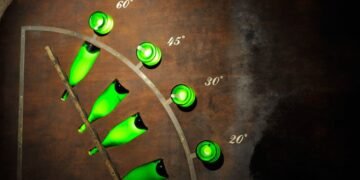
Bottles are placed neck-down in wooden racks called pupitres.
Workers known as remueurs:
- Rotate bottles slightly each day
- Gradually increase bottle angle
- Encourage sediment to collect near the neck
Master riddlers could process tens of thousands of bottles daily by hand.
Modern Automation
Today many producers use gyropalettes — automated machines that perform riddling mechanically.
Prestige houses sometimes continue hand riddling for luxury cuvées.
Disgorgement: Removing the Lees
Once sediment gathers in the bottle neck, it must be removed.
This process is called disgorgement.
Neck Freezing
The bottle neck is submerged in freezing liquid, forming an ice plug containing sediment.
When the temporary cap is removed:
- Internal pressure ejects the frozen plug
- Wine remains mostly intact
This step requires precision because Champagne remains under immense pressure.
Dosage: Determining Sweetness
After disgorgement, producers add a final mixture called dosage or liqueur d’expédition.
This solution contains:
- Wine
- Sugar
- Sometimes aged reserve wines
Dosage determines final sweetness level.
Sweetness Categories
Brut Nature
0–3 grams sugar per liter
Very dry and increasingly popular among enthusiasts.
Extra Brut
0–6 grams
Highly crisp and mineral-driven.
Brut
Under 12 grams
The global standard.
Demi-Sec
Sweeter style often paired with desserts.
Balancing Acidity
Dosage is not merely about sweetness. It balances acidity and shapes mouthfeel.
Even tiny adjustments dramatically affect:
- Texture
- Perceived freshness
- Flavor harmony
Corking and Packaging
After dosage, Champagne receives its final cork and wire cage.
The mushroom-shaped cork forms gradually due to prolonged pressure inside the bottle.
Packaging is particularly important in Champagne because presentation strongly influences luxury perception.
Many houses invest heavily in:
- Bottle design
- Label art
- Gift packaging
- Limited editions
Luxury branding has become inseparable from Champagne’s commercial success.
The Science of Bubble Formation
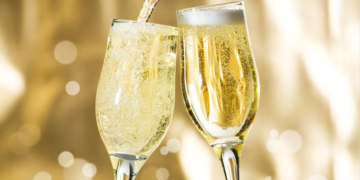
Champagne bubbles represent sophisticated physical chemistry.
Carbonation Physics
Carbon dioxide dissolves under pressure during secondary fermentation.
When the bottle opens:
- Pressure drops suddenly
- Gas escapes solution
- Bubbles form
Nucleation Points
Bubbles originate at microscopic imperfections in the glass.
Perfectly smooth glass would produce very few bubbles.
Bubble Size
Smaller bubbles are often associated with:
- Longer aging
- Higher quality
- Greater elegance
Persistent mousse contributes significantly to sensory experience.
Oxidative vs Reductive Styles
Champagne producers often pursue different stylistic philosophies.
Reductive Style
Characteristics:
- Citrus
- Freshness
- Precision
- Mineral purity
Achieved through:
- Stainless steel
- Minimal oxygen exposure
Oxidative Style
Characteristics:
- Nutty aromas
- Bread notes
- Richness
- Complexity
Achieved through:
- Barrel fermentation
- Oxygen exposure
- Longer aging
Different houses become known for distinct stylistic signatures.
Rosé Champagne Production
Rosé Champagne occupies a unique category within sparkling wine.
Unlike most rosé wines, Champagne producers may legally blend red and white wines.
Two Main Methods
Blending Method
Adding still red Pinot Noir wine to white Champagne base wine.
Saignée Method
Allowing limited skin contact to extract color naturally.
Rosé Champagne often displays:
- Strawberry notes
- Raspberry aromas
- Greater structure
Its popularity has grown dramatically in recent decades.
Sustainability in Champagne
Environmental concerns increasingly shape Champagne production.
Climate Challenges
Warmer temperatures affect:
- Harvest timing
- Acidity levels
- Disease pressure
- Water balance
The Champagne region has experienced harvest dates significantly earlier than historical norms.
Sustainable Initiatives
Many producers now emphasize:
- Organic viticulture
- Biodynamic farming
- Carbon neutrality
- Reduced pesticide use
- Biodiversity protection
Sustainability has become both an ethical and commercial priority.
Technology and Innovation
Although Champagne values tradition, technology plays an increasingly important role.
Modern innovations include:
- Precision viticulture
- Satellite vineyard monitoring
- Temperature-controlled fermentation
- Automated riddling
- Advanced quality control
Yet human sensory judgment remains irreplaceable.
The best Champagne still depends heavily on:
- Taste
- Experience
- Intuition
- Patience
The Economics of Champagne
Champagne is also a massive global business.
The region exports hundreds of millions of bottles annually.
Major markets include:
- United States
- United Kingdom
- Japan
- Italy
- France itself
Luxury demand drives high prices because Champagne production involves:
- Expensive land
- Labor-intensive harvesting
- Long aging periods
- Storage costs
- Marketing investment
Prestige cuvées can sell for hundreds or even thousands of dollars per bottle.
Why Champagne Remains Unique
Many sparkling wines around the world are excellent, yet Champagne maintains unmatched prestige.
Its reputation stems from a combination of:
- History
- Geography
- Production rigor
- Branding
- Cultural symbolism
Champagne also benefits from strict legal protection. Only wines produced within the designated Champagne appellation using approved methods may legally use the name.
This protection preserves identity and reinforces exclusivity.
Conclusion
The creation of Champagne is one of the most sophisticated processes in the wine world. Every bottle represents years of agricultural labor, scientific precision, and artistic decision-making. From carefully tended vineyards to underground chalk cellars, from delicate blending to the slow evolution of bubbles during aging, Champagne production embodies patience and craftsmanship on an extraordinary level.
What consumers often experience as a simple celebratory drink is actually the result of countless invisible decisions. The elegance of Champagne depends not on a single factor, but on the harmonious interaction of climate, soil, grape varieties, fermentation science, aging, and human expertise.
Its bubbles symbolize joy, but they also represent centuries of innovation and tradition working together.
As global wine culture evolves and environmental challenges intensify, Champagne producers continue adapting while preserving the identity that made the region legendary. That balance between innovation and heritage may be the true secret behind Champagne’s enduring magic.
For all its glamour and prestige, Champagne remains at its core an agricultural product shaped by nature, transformed by science, and perfected by human artistry.