








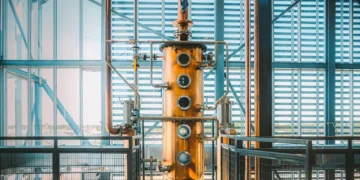






















Beer, at its essence, is deceptively simple. It is made from just four primary ingredients: water, malted grain, hops, and yeast. Yet from this simplicity emerges an extraordinary range of flavors, textures, aromas, and styles. The secret lies in science—specifically, the complex interplay of chemistry, biology, and physics that occurs throughout the brewing process.
Understanding the science of brewing not only deepens appreciation for beer but also reveals why small changes in process or ingredients can produce dramatically different results. This article explores the scientific foundations of brewing, from raw materials to fermentation, and how these elements shape the final product in your glass.
1. Water: The Foundation of Beer
Water makes up more than 90% of beer, making it the most important—and often most overlooked—ingredient.
Mineral Composition and Its Impact
Water is not just H₂O; it contains dissolved minerals that significantly influence brewing:
- Calcium: Enhances enzyme activity and improves clarity
- Magnesium: Aids yeast metabolism but must be balanced
- Bicarbonate: Affects pH and can influence flavor harshness
- Sulfates: Accentuate hop bitterness
- Chlorides: Enhance malt sweetness and body
Different regions historically developed distinct beer styles largely due to their water profiles. For example:
- Soft water favored pale lagers
- Hard water supported darker, malt-forward beers
Modern brewers often treat or replicate specific water profiles to achieve desired results.
2. Malted Grain: The Source of Sugar
Malt provides the sugars necessary for fermentation, as well as color, flavor, and body.
The Malting Process
Malting involves three key steps:
- Steeping: Grains are soaked in water
- Germination: Enzymes develop to break down starches
- Kilning: Heat stops germination and develops flavor
Types of Malt
- Base Malts: Provide fermentable sugars (e.g., pale malt)
- Specialty Malts: Add flavor and color (caramel, chocolate, roasted malts)
The degree of roasting determines:
- Color (from pale gold to deep black)
- Flavor (from bread-like to coffee or chocolate notes)
3. Hops: Bitterness, Aroma, and Stability
Hops are the flowers of the hop plant, and they play a crucial role in balancing beer.
Key Components of Hops
- Alpha acids: Responsible for bitterness
- Essential oils: Provide aroma and flavor
- Polyphenols: Contribute to mouthfeel and stability
Boiling and Isomerization
During boiling, alpha acids undergo isomerization, transforming into compounds that create bitterness. The longer hops are boiled:
- The more bitterness is extracted
- The more delicate aromas are lost
This is why hops are often added at different stages:
- Early additions for bitterness
- Late additions for aroma
4. Yeast: The Living Engine
Yeast is a microorganism that converts sugars into alcohol, carbon dioxide, and a wide array of flavor compounds.
Fermentation Basics
At its core, fermentation follows a biochemical process where glucose is converted into ethanol and CO₂.
But beyond alcohol production, yeast creates:
- Esters (fruity flavors)
- Phenols (spicy or clove-like notes)
- Higher alcohols (contribute to warmth and complexity)
Types of Yeast
- Ale yeast (top-fermenting): Works at warmer temperatures, produces more fruity flavors
- Lager yeast (bottom-fermenting): Works at cooler temperatures, results in cleaner profiles
Temperature control is critical:
- Higher temperatures = more flavor compounds
- Lower temperatures = cleaner taste
5. The Brewing Process: Step by Step
Mashing
Mashing is where malted grains are mixed with hot water to activate enzymes that convert starches into fermentable sugars.
Key factors:
- Temperature (affects sugar composition)
- Time (influences efficiency)
Different temperature ranges produce:
- More fermentable sugars → drier beer
- More complex sugars → fuller body
Lautering
After mashing, the liquid (wort) is separated from the grain solids. This process extracts the sugars needed for fermentation.
Boiling
Boiling serves multiple purposes:
- Sterilizes the wort
- Extracts bitterness from hops
- Drives off unwanted volatile compounds
It also influences color and flavor through chemical reactions.
6. The Maillard Reaction: Flavor Development
One of the most important chemical processes in brewing is the Maillard reaction.
This occurs when:
- Amino acids react with reducing sugars under heat
The result:
- Complex flavors (toasty, nutty, caramel-like)
- Darker color
This reaction is crucial in:
- Malt kilning
- Wort boiling

7. Fermentation: Transformation in Action
Once cooled, the wort is transferred to a fermentation vessel and yeast is added.
Stages of Fermentation
- Lag Phase: Yeast adapts and begins to multiply
- Active Fermentation: Rapid sugar consumption and alcohol production
- Conditioning Phase: Flavor refinement and cleanup of byproducts
During this process, hundreds of compounds are created, shaping the beer’s final profile.
8. Conditioning and Maturation
After fermentation, beer is conditioned to improve clarity, stability, and flavor.
Methods include:
- Cold conditioning (lagering): Smooths flavors
- Bottle conditioning: Secondary fermentation in the bottle
- Barrel aging: Adds complexity from wood and previous contents
Time plays a critical role in developing balance and depth.
9. Carbonation: The Role of CO₂
Carbonation affects both mouthfeel and aroma perception.
Sources of carbonation:
- Natural fermentation
- Forced carbonation
Higher carbonation:
- Enhances crispness
- Lifts aromas
Lower carbonation:
- Creates a smoother, creamier texture
10. Flavor Chemistry: What You Taste
The flavor of beer is a combination of:
- Sugars and residual sweetness
- Bitterness from hops
- Aromatic compounds from yeast and hops
- Acidity and alcohol
Balance is key. A well-crafted beer harmonizes these elements rather than allowing one to dominate.
11. Off-Flavors and Quality Control
Not all flavors are desirable. Off-flavors can result from:
- Contamination
- Poor fermentation control
- Oxidation
Common off-flavors include:
- Sourness (unintended bacterial activity)
- Butter-like flavors (diacetyl)
- Paper-like taste (oxidation)
Brewers use strict quality control measures to prevent these issues.
12. Innovation Through Science
Modern brewing continues to evolve through scientific advancements:
- Genetic research on yeast strains
- Precision fermentation technologies
- Advanced filtration systems
- Data-driven brewing analytics
These innovations allow for:
- Greater consistency
- New flavor possibilities
- Improved efficiency
13. The Intersection of Science and Creativity
While science provides the foundation, creativity drives innovation.
Brewers experiment with:
- Unusual ingredients
- New fermentation methods
- Hybrid styles
Science ensures these experiments are repeatable and scalable.
14. Why Small Changes Matter
One of the most fascinating aspects of brewing science is sensitivity.
Small changes in:
- Temperature
- Ingredient ratios
- Timing
Can produce dramatically different results.
This is why brewing is often compared to both cooking and chemistry—it requires precision, intuition, and experience.
15. Appreciating Beer Through Science
Understanding the science behind beer enhances the drinking experience.
It allows you to:
- Identify flavor components
- Recognize brewing techniques
- Appreciate craftsmanship
Every sip becomes more than taste—it becomes insight into a complex process.
Conclusion: The Invisible Craft
The science of brewing is largely invisible, yet it defines everything about beer. From the molecular transformations of fermentation to the chemical reactions that create flavor, every stage is guided by principles that balance precision with possibility.
Beer is not just made—it is engineered, cultivated, and carefully transformed.
And while the final product may seem simple, it carries within it a world of scientific complexity—one that continues to evolve as brewers push the boundaries of what beer can be.