






























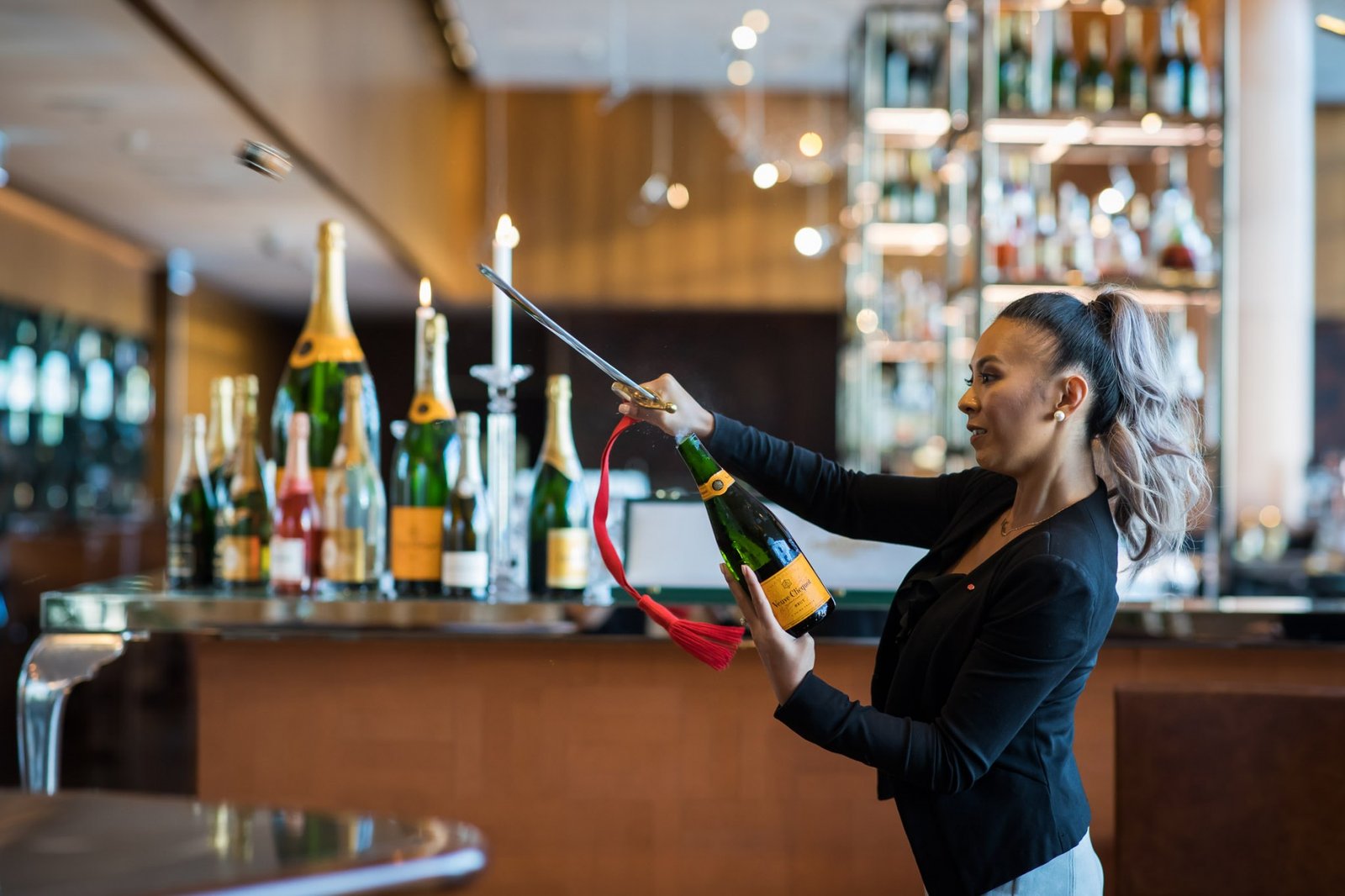
For many, Champagne is synonymous with celebration and moments of joy. Its association with luxury and milestone events often calls for extravagant gestures, and few traditions are as striking and dramatic as sabrage. This ceremonial practice, which involves opening a bottle of Champagne with a sword, has evolved into a symbol of celebration and grandeur. But sabrage is more than just a spectacle; it is a part of Champagne culture steeped in history, technique, and artistry. In this article, we will delve into the tradition of sabrage, exploring its origins, significance, and the steps involved in performing this impressive ritual.
The Art of Sabrage: A Ceremonial Tradition
Sabrage is a thrilling and dramatic way to open a bottle of Champagne, where a sword (or saber) is used to break the top off the bottle’s neck. The result is a clean break that leaves the bottle ready to be enjoyed, and the cork and neck are sent flying in a burst of celebratory energy. Sabrage has become synonymous with luxury, grand events, and special occasions, but it is more than just a spectacle. The technique requires precision, the right equipment, and an understanding of Champagne’s history and traditions.
The ceremonial act of sabrage is often performed during important events, such as weddings, military ceremonies, or major celebrations. It embodies a sense of grandeur and triumph, elevating the opening of a bottle of Champagne into a show of skill and elegance.
The Origins of Sabrage
The practice of sabrage dates back to the late 18th century, with its roots deeply entwined with the history of the French military and the aristocracy. The term “sabrage” comes from the French word “sabre”, referring to a type of curved sword commonly used by cavalry officers. While the exact origins of the tradition are debated, several theories exist regarding how it came to be associated with Champagne.
1. Napoleon and the French Military
One popular theory is that sabrage was popularized by the French military, specifically by Napoleon Bonaparte and his officers. According to legend, during the Napoleonic Wars, French cavalry officers would celebrate their victories by opening bottles of Champagne with their sabers. The act was seen as a symbol of victory, bravery, and celebration. As the story goes, after a battle or a significant win, officers would draw their sabers and slice the top off a bottle of Champagne in a display of triumph.
Napoleon himself was known for his love of Champagne, and it’s said that he would enjoy the sparkling wine in celebratory moments. Whether or not Napoleon directly endorsed the practice of sabrage, the association between the military, victory, and Champagne likely helped to cement the tradition’s place in French culture.
2. Champagne and the Aristocracy
Another theory suggests that sabrage became popular with French aristocrats in the late 18th century, who would host extravagant banquets and social events. The practice of opening Champagne bottles with a saber was an impressive and theatrical gesture, showcasing both opulence and skill. It quickly became a part of the aristocratic tradition, symbolizing refinement and the art of entertaining.
The tradition of sabrage was also influenced by the technical challenges of opening Champagne bottles during the early days of sparkling wine production. Bottles of Champagne in the 17th and 18th centuries were often made from thicker glass and were sealed with strong corks that could be difficult to remove without causing the bottle to explode under pressure. Sabrage offered a quick, efficient, and visually exciting way to open the bottle without worrying about the cork getting stuck or damaging the wine.
3. Modern Revival of Sabrage
While sabrage remained a rare and niche practice for much of the 19th and 20th centuries, the tradition experienced a revival in the 20th century, particularly in the 1990s and early 2000s. As Champagne became increasingly associated with luxury, special events, and high-end celebrations, sabrage was resurrected as a way to elevate the experience of drinking Champagne.
Today, sabrage is performed during celebrations such as weddings, milestone birthdays, corporate events, and even at some fine dining establishments. The skill and spectacle of sabrage continue to captivate audiences, creating lasting memories and adding a touch of drama to any occasion.
The Technique of Sabrage: How Do You Do It?
Sabrage is an impressive feat that requires practice, precision, and safety awareness. The process of opening a bottle of Champagne with a sword involves a few key steps, and though it may look easy, it takes careful technique to avoid injury and ensure a successful sabrage.
Step 1: Choose the Right Bottle of Champagne
Not all Champagne bottles are created equal, and not all are suitable for sabrage. The best bottles for sabrage are vintage-style bottles with a long neck and a cork held in place by a wire cage. These bottles are typically more durable and able to withstand the impact of the saber without shattering.
It is also important to choose a chilled bottle. The ideal temperature for Champagne when performing sabrage is around 45–50°F (7–10°C). A chilled bottle of Champagne will have a slightly more controlled pressure inside, making it less likely to explode uncontrollably upon impact.
Step 2: Remove the Foil and Cage
Before performing sabrage, you’ll need to carefully remove the foil from the top of the bottle. The wire cage that secures the cork should also be removed, but the cork itself should remain in place, as it’s vital for the success of the sabrage. Take care not to shake the bottle or agitate it too much, as this could cause the Champagne to foam excessively when opened.

Step 3: Locate the Seam of the Bottle
Champagne bottles are made by blowing glass into molds, and as a result, they have seams that run from the neck to the bottom. These seams are weaker areas of the glass and are where the sword should strike during sabrage. Identifying the seam is essential, as hitting this area will ensure a clean break and prevent the bottle from shattering unpredictably.
Step 4: Angle the Bottle Properly
The bottle should be held at a 30-degree angle, with the seam facing upward. The goal is to strike the lip of the bottle at an angle, using the blunt side of the saber to apply force along the seam. This ensures that the cork and the top of the bottle break cleanly, while the force of the strike sends the cork flying off in a dramatic fashion.
Step 5: Strike the Bottle
To perform the actual sabrage, you’ll need to use the back edge of the saber (the blunt side) to hit the seam of the bottle. The strike should be swift and controlled, with enough force to break the top of the bottle but not so much that the glass shatters completely. The impact will cause the cork to fly off with a satisfying pop, and the top of the bottle will be neatly severed, leaving a clean opening for the Champagne to pour.
Step 6: Pour the Champagne
Once the bottle has been successfully opened, it’s time to pour the Champagne. The remaining wine inside should be poured gently into glasses, as shaking the bottle too much could result in excessive foam. The break at the neck of the bottle should be smooth and free of sharp edges, but it’s always a good idea to be cautious when handling the bottle after sabrage.
The Symbolism and Significance of Sabrage
While sabrage is often performed for fun and spectacle, it also carries deep symbolic meaning. In many cultures, Champagne is associated with moments of triumph, celebration, and achievement. Sabrage elevates this symbolism by turning the simple act of opening a bottle of Champagne into a statement of success, grandeur, and elegance.
In the context of military celebrations, sabrage represents the spirit of victory and the courage of soldiers. It’s said to symbolize the cleaving of challenges and the achievement of a hard-fought victory. For aristocrats and royalty, it may have been a display of opulence and refinement, showing off one’s status and the ability to entertain with flair.
In modern times, sabrage is often used during weddings, anniversaries, and significant birthdays. It adds a dramatic touch to the occasion, marking it as something extraordinary. The striking visual appeal of the saber cutting through the bottle, followed by the burst of effervescent Champagne, reinforces the idea that the event is memorable, one-of-a-kind, and worth celebrating.
Sabrage as a Performance
Sabrage has also evolved into a performance art, with many professional sommeliers and Champagne experts showcasing their skills during events. Sabrage competitions, where participants demonstrate their ability to open bottles with precision and style, have become a popular form of entertainment at Champagne festivals, high-profile events, and luxury experiences.
The skill required for a flawless sabrage makes it a mesmerizing spectacle, as it combines physical prowess, a sense of timing, and a deep understanding of Champagne culture. It is as much about the artistry as it is about the celebration, making it an unforgettable experience for both the person performing the act and those watching.
Conclusion
The tradition of sabrage is more than just an impressive way to open a bottle of Champagne. It is a celebration of victory, luxury, and the art of entertaining. From its origins with Napoleon’s cavalry to its revival as a symbol of opulence and grand occasions, sabrage remains a timeless and captivating tradition in Champagne culture. Whether performed at a wedding, a military event, or a festive celebration, the act of sabrage adds an unforgettable touch of drama and elegance, making every sip of Champagne all the more special.










