






























SipsavorLife
  • Home
  • Wine
    Wine as a Cultural Artifact: History, Identity, and the Evolution of Taste

    The Art and Science of Wine & Food Pairing: How to Create Perfect Matches Every Time

    Wine as a Cultural Artifact: History, Identity, and the Evolution of Taste

    A Complete Guide to Wine Styles and Grape Varieties: From Cabernet Sauvignon to Riesling

    Wine as a Cultural Artifact: History, Identity, and the Evolution of Taste

    The Global Wine Industry: Economics, Markets, and the Future of Consumption

    Wine as a Cultural Artifact: History, Identity, and the Evolution of Taste

    The Science of Wine Tasting: How Chemistry, Biology, and Perception Shape Flavor

    Wine as a Cultural Artifact: History, Identity, and the Evolution of Taste

    Wine as a Cultural Artifact: History, Identity, and the Evolution of Taste

    Red Wine — The Liquid Expression of Land, Time, and Human Intention

    The Future of Red Wine — Climate Change, Technology, and the Evolution of Taste

  • Whiskey
    Can Beer Be an Effective Ingredient in Culinary Cooking?

    Can Beer Be an Effective Ingredient in Culinary Cooking?

    Second Fermentation in Champagne: Is It Really That Crucial?

    Second Fermentation in Champagne: Is It Really That Crucial?

    How Do Different Grains Impact the Flavor Profile of Distilled Spirits?

    How Do Different Grains Impact the Flavor Profile of Distilled Spirits?

    How Do Whiskey Master Blenders Create Perfection?

    How Do Whiskey Master Blenders Create Perfection?

    Wine Pairings: Can They Change the Flavor Profile of a Dish?

    Wine Pairings: Can They Change the Flavor Profile of a Dish?

    Beer the Ultimate Beverage for Pairing with Spicy Food?

    Beer the Ultimate Beverage for Pairing with Spicy Food?

  • Beer
    Beer as a Cultural and Social Force: From Ancient Brew to Modern Identity

    The Art of Beer & Food Pairing: Unlocking Flavor Through Balance, Contrast, and Texture

    Beer as a Cultural and Social Force: From Ancient Brew to Modern Identity

    A Complete Guide to Beer Styles: From Lager to Stout, Understanding Flavor, Body, and Character

    Beer as a Cultural and Social Force: From Ancient Brew to Modern Identity

    The Global Beer Industry: Craft Revolution, Market Forces, and the Future of Brewing

    Beer as a Cultural and Social Force: From Ancient Brew to Modern Identity

    The Science of Beer: Brewing Process, Ingredients, and the Chemistry of Flavor

    Beer as a Cultural and Social Force: From Ancient Brew to Modern Identity

    Beer as a Cultural and Social Force: From Ancient Brew to Modern Identity

    The Evolution of Beer — From Ancient Brews to the Craft Revolution

    The Future of Beer — Innovation, Sustainability, and Emerging Trends

  • Grain Spirits
    Grain Spirits Explained — The Foundation of Global Distillation

    The Future of Grain Spirits — Technology, Sustainability, and the Next Era of Distillation

    Grain Spirits Explained — The Foundation of Global Distillation

    Grain Spirits Around the World — Vodka, Whisky Bases, and Industrial Applications

    Grain Spirits Explained — The Foundation of Global Distillation

    Distillation Systems — Pot Still vs Column Still, and the Balance Between Efficiency and Flavor

    Grain Spirits Explained — The Foundation of Global Distillation

    Grain Selection and Fermentation Science — How Raw Ingredients Shape Grain Spirits

    Grain Spirits Explained — The Foundation of Global Distillation

    Grain Spirits Explained — The Foundation of Global Distillation

    Grain Spirits and the Industrial Birth of Neutral Alcohol

    The Future of Grain Spirits — AI Distillation, Sustainability, and the Post-Flavor Alcohol Industry

  • Champagne
    The History of Champagne — From Accidental Sparkle to Global Luxury

    The Future of Champagne — Climate Change, Innovation, and Industry Evolution

    The History of Champagne — From Accidental Sparkle to Global Luxury

    The Culture of Champagne — Luxury, Celebration, and Global Influence

    The History of Champagne — From Accidental Sparkle to Global Luxury

    Champagne Styles Explained — Brut, Rosé, Vintage, and Beyond

    The History of Champagne — From Accidental Sparkle to Global Luxury

    The Craft of Champagne — Terroir, Grapes, and the Méthode Traditionnelle

    The History of Champagne — From Accidental Sparkle to Global Luxury

    The History of Champagne — From Accidental Sparkle to Global Luxury

    The Future of Champagne — Climate Change, Innovation, and the Evolution of Sparkling Wine

    The Future of Champagne — Climate Change, Innovation, and the Evolution of Sparkling Wine

  • ALL
    Can Beer Be an Effective Ingredient in Culinary Cooking?

    Can Beer Be an Effective Ingredient in Culinary Cooking?

    Second Fermentation in Champagne: Is It Really That Crucial?

    Second Fermentation in Champagne: Is It Really That Crucial?

    How Do Different Grains Impact the Flavor Profile of Distilled Spirits?

    How Do Different Grains Impact the Flavor Profile of Distilled Spirits?

    How Do Whiskey Master Blenders Create Perfection?

    How Do Whiskey Master Blenders Create Perfection?

    Wine Pairings: Can They Change the Flavor Profile of a Dish?

    Wine Pairings: Can They Change the Flavor Profile of a Dish?

    Beer the Ultimate Beverage for Pairing with Spicy Food?

    Beer the Ultimate Beverage for Pairing with Spicy Food?

SipsavorLife
  • Home
  • Wine
    Wine as a Cultural Artifact: History, Identity, and the Evolution of Taste

    The Art and Science of Wine & Food Pairing: How to Create Perfect Matches Every Time

    Wine as a Cultural Artifact: History, Identity, and the Evolution of Taste

    A Complete Guide to Wine Styles and Grape Varieties: From Cabernet Sauvignon to Riesling

    Wine as a Cultural Artifact: History, Identity, and the Evolution of Taste

    The Global Wine Industry: Economics, Markets, and the Future of Consumption

    Wine as a Cultural Artifact: History, Identity, and the Evolution of Taste

    The Science of Wine Tasting: How Chemistry, Biology, and Perception Shape Flavor

    Wine as a Cultural Artifact: History, Identity, and the Evolution of Taste

    Wine as a Cultural Artifact: History, Identity, and the Evolution of Taste

    Red Wine — The Liquid Expression of Land, Time, and Human Intention

    The Future of Red Wine — Climate Change, Technology, and the Evolution of Taste

  • Whiskey
    Can Beer Be an Effective Ingredient in Culinary Cooking?

    Can Beer Be an Effective Ingredient in Culinary Cooking?

    Second Fermentation in Champagne: Is It Really That Crucial?

    Second Fermentation in Champagne: Is It Really That Crucial?

    How Do Different Grains Impact the Flavor Profile of Distilled Spirits?

    How Do Different Grains Impact the Flavor Profile of Distilled Spirits?

    How Do Whiskey Master Blenders Create Perfection?

    How Do Whiskey Master Blenders Create Perfection?

    Wine Pairings: Can They Change the Flavor Profile of a Dish?

    Wine Pairings: Can They Change the Flavor Profile of a Dish?

    Beer the Ultimate Beverage for Pairing with Spicy Food?

    Beer the Ultimate Beverage for Pairing with Spicy Food?

  • Beer
    Beer as a Cultural and Social Force: From Ancient Brew to Modern Identity

    The Art of Beer & Food Pairing: Unlocking Flavor Through Balance, Contrast, and Texture

    Beer as a Cultural and Social Force: From Ancient Brew to Modern Identity

    A Complete Guide to Beer Styles: From Lager to Stout, Understanding Flavor, Body, and Character

    Beer as a Cultural and Social Force: From Ancient Brew to Modern Identity

    The Global Beer Industry: Craft Revolution, Market Forces, and the Future of Brewing

    Beer as a Cultural and Social Force: From Ancient Brew to Modern Identity

    The Science of Beer: Brewing Process, Ingredients, and the Chemistry of Flavor

    Beer as a Cultural and Social Force: From Ancient Brew to Modern Identity

    Beer as a Cultural and Social Force: From Ancient Brew to Modern Identity

    The Evolution of Beer — From Ancient Brews to the Craft Revolution

    The Future of Beer — Innovation, Sustainability, and Emerging Trends

  • Grain Spirits
    Grain Spirits Explained — The Foundation of Global Distillation

    The Future of Grain Spirits — Technology, Sustainability, and the Next Era of Distillation

    Grain Spirits Explained — The Foundation of Global Distillation

    Grain Spirits Around the World — Vodka, Whisky Bases, and Industrial Applications

    Grain Spirits Explained — The Foundation of Global Distillation

    Distillation Systems — Pot Still vs Column Still, and the Balance Between Efficiency and Flavor

    Grain Spirits Explained — The Foundation of Global Distillation

    Grain Selection and Fermentation Science — How Raw Ingredients Shape Grain Spirits

    Grain Spirits Explained — The Foundation of Global Distillation

    Grain Spirits Explained — The Foundation of Global Distillation

    Grain Spirits and the Industrial Birth of Neutral Alcohol

    The Future of Grain Spirits — AI Distillation, Sustainability, and the Post-Flavor Alcohol Industry

  • Champagne
    The History of Champagne — From Accidental Sparkle to Global Luxury

    The Future of Champagne — Climate Change, Innovation, and Industry Evolution

    The History of Champagne — From Accidental Sparkle to Global Luxury

    The Culture of Champagne — Luxury, Celebration, and Global Influence

    The History of Champagne — From Accidental Sparkle to Global Luxury

    Champagne Styles Explained — Brut, Rosé, Vintage, and Beyond

    The History of Champagne — From Accidental Sparkle to Global Luxury

    The Craft of Champagne — Terroir, Grapes, and the Méthode Traditionnelle

    The History of Champagne — From Accidental Sparkle to Global Luxury

    The History of Champagne — From Accidental Sparkle to Global Luxury

    The Future of Champagne — Climate Change, Innovation, and the Evolution of Sparkling Wine

    The Future of Champagne — Climate Change, Innovation, and the Evolution of Sparkling Wine

  • ALL
    Can Beer Be an Effective Ingredient in Culinary Cooking?

    Can Beer Be an Effective Ingredient in Culinary Cooking?

    Second Fermentation in Champagne: Is It Really That Crucial?

    Second Fermentation in Champagne: Is It Really That Crucial?

    How Do Different Grains Impact the Flavor Profile of Distilled Spirits?

    How Do Different Grains Impact the Flavor Profile of Distilled Spirits?

    How Do Whiskey Master Blenders Create Perfection?

    How Do Whiskey Master Blenders Create Perfection?

    Wine Pairings: Can They Change the Flavor Profile of a Dish?

    Wine Pairings: Can They Change the Flavor Profile of a Dish?

    Beer the Ultimate Beverage for Pairing with Spicy Food?

    Beer the Ultimate Beverage for Pairing with Spicy Food?

SipsavorLife
No Result
View All Result
Home ALL

What’s the Secret to Making Champagne Bubbles So Special?

February 26, 2025
in ALL, Champagne
What’s the Secret to Making Champagne Bubbles So Special?

Champagne is synonymous with celebration, and its signature effervescence—the bubbles that rise and dance in the glass—plays a key role in its allure. For many, the sight and sound of Champagne bubbling away in a glass are almost as exciting as the first sip. But have you ever wondered why the bubbles in Champagne are so distinctive? Why do they have such a refined, delicate sparkle, and why do they seem to last longer than in other sparkling wines? In this article, we will explore the science behind bubble formation in Champagne, how second fermentation creates the effervescence, and how different production methods impact the quality of the bubbles.

The Science Behind the Bubble Formation in Champagne

To understand the secret to Champagne’s bubbles, we must first delve into the science of carbonation and bubble formation. The bubbles in Champagne are created when carbon dioxide (CO₂) is dissolved in the liquid. The fascinating thing about Champagne—and sparkling wines in general—is that the bubbles are not created by simply adding CO₂ to the liquid, as is often done in soda. Instead, they form naturally during the fermentation process.

1. Carbonation and Pressure When Champagne is first made, it begins as a still wine, and then undergoes a process known as secondary fermentation (which we will explore in the next section). This fermentation takes place in a sealed bottle, where yeast consumes sugar and produces alcohol and CO₂. Since the bottle is sealed, the CO₂ can’t escape and dissolves into the wine, creating carbonation.

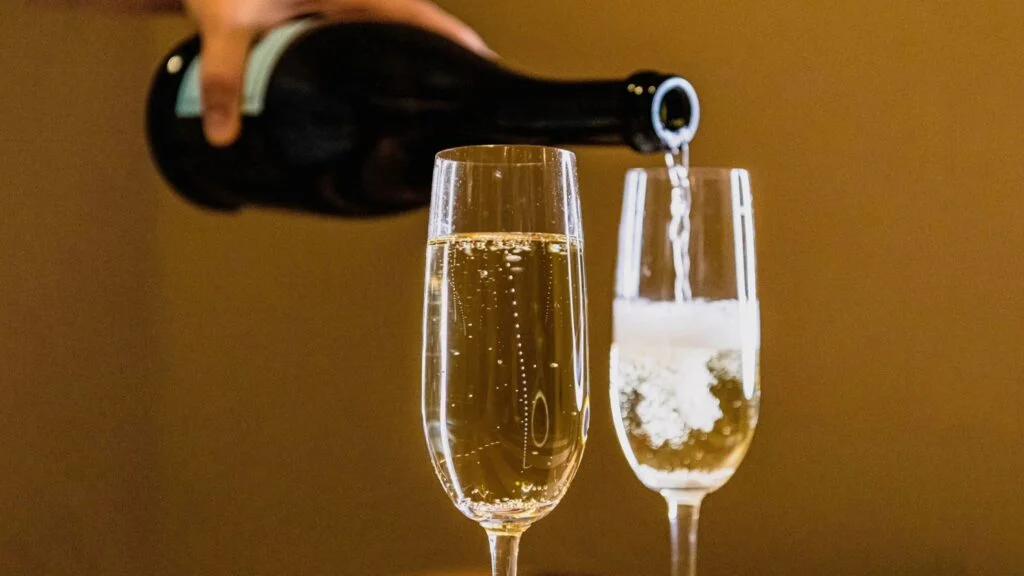
What sets Champagne apart from other sparkling wines is the pressure created during this fermentation. The pressure inside the bottle can reach up to 6 atmospheres, roughly 90 pounds per square inch—about three times the pressure in a car tire. This high pressure forces a significant amount of CO₂ to remain dissolved in the wine. When you open a bottle of Champagne, the pressure is released, and the dissolved CO₂ comes out of solution in the form of tiny bubbles.

2. Nucleation Sites The size and persistence of Champagne bubbles are influenced by the shape of the glass, the presence of any particles inside it, and the wine’s composition. As the CO₂ escapes the wine, it attaches to tiny imperfections or particles in the glass—these are known as nucleation sites. These tiny spots allow the CO₂ to form bubbles, which then rise to the surface.

In Champagne, the bubbles are typically much smaller and more numerous than in other sparkling wines, such as Prosecco or Cava. The reason for this lies in the size of the nucleation sites. Champagne glasses are designed to maximize the number of nucleation sites, promoting the formation of smaller, more delicate bubbles. This creates the signature “delicate mousse” that Champagne drinkers love.

How Second Fermentation Creates the Signature Effervescence

The key to Champagne’s unique effervescence lies in the method known as méthode champenoise (also referred to as the traditional method). This two-stage fermentation process is responsible for the creation of the bubbles that give Champagne its sparkle and character. Here’s how it works:

1. Primary Fermentation and Base Wine The Champagne-making process begins with primary fermentation, during which grape juice is fermented into a still wine. This base wine typically has low alcohol content and a crisp, acidic flavor, which forms the backbone of Champagne’s taste profile. At this stage, the wine is still, meaning it has no bubbles.

2. Secondary Fermentation in the Bottle The magic happens during the second fermentation, which is the defining characteristic of Champagne production. Once the base wine has been made, a mixture of yeast and sugar is added to each bottle, and the bottle is sealed with a crown cap. The yeast consumes the sugar, producing alcohol and CO₂. Because the bottle is sealed, the CO₂ has nowhere to escape and dissolves into the wine, creating carbonation.

This secondary fermentation typically lasts for a minimum of 9 months, but many producers extend this period to 18 months, or even several years, for greater complexity. The yeast also produces other compounds during fermentation that contribute to the flavor and texture of Champagne, such as autolysis, which imparts rich, toasty, and biscuit-like notes.

3. The Role of Aging As the Champagne ages, the bubbles become finer and more persistent. This aging process helps to refine the overall texture of the wine, creating the smooth, silky mouthfeel that is often associated with well-aged Champagne. The yeast also undergoes a process called autolysis, where the dead yeast cells break down and release compounds that add complexity to the flavor. The combination of these factors results in Champagne with more fine, persistent bubbles and a refined effervescence that can last for hours in the glass.
How Different Methods of Production Affect Bubble Quality

While the méthode champenoise is the traditional method of Champagne production, not all sparkling wines use this technique. The method used can significantly impact the size, texture, and longevity of the bubbles.

1. The Traditional Method (Méthode Champenoise) As we’ve discussed, the traditional method is responsible for Champagne’s signature fine, persistent bubbles. During the second fermentation in the sealed bottle, CO₂ dissolves into the wine and creates small, delicate bubbles. The extended aging process and the autolysis of the yeast contribute to the quality of the bubbles, enhancing their texture and creating the signature mousse that makes Champagne so special.

In addition to the bubbles themselves, the method also impacts the flavor profile of the wine, contributing complex, yeasty, nutty, and biscuity notes. This is why Champagne and other sparkling wines made using this technique tend to have a more sophisticated, refined effervescence compared to wines produced by other methods.

2. The Charmat Method (Tank Method) In contrast to the traditional method, the Charmat method (also known as the tank method) is used for sparkling wines like Prosecco. In this method, the secondary fermentation occurs in large pressurized tanks instead of individual bottles. While this method is faster and more cost-effective than the traditional method, it produces larger, less persistent bubbles. This results in a different mouthfeel, often described as more fizzy or “bubbly,” but less refined than that of Champagne.

The Charmat method is more commonly used for fresh, fruit-forward sparkling wines and does not result in the same level of complexity or longevity in the bubbles as the traditional method. However, it is still an excellent way to create sparkling wines that are enjoyable and refreshing.

3. The Carbonic Method Another method used for sparkling wines, particularly in regions like the U.S. and Argentina, is the carbonic maceration method. This technique involves fermenting whole grapes in a sealed container, allowing CO₂ to naturally permeate the fruit, creating a light, effervescent wine with a more fruity and floral character. The bubbles produced by this method are typically larger and less refined than those created by the traditional method.

While this method is not used for Champagne, it does produce sparkling wines with lively bubbles, though these are usually short-lived compared to Champagne’s fine effervescence.

Conclusion

The bubbles in Champagne are more than just an aesthetic feature—they are a vital part of what makes this sparkling wine so special. The science behind bubble formation is rooted in the process of secondary fermentation, which allows CO₂ to dissolve into the wine and create the fine, persistent bubbles Champagne is known for. The méthode champenoise (traditional method) is the secret to the champagne bubble’s quality, with extended aging, autolysis, and high pressure contributing to their delicate, refined texture.

Unlike other sparkling wines, Champagne’s bubbles are smaller, longer-lasting, and more elegant due to the controlled fermentation process and unique environmental factors. Whether you’re savoring a vintage bottle of Champagne or enjoying a more casual sparkling wine, understanding the science and techniques behind the bubbles will deepen your appreciation for this remarkable drink.


Tags: Champagne bubblesChampagne productionméthode champenoisesparkling wine
ShareTweetShare

Related Posts

The History of Champagne — From Accidental Sparkle to Global Luxury
Champagne

The Future of Champagne — Climate Change, Innovation, and Industry Evolution

April 25, 2026
The History of Champagne — From Accidental Sparkle to Global Luxury
Champagne

The Culture of Champagne — Luxury, Celebration, and Global Influence

April 25, 2026
The History of Champagne — From Accidental Sparkle to Global Luxury
Champagne

Champagne Styles Explained — Brut, Rosé, Vintage, and Beyond

April 25, 2026
The History of Champagne — From Accidental Sparkle to Global Luxury
Champagne

The Craft of Champagne — Terroir, Grapes, and the Méthode Traditionnelle

April 25, 2026
The History of Champagne — From Accidental Sparkle to Global Luxury
Champagne

The History of Champagne — From Accidental Sparkle to Global Luxury

April 25, 2026
The Future of Champagne — Climate Change, Innovation, and the Evolution of Sparkling Wine
Champagne

The Future of Champagne — Climate Change, Innovation, and the Evolution of Sparkling Wine

April 22, 2026
Leave Comment
  • Trending
  • Comments
  • Latest
Role of Terroir in Champagne Production

Role of Terroir in Champagne Production

January 19, 2026
Champagne Can Be Aged in Wood?

Champagne Can Be Aged in Wood?

January 18, 2026
Is Organic Wine Healthier Than Conventional Wine?

Is Organic Wine Healthier Than Conventional Wine?

January 20, 2026
Why Do Some Champagnes Use a High Proportion of Pinot Meunier?

Why Do Some Champagnes Use a High Proportion of Pinot Meunier?

January 20, 2026
The Timeless Elegance of Wine: A Journey Through History and Culture

The Timeless Elegance of Wine: A Journey Through History and Culture

Why Is Château Lafite Rothschild the Pinnacle of Fine Wine?

Why Is Château Lafite Rothschild the Pinnacle of Fine Wine?

How Did Château Lafite Rothschild Become a Global Icon of Luxury?

How Did Château Lafite Rothschild Become a Global Icon of Luxury?

What Makes Chateau Lafite Rothschild the Pinnacle of Bordeaux Wines?

What Makes Chateau Lafite Rothschild the Pinnacle of Bordeaux Wines?

Beer as a Cultural and Social Force: From Ancient Brew to Modern Identity

The Art of Beer & Food Pairing: Unlocking Flavor Through Balance, Contrast, and Texture

April 26, 2026
Beer as a Cultural and Social Force: From Ancient Brew to Modern Identity

A Complete Guide to Beer Styles: From Lager to Stout, Understanding Flavor, Body, and Character

April 26, 2026
Beer as a Cultural and Social Force: From Ancient Brew to Modern Identity

The Global Beer Industry: Craft Revolution, Market Forces, and the Future of Brewing

April 26, 2026
Beer as a Cultural and Social Force: From Ancient Brew to Modern Identity

The Science of Beer: Brewing Process, Ingredients, and the Chemistry of Flavor

April 26, 2026
SipsavorLife

Welcome to our comprehensive beverage guide, where you can explore the fascinating world of alcoholic drinks. From exquisite wines and rich whiskeys to refreshing beers and sparkling champagnes, we provide insights, tips, and recommendations for enthusiasts and casual drinkers alike. Discover your next favorite libation with us!

© 2025 sipsavorlife.com. contacts:sipsavorlife-35376@gmail.com

No Result
View All Result
  • Home
  • Wine
  • Whiskey
  • Beer
  • Grain Spirits
  • Champagne
  • ALL

© 2025 sipsavorlife.com. contacts:sipsavorlife-35376@gmail.com

Welcome Back!

Login to your account below

Forgotten Password?

Retrieve your password

Please enter your username or email address to reset your password.

Log In





